


Rail Baltica is under active construction across Estonia, Latvia, Lithuania and Poland right now, nearly 900 kilometres of new standard-gauge line built almost entirely from scratch through terrain that includes protected Natura 2000 habitat. The European Commission’s latest Connecting Europe Facility call has put another €1.1 billion behind rail projects on the TEN-T core network, on top of a revised TEN-T regulation that’s pushing member states toward faster, higher-speed, better-connected lines across the continent. Rail is one of the few infrastructure categories in Europe with genuine cross-border political momentum behind it right now.
That momentum runs straight into the same problem in every country: a new or upgraded rail corridor still has to sit next to the towns and farmland it passes through, for as long as it operates.
A Patchwork That’s Getting Less Forgiving
Noise regulation for rail in the EU isn’t a single rulebook. Member states apply their own national standards, but they all sit under the umbrella of the EU’s environmental noise framework, which requires noise mapping and action plans for major transport infrastructure and obliges project developers to identify and mitigate significant noise exposure along transport corridors, not just during construction.
For a project like Rail Baltica, that plays out at two levels simultaneously. Each country’s environmental impact assessment sets construction-phase conditions, often shaped by the additional requirement to avoid or mitigate effects on protected habitat under the EU Habitats Directive. Separately, the noise mapping obligations that apply once a line is operational mean corridor noise stays a compliance question for the life of the asset, reassessed on a recurring cycle rather than signed off once at completion.
Cross-border projects add a layer most single-country schemes don’t have to deal with: coordinating noise mitigation standards and monitoring across regulatory frameworks that don’t always align, while keeping construction moving on a fixed delivery timeline tied to EU funding milestones.
Matching the Mitigation to the Phase
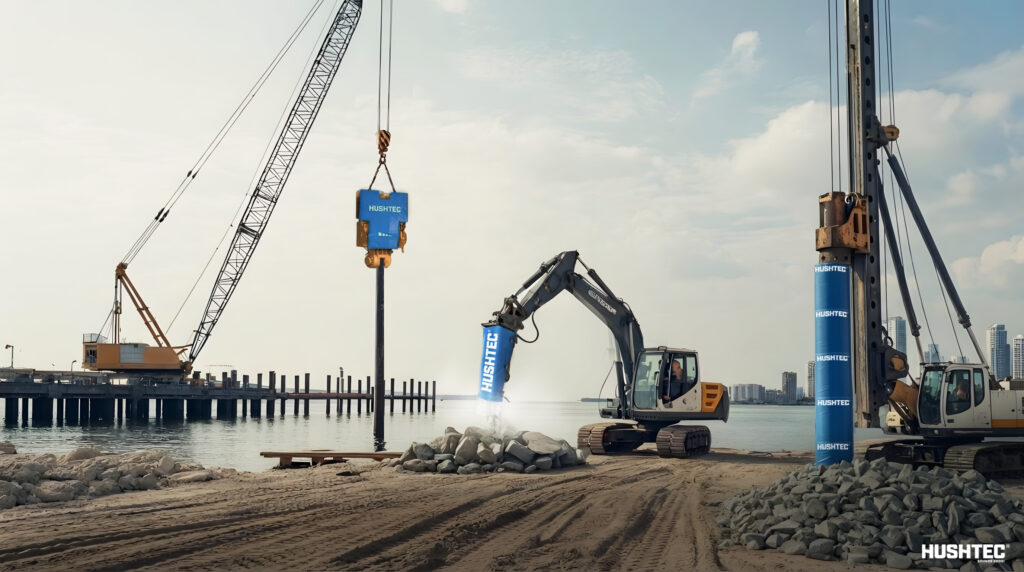
During construction, temporary acoustic barriers around piling rigs and embankment works need to move with a build that, on a project like Rail Baltica, is progressing across four countries and multiple contractors at once. Modular systems that can be repositioned without a full teardown suit that kind of distributed, moving worksite far better than fixed installations.
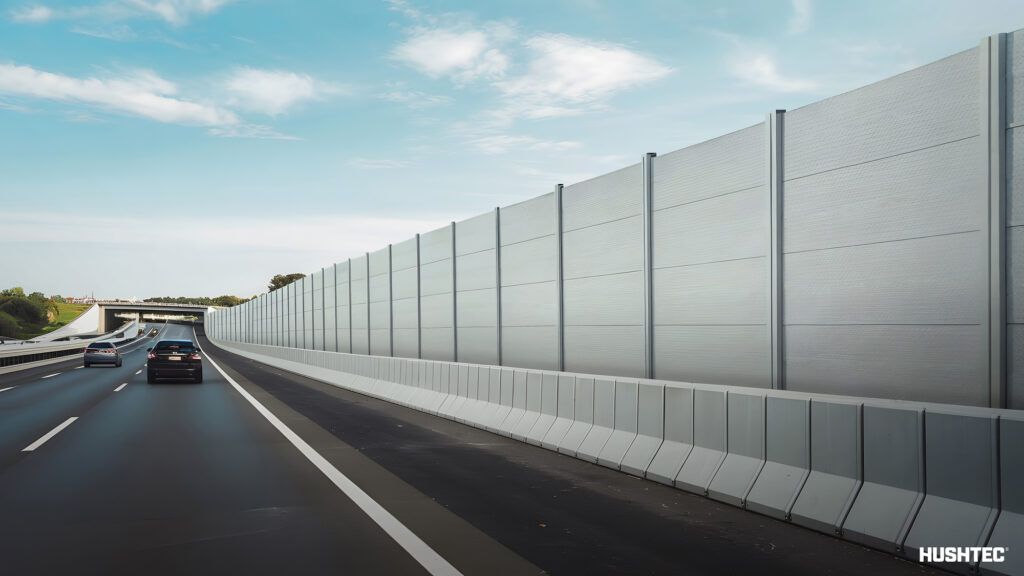
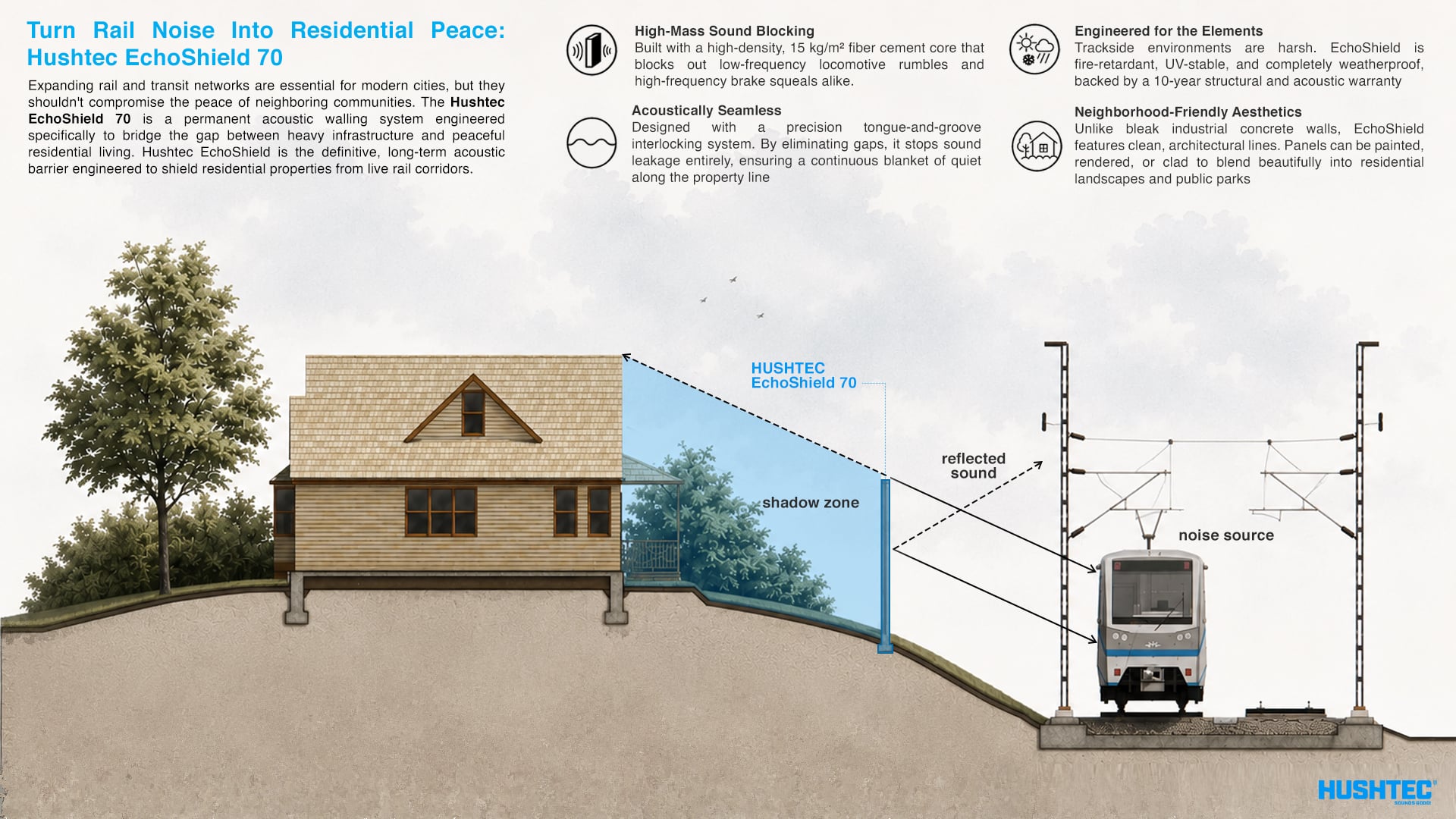
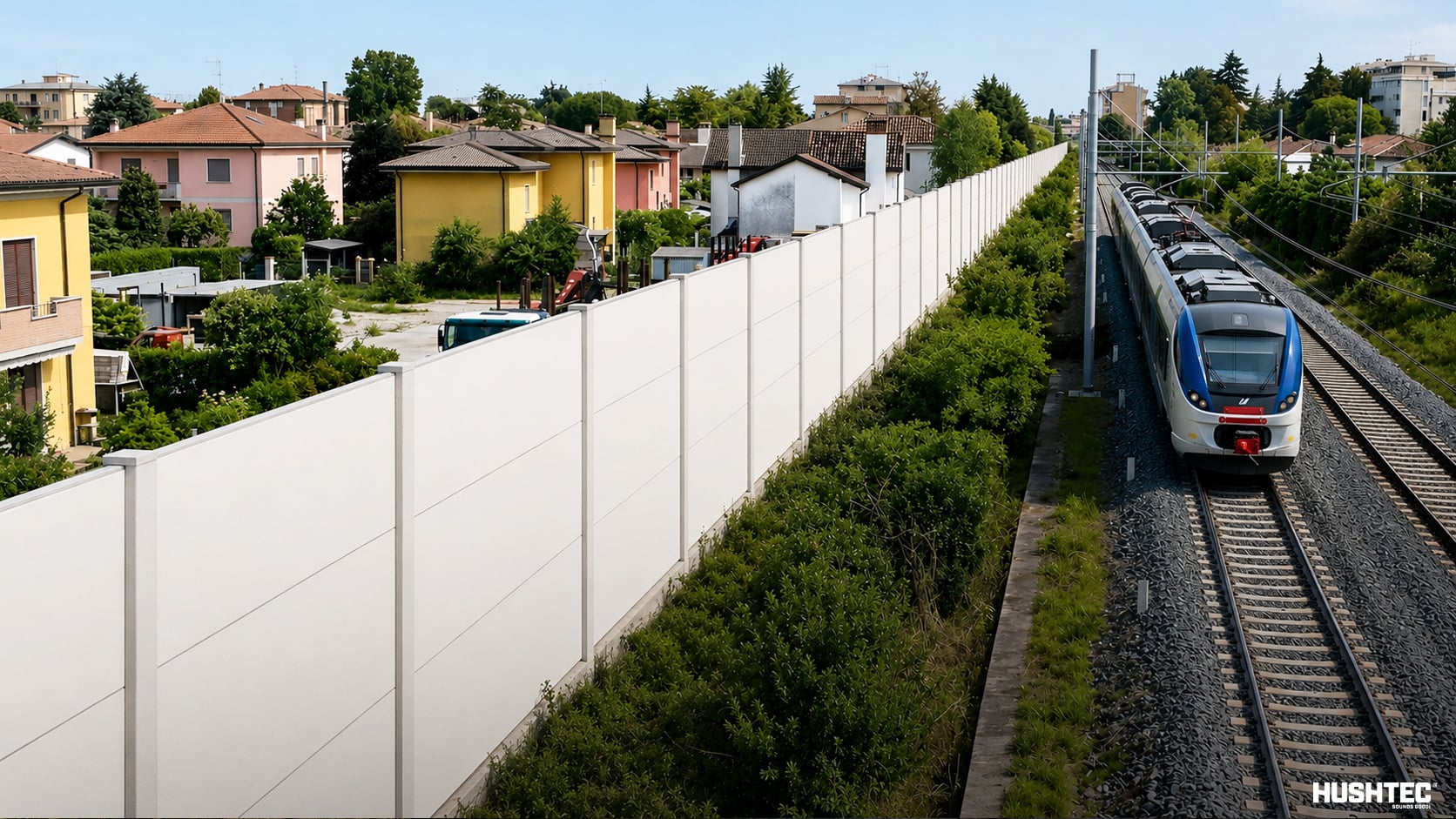
Once a line is running, that changes. Permanent noise walls, like Hushtec’s EchoShield system, are built for continuous-duty exposure along a live corridor, and for the kind of recurring compliance reassessment that EU noise mapping obligations require over the life of the line.
What This Means for Contractors and Infrastructure Managers
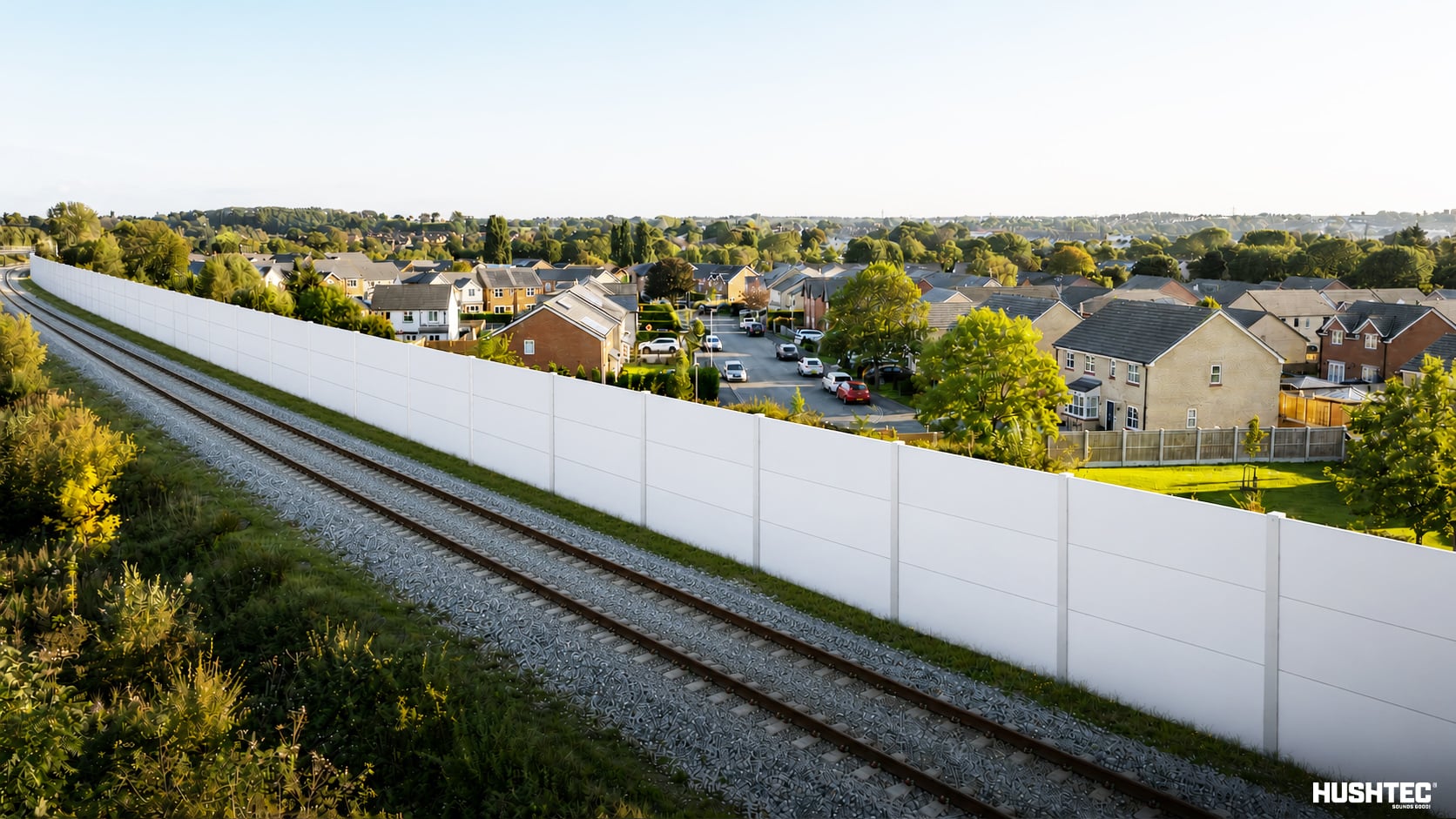
With this much EU-backed rail investment moving through delivery at once, the ability to show a noise mitigation plan that holds up under both construction-phase assessment and long-term operational noise mapping is becoming a genuine differentiator in tender processes, not just a compliance checkbox.
Hushtec supplies temporary and permanent noise barrier systems for infrastructure and transport projects across international markets.
Frequently Asked Question
Q: Is there a single EU-wide rail noise standard?
A: No. Member states apply their own national standards, but all fall under the EU’s environmental noise framework, which requires noise mapping and action plans for major transport infrastructure.
Q: Why is cross-border rail noise compliance more complex?
A: Projects like Rail Baltica must coordinate noise mitigation standards and monitoring across multiple national regulatory frameworks while meeting a single EU-funded delivery timeline.
Q: Why is EU Rail Noise Compliance important for cross-border rail projects?
A: EU Rail Noise Compliance helps ensure construction and operational rail noise are effectively managed across multiple jurisdictions, supporting environmental requirements, regulatory compliance, and community wellbeing throughout the life of the railway.
Plan for EU Rail Noise Compliance from the Start
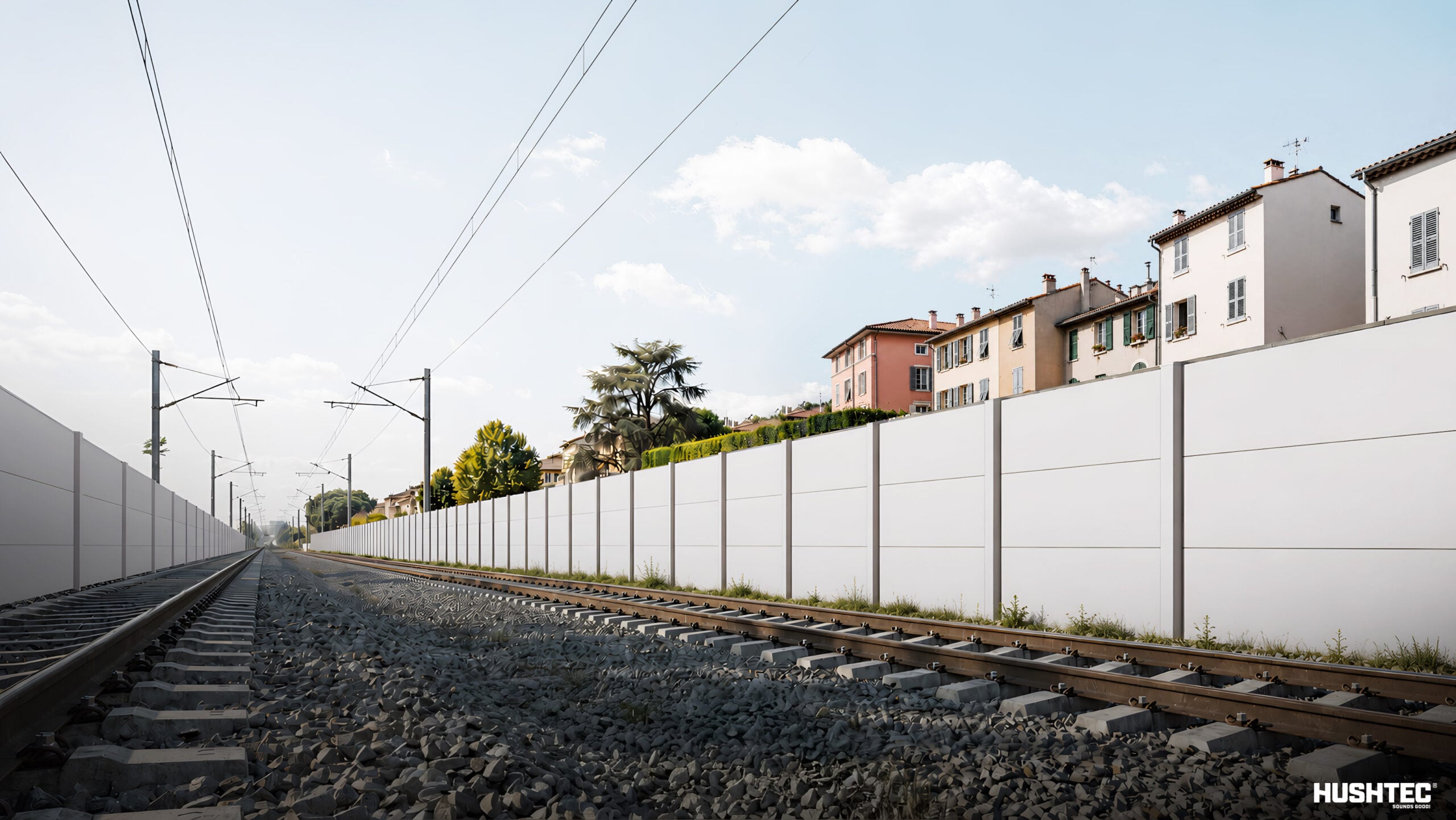
Cross-border rail infrastructure requires noise management strategies that extend well beyond construction. Planning for EU Rail Noise Compliance from the earliest stages helps contractors support regulatory requirements, reduce project risks, and minimise long-term impacts on nearby communities and protected environments.
Working on a rail or transport corridor project in Europe? Talk to Hushtec about EU Rail Noise Compliance solutions designed for both construction and long-term operation.