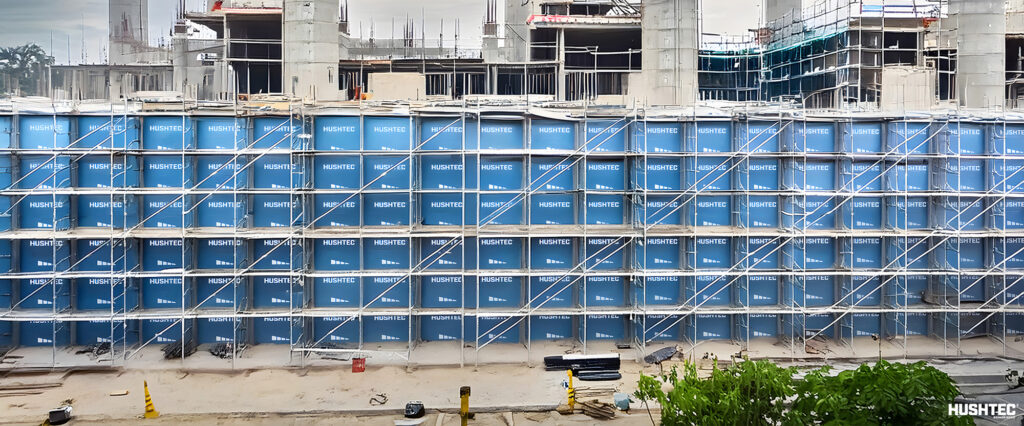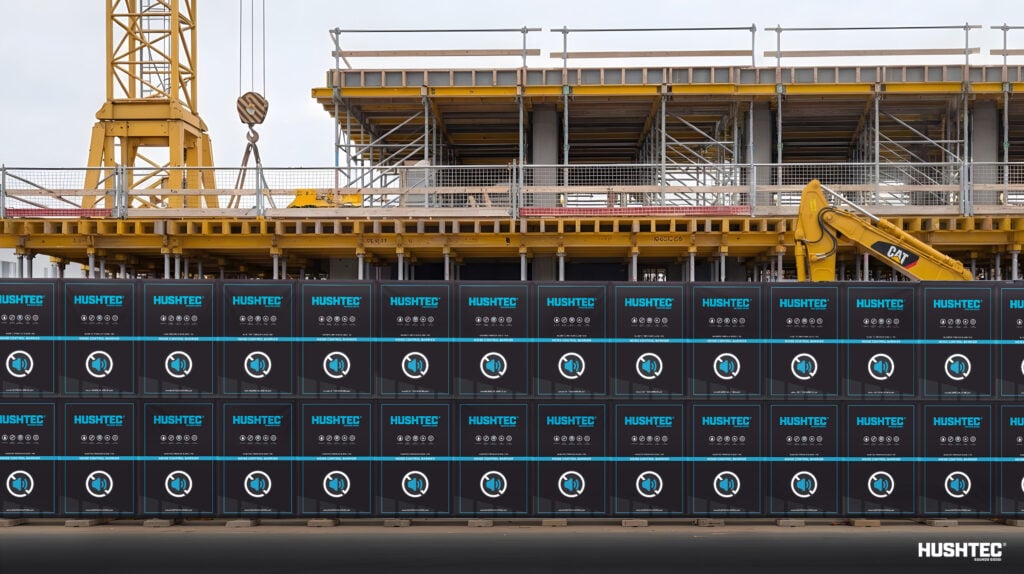



Portable acoustic walls help oil and gas sites reduce noise, maintain compliance, and support extended operating hours in high-demand environments.
Noise Restrictions Often Define Operating Hours
Across oil and gas operations, noise restrictions increasingly influence how long sites can operate and when work can occur. Finding the right oil and gas noise control solutions has become critical for operators facing strict environmental noise requirements.
Projects located near infrastructure, industrial neighbours, environmentally sensitive areas, or residential zones often face strict operational limitations tied directly to these noise limits.
In many cases, these restrictions affect:
- Night-time operations
- Maintenance scheduling
- Temporary works
- Equipment operation hours
- Project continuity
While production demands continue to increase, allowable operating windows often become smaller.
As a result, many operators face a growing challenge:
How do you maintain productivity while remaining compliant?
The Operational Cost of Restricted Working Hours
Noise-related operating limits rarely affect just one activity.
Once operational hours become restricted, the impact often spreads across scheduling, labour allocation, equipment utilisation, and project sequencing.
This can lead to:
- Delayed project milestones
- Reduced daily output
- Increased idle equipment time
- Higher labour and operational costs
- Reduced scheduling flexibility
For temporary operations or high-output project phases, even minor restrictions can create significant commercial impact over time.
Every lost operating hour reduces productive capacity.
Portable Acoustic Containment Changes the Equation
To reduce the impact of operational restrictions, many sites are implementing portable acoustic containment systems around high-noise activities and equipment zones.
Unlike permanent infrastructure, modular acoustic containment systems can be deployed where and when containment is required — allowing sites to respond quickly to operational or compliance pressures.
This flexibility allows operators to:
- Extend operational capability
- Reduce exposure to complaints
- Maintain compliance during temporary works
- Adapt containment layouts as projects evolve
Rather than restricting operations around fixed infrastructure, portable containment supports the operational realities of active worksites.
Supporting Extended Operations in Dynamic Environments
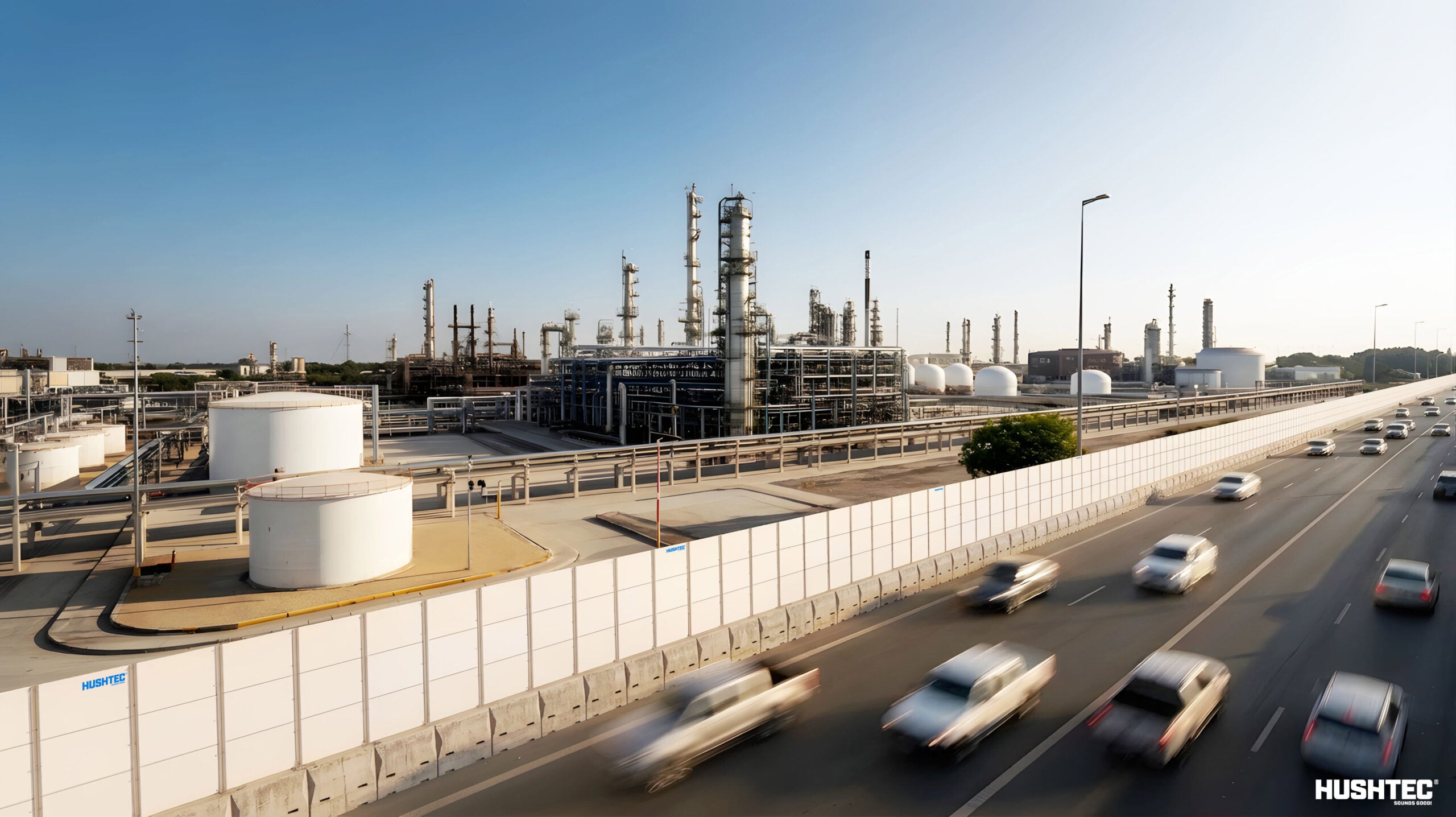
Oil and gas sites are constantly evolving.
Equipment relocations, temporary shutdowns, staged developments, and changing work areas require containment solutions that can move with the project.
Portable acoustic walls containment systems are particularly effective in environments where:
- Site layouts change regularly
- Temporary containment is required
- Equipment locations shift over time
- Permanent infrastructure is impractical
Because these systems can be repositioned and reconfigured as needed, they support ongoing operations without requiring extensive civil works or redesign.
How Hushwall Supports Flexible Noise Control
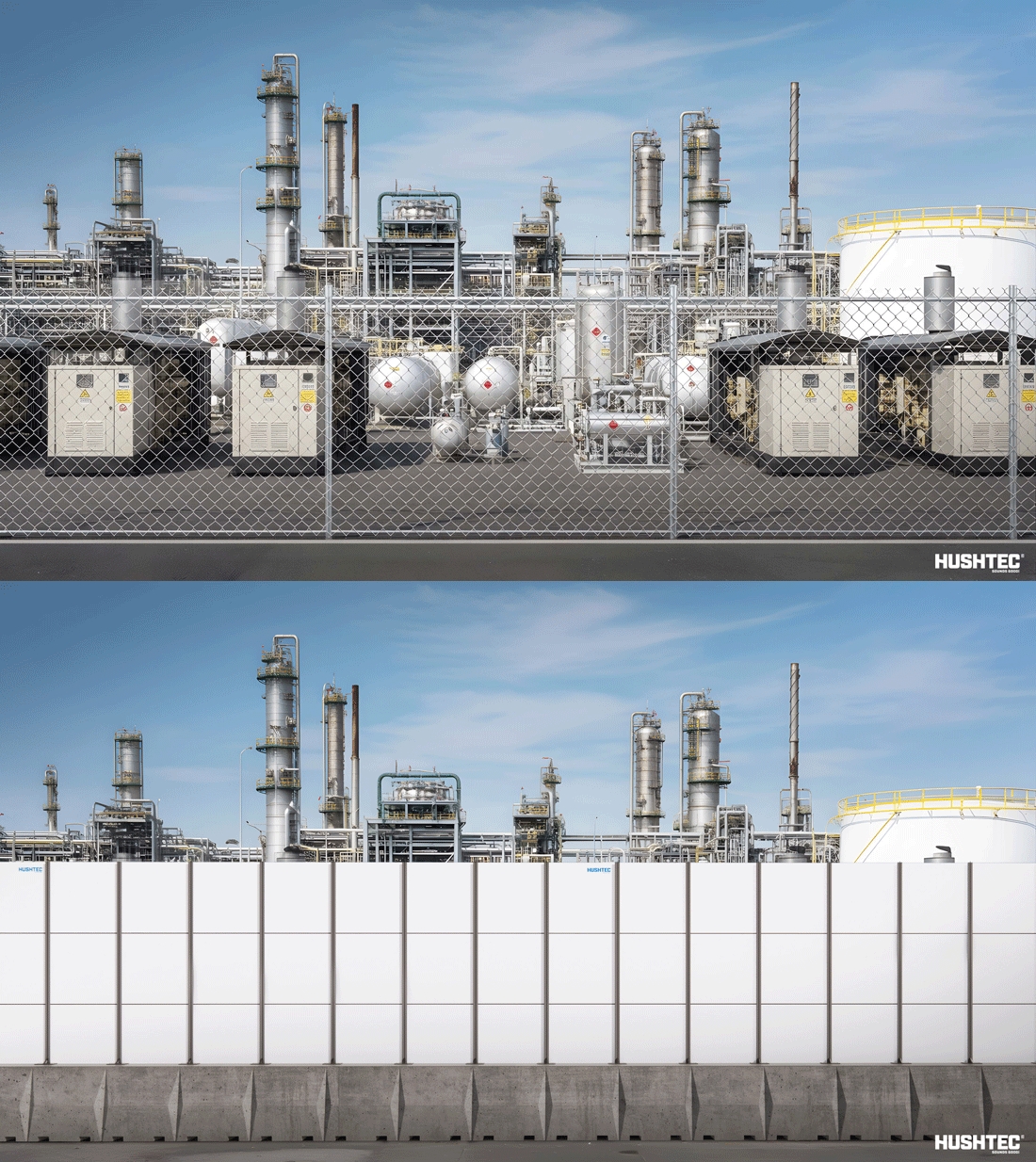
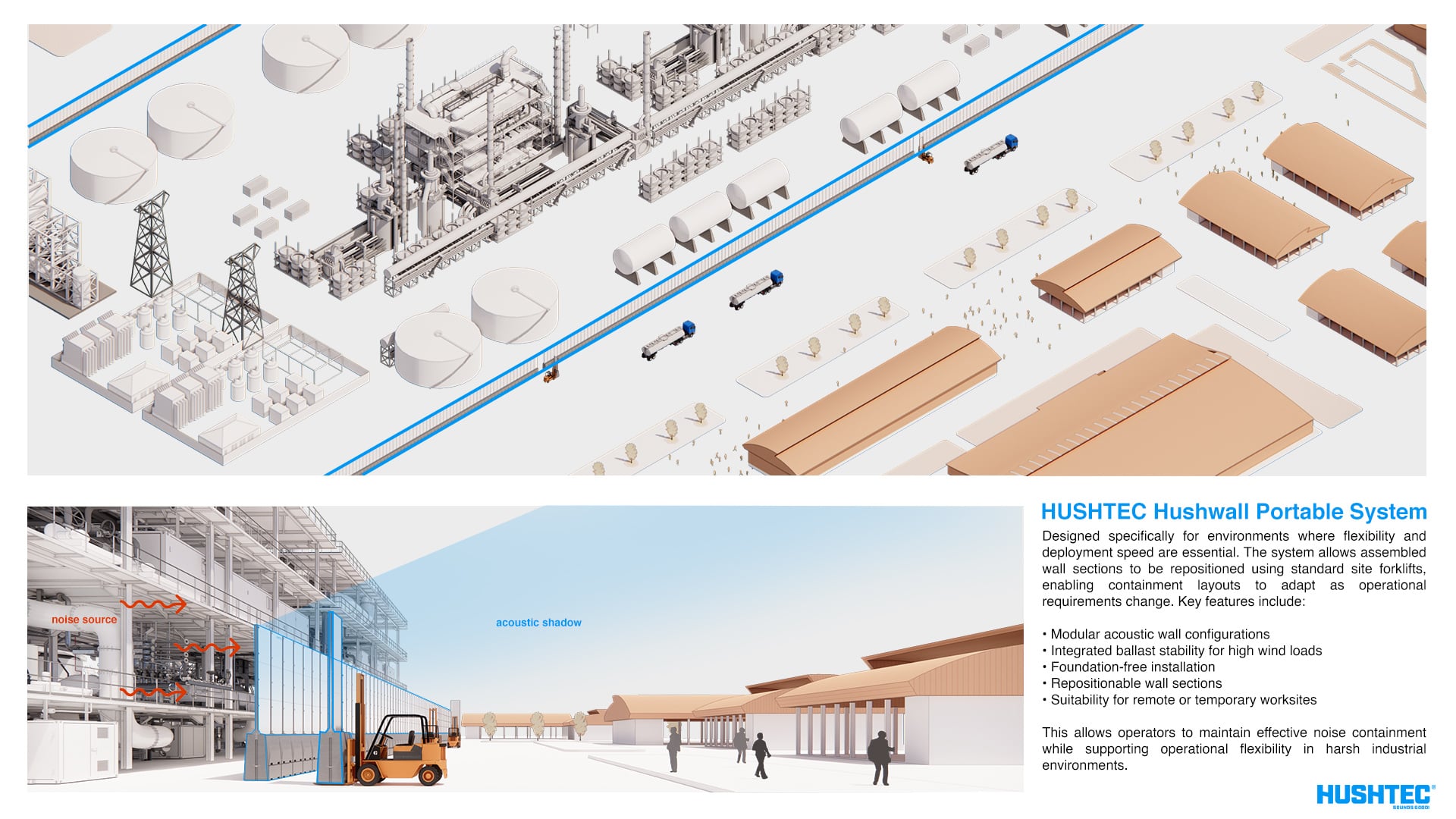
Engineered systems such as the Hushtec Hushwall Portable System are designed specifically for environments where flexibility and deployment speed are essential.
The system allows assembled wall sections to be repositioned using standard site forklifts, enabling containment layouts to adapt as operational requirements change.
Key features include:
- Modular acoustic wall configurations
- Integrated ballast stability for high wind loads
- Foundation-free installation
- Repositionable wall sections
- Suitability for remote or temporary worksites
This allows operators to maintain effective noise containment while supporting operational flexibility in harsh industrial environments.
Typical Oil & Gas Noise Control Applications
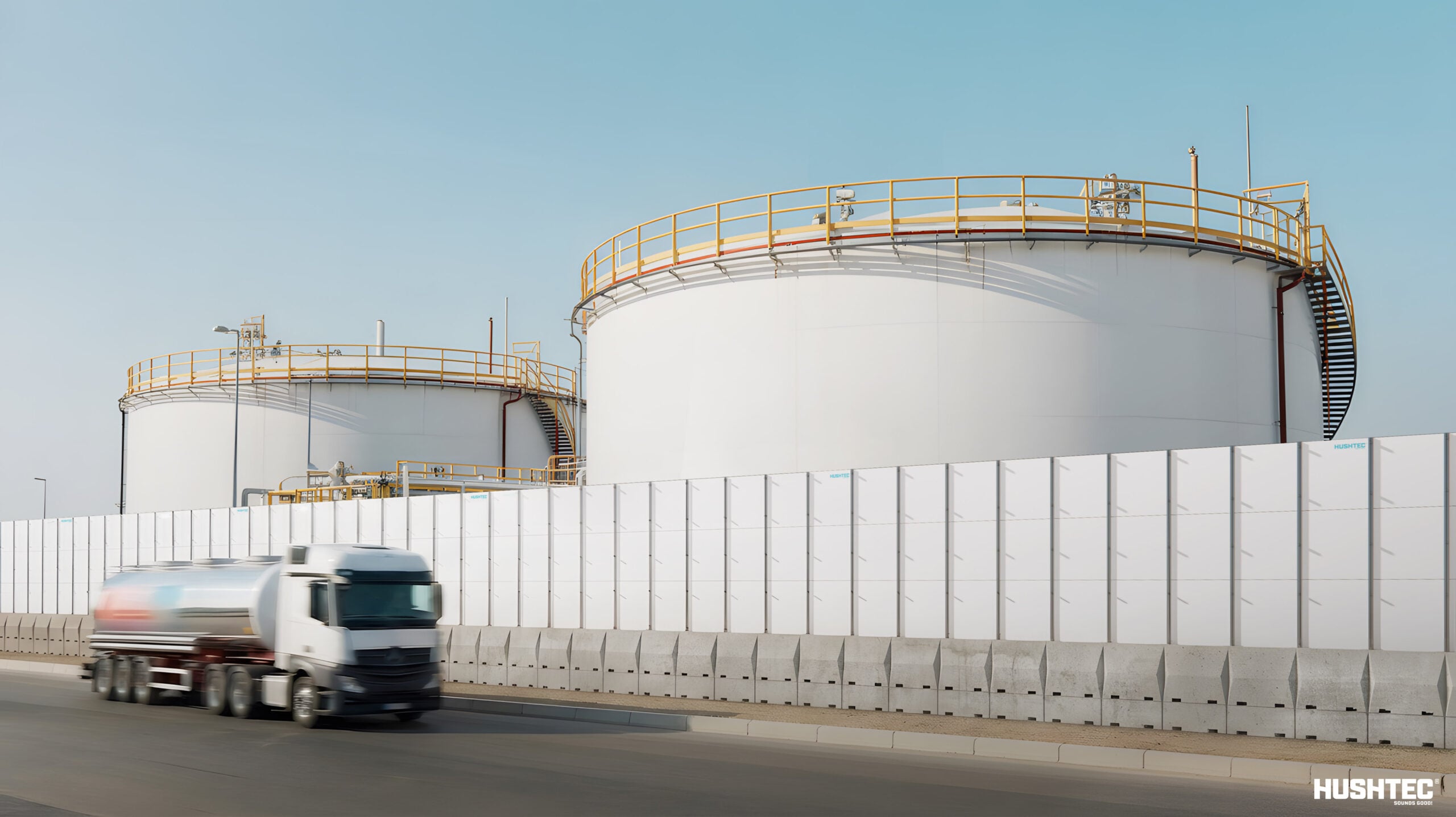
Portable acoustic containment systems are commonly used across a range of oil and gas activities where temporary or adaptable industrial noise compliance solutions are required.
Applications may include:
- Drilling and exploration works
- Compressor and generator containment
- Maintenance shutdowns
- Temporary high-noise activities
- Perimeter acoustic screening
- Equipment isolation zones
Because systems can be reused and repositioned, they provide long-term operational value across multiple project phases.
Compliance Without Compromising Productivity
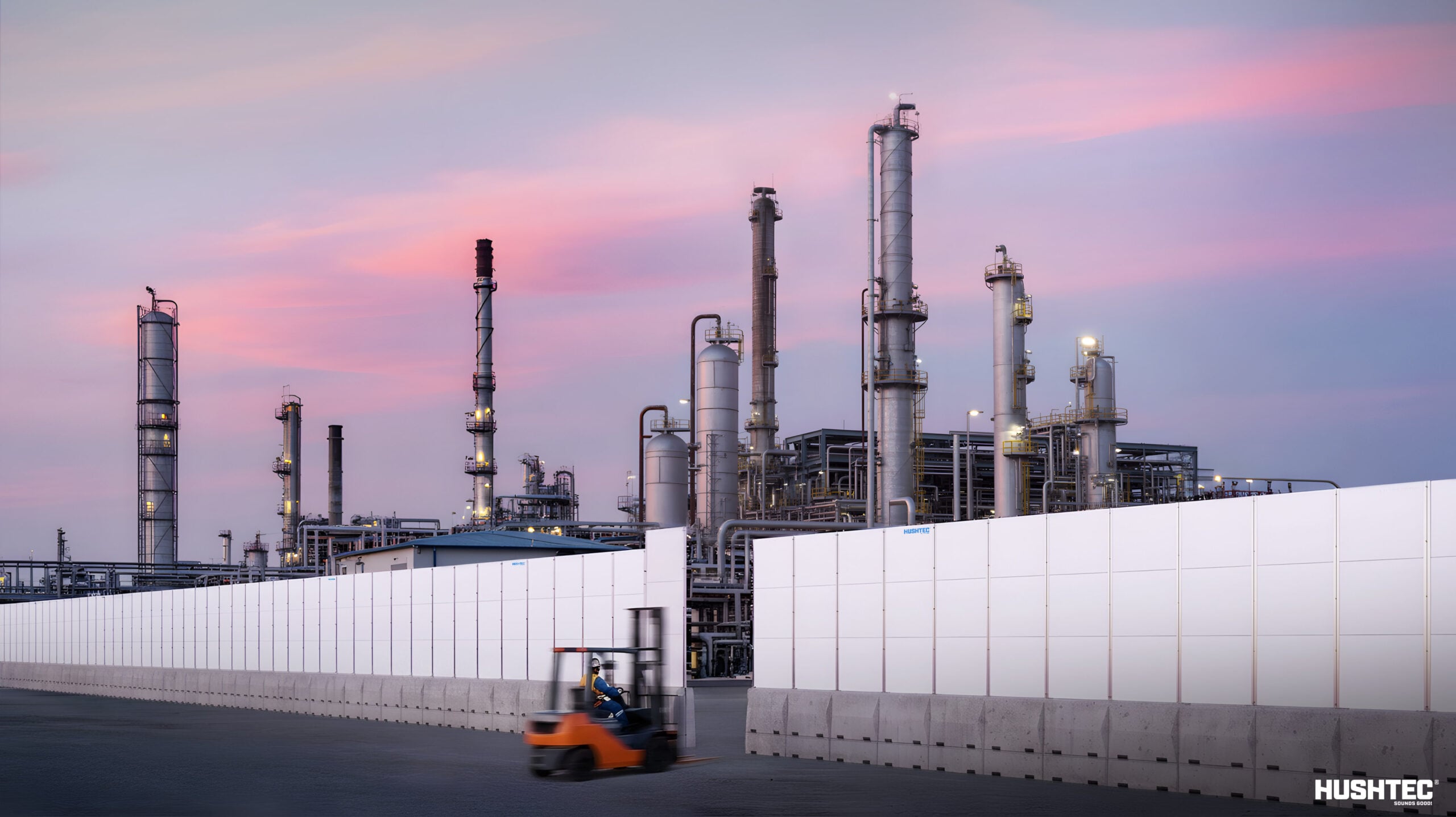
Noise compliance is often viewed as a restriction on operations.
However, when containment systems are designed for flexibility and rapid deployment, compliance can become an operational enabler rather than a limitation.
Portable acoustic containment systems help operators maintain productive work schedules while reducing the risks associated with noise exposure and community impact.
This supports:
- Improved operational continuity
- Reduced shutdown risk
- Greater scheduling confidence
- Better utilisation of working hours
For many projects, maintaining flexibility is the key to maintaining productivity.
The Shift Toward Flexible Operational Infrastructure
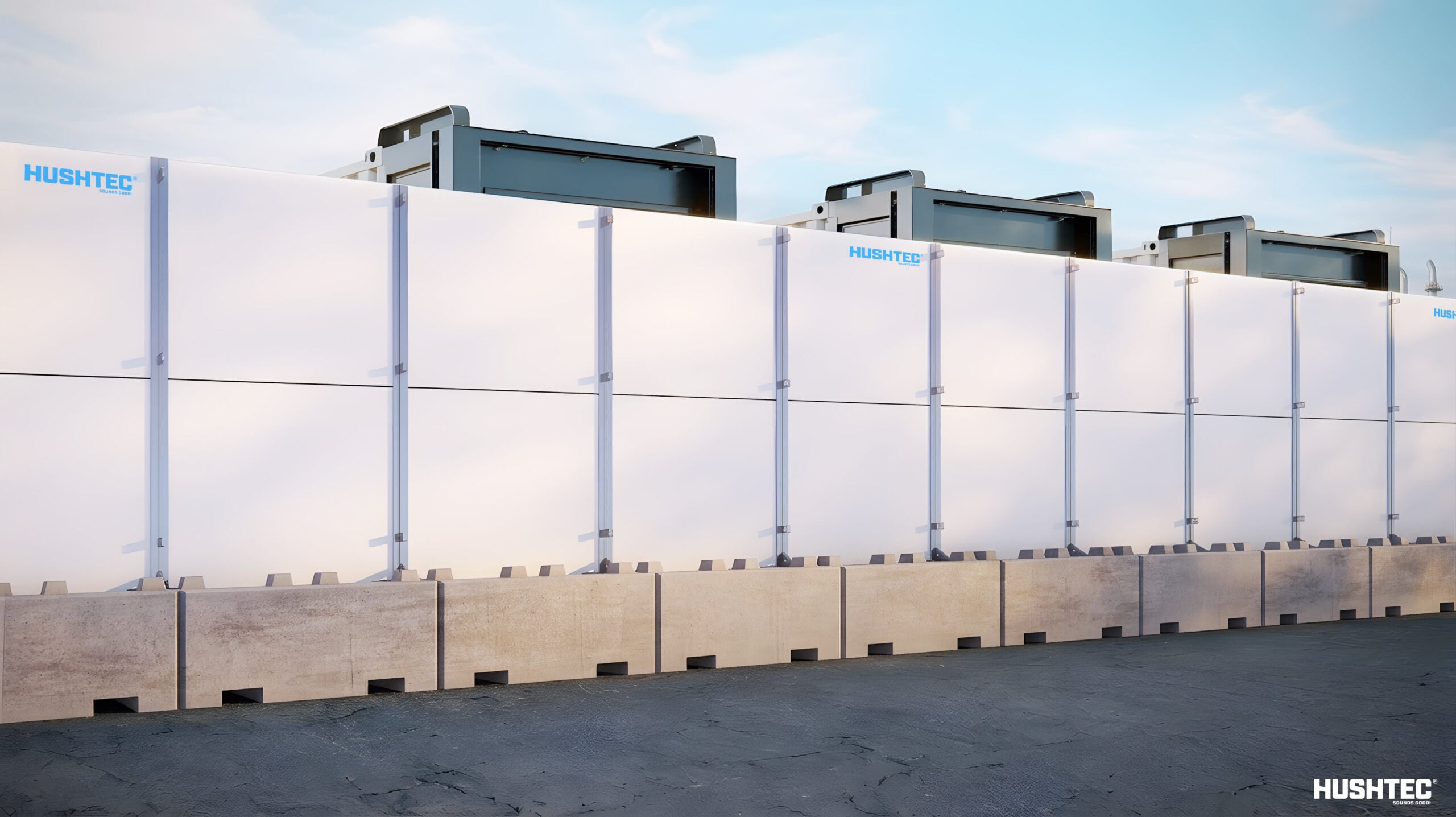
As oil and gas operations continue to evolve, project infrastructure is evolving with them.
Operators increasingly require solutions that can adapt to temporary works, staged developments, and changing operational priorities.
Portable acoustic containment systems are becoming part of this broader shift toward flexible operational infrastructure — solutions designed to support productivity without creating unnecessary delay or rigidity.
In this environment, mobility and adaptability are becoming just as important as acoustic performance.
Final Thoughts: Productivity Depends on Operational Flexibility
Noise restrictions will continue to shape how oil and gas operations are planned and executed.
The difference between delay and productivity often depends on how quickly and effectively sites can adapt to changing operational conditions.
Portable acoustic containment systems provide a practical solution — enabling operators to maintain compliance while supporting extended operations and operational continuity.
Engineered solutions such as the Hushtec Hushwall Portable System demonstrate how adaptable acoustic containment can help modern projects remain productive in increasingly constrained environments.
FAQ: Portable Acoustic Walls in Oil & Gas
How much noise reduction can be expected from a portable acoustic wall?
Engineered temporary noise barriers can provide significant noise reduction performance depending on panel configuration, acoustic core selection, source characteristics, and site conditions.
Options such as STC24 and STC32 acoustic core configurations allow systems to be tailored to different operational requirements and environmental noise targets.
Can portable noise barriers withstand high wind loads on open sites?
Yes. High-quality portable systems are structurally engineered to meet relevant wind loading requirements.
Rather than relying on poured concrete footings, systems such as the Hushwall Portable System utilise integrated ballast systems designed to provide structural stability in exposed industrial environments.
This makes them well suited to remote, open, and high-wind operational areas.
How difficult is it to relocate temporary noise barriers as the project evolves?
Modern systems are designed specifically for rapid deployment and mobility.
Fully assembled wall sections feature integrated forklift-accessible base frames, allowing site crews to reposition containment layouts as equipment locations or operational requirements change.
This flexibility reduces disruption and eliminates the need for permanent civil works.
Do portable acoustic walls help support HSE and environmental noise compliance requirements?
Yes. Acoustic containment systems are widely used as an engineering control to help reduce noise propagation from high-noise industrial activities.
By isolating activities such as drilling, compressor operation, or temporary maintenance works, portable containment systems help support operators in managing environmental noise requirements and reducing operational noise exposure across active worksites.