



Oil & Gas Production Is Increasing — But So Are Operational Pressures
Across global energy markets, demand for oil and gas production continues to rise. Oil and gas noise restrictions now play a critical role in how operators plan expansion and manage site activities. Ongoing geopolitical uncertainty, supply instability, and increasing infrastructure demand are pushing operators to maximise output wherever possible.
Exploration activity is expanding into new regions, infrastructure projects are accelerating, and operators are under pressure to deliver results faster than ever before.
However, while production targets continue to rise, many operations are facing a less visible but highly impactful constraint:
Oil and Gas Noise restrictions.
Across oil and gas projects worldwide — particularly those located near communities, transport infrastructure, or environmentally sensitive zones — noise compliance requirements are becoming stricter and more actively enforced.
These restrictions are no longer occasional considerations.
They are becoming core operational constraints.
The Overlooked Limiter: Oil and Gas Noise Restrictions
Noise restrictions are often introduced during project planning or environmental approvals. While necessary for protecting surrounding communities and environments, these requirements frequently introduce limitations that directly impact how and when work can occur.
Common scenarios include:
- Restrictions on night-time operations
- Limited operating hours during sensitive periods
- Increased monitoring requirements
- Heightened risk of complaints from nearby communities
- Additional permitting delays
For oil and gas operators, these restrictions rarely appear as isolated challenges. Instead, they accumulate over time — affecting scheduling, resource allocation, and ultimately productivity.
What begins as a compliance requirement often evolves into a production limitation.
How Oil and Gas Noise Restrictions Impact Productivity
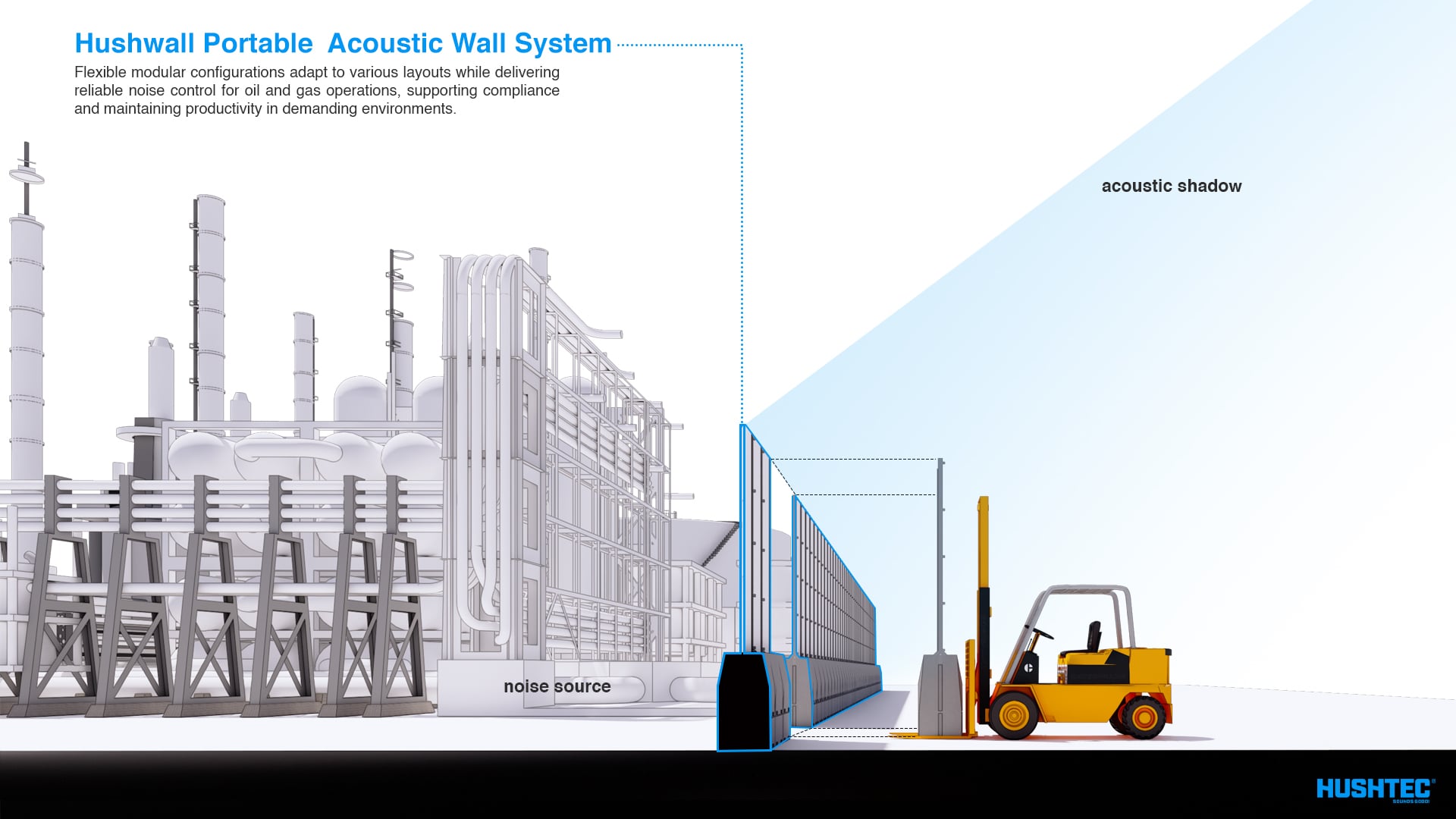
Every hour that operations are restricted due to noise limits represents more than just lost time — it represents lost opportunity.
Noise restrictions can affect:
Operating Hours
Many sites are forced to reduce or stagger operations to remain within allowable noise limits. This reduces total production time and can slow project milestones.
Project Approvals
Projects that cannot demonstrate adequate noise control may face approval delays or additional regulatory scrutiny.
Community Risk
Operations located near populated areas face increased exposure to complaints, which can trigger inspections, operational limitations, or reputational risk.
Financial Performance
Reduced operating hours, delayed approvals, and operational disruptions all contribute to increased costs and reduced profitability.
Noise is not simply an environmental issue — it is a commercial issue.
Why Traditional Noise Control Approaches Often Fall Short
Historically, many noise control solutions relied on permanent infrastructure or fixed installations. While effective in certain environments, these approaches often introduce their own operational challenges.
Permanent structures typically require:
- Engineering design approvals
- Civil works and foundations
- Extended installation timelines
- Reduced flexibility once installed
In dynamic oil and gas environments, where site layouts frequently change and operational requirements evolve, permanent solutions can slow progress rather than support it.
Modern operations require solutions that move at the same pace as the project.
A Shift Toward Portable Acoustic Infrastructure
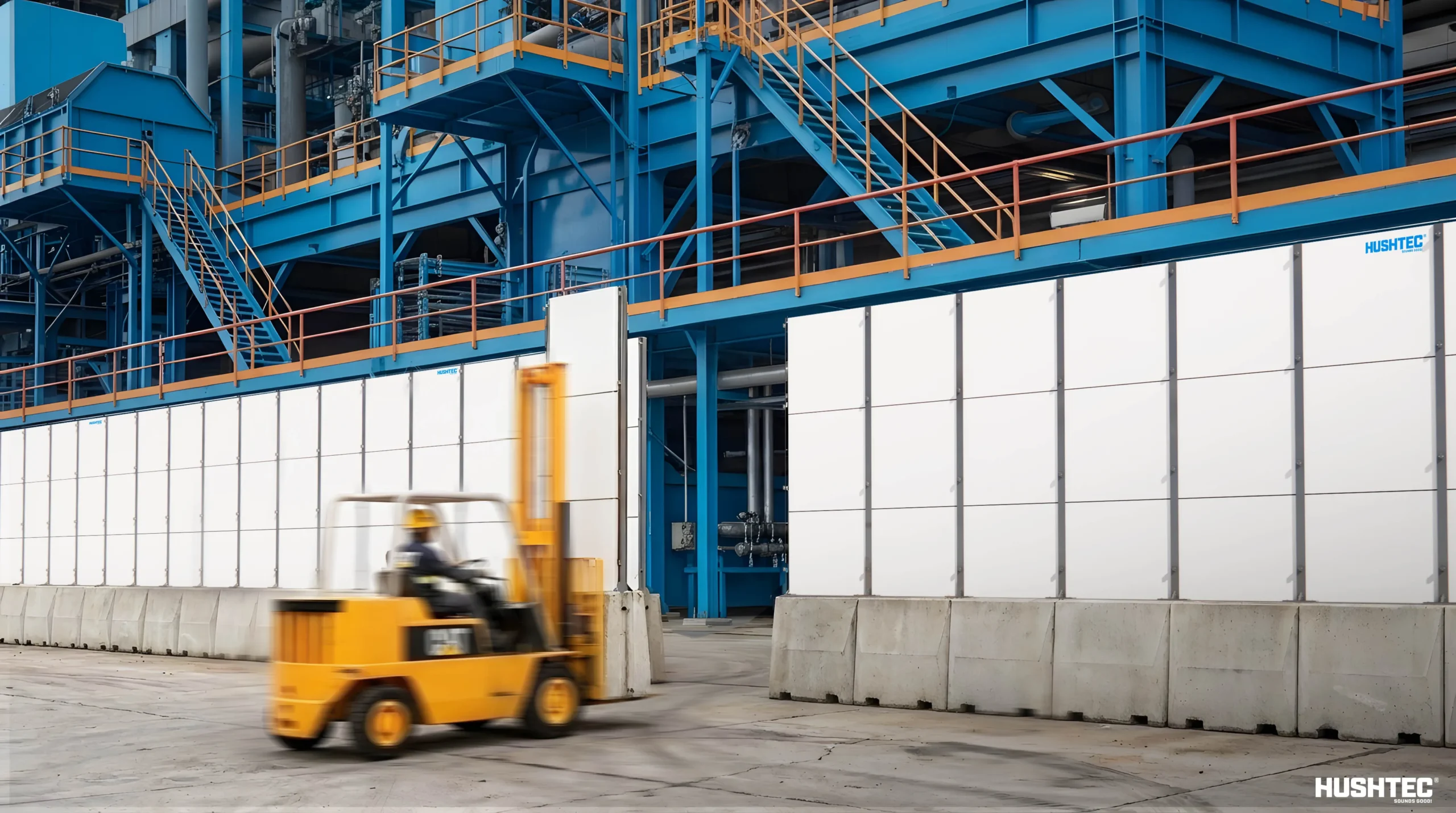
To address growing noise challenges without slowing production, many operators are shifting toward portable acoustic containment systems.
These systems are designed to be:
- Rapidly deployed
- Easily relocated
- Adaptable to changing site conditions
- Suitable for temporary or evolving environments
Unlike permanent structures, portable acoustic systems provide flexibility — allowing teams to respond quickly to operational and compliance requirements.
This shift reflects a broader trend in oil and gas operations:
Infrastructure must support productivity — not restrict it.
Introducing Portable Acoustic Wall Systems for Oil & Gas
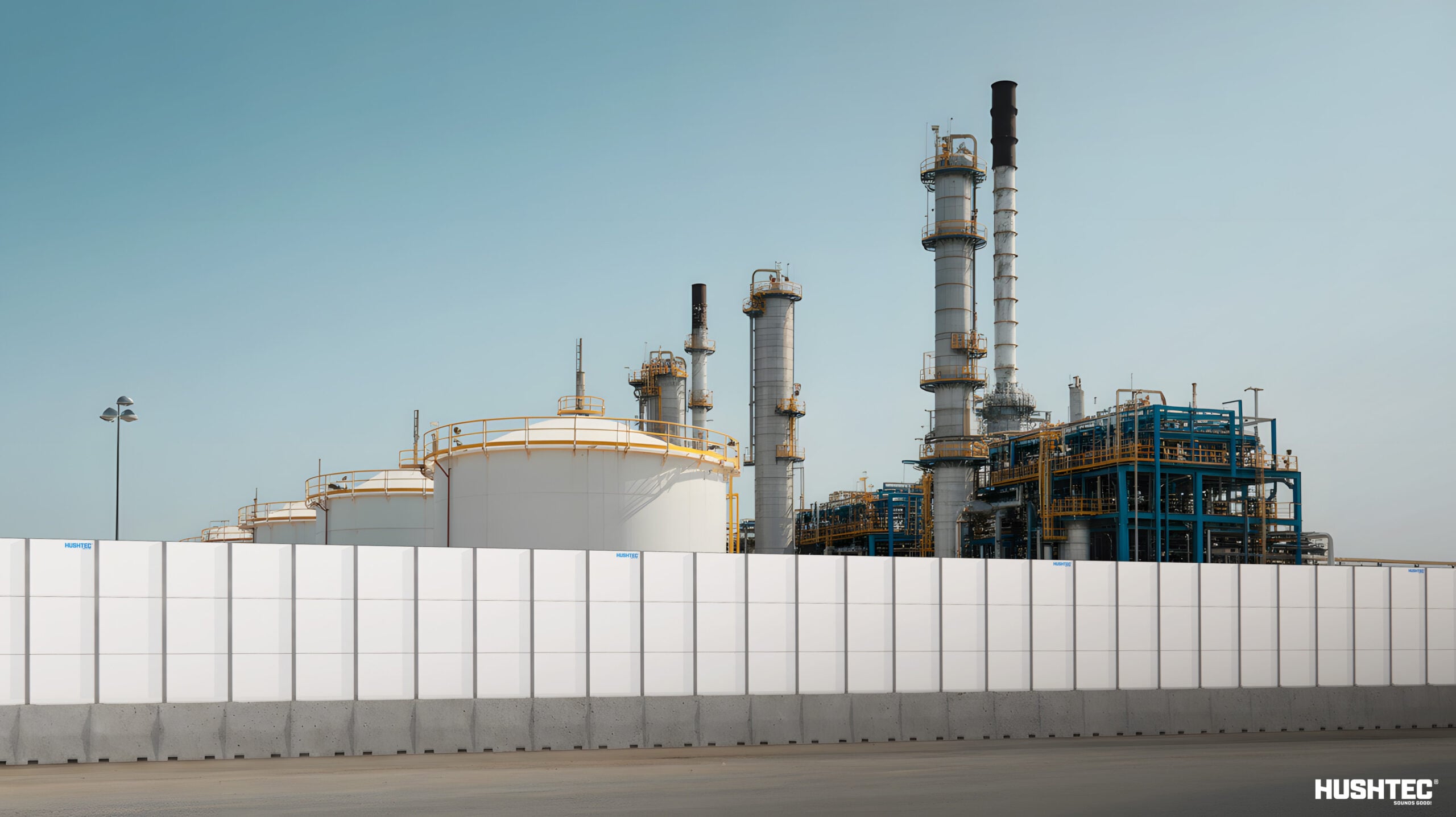
Modern portable acoustic wall systems, such as the Hushtec Hushwall Portable System, are engineered specifically to address noise restrictions in demanding environments.
Designed for deployment using standard site equipment such as forklifts, these systems can be installed quickly without the need for permanent foundations.
Key advantages include:
- Rapid deployment across active work zones
- Modular configurations to suit different layouts
- Integrated ballast for wind stability
- Adaptability for remote or harsh environments
- Reusability across multiple project stages
These capabilities allow operators to maintain compliance while continuing to meet production targets.
The Future of Oil & Gas Operations Requires Flexibility
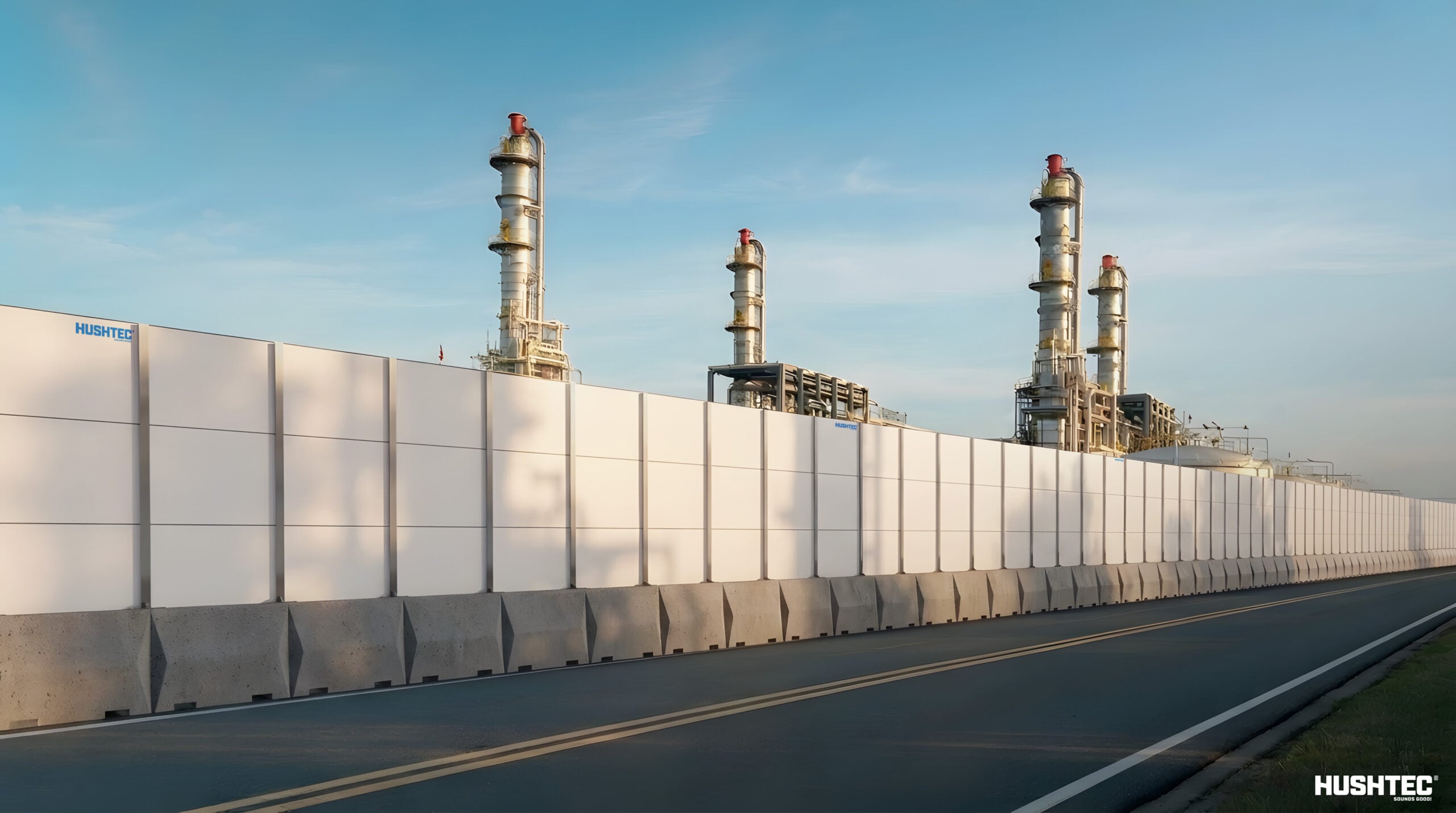
As the industry continues to expand into new regions and operate in closer proximity to infrastructure and communities, noise management will play an increasingly important role in project success.
Operators who treat noise as a compliance checkbox risk delays and lost productivity.
Those who treat noise as an operational variable gain a competitive advantage.
Portable acoustic containment is becoming a critical component of modern project planning — enabling operations to continue safely, efficiently, and compliantly.
Final Thoughts: Noise Should Not Limit Productivity
Oil and gas operations are expanding globally — but noise restrictions remain one of the most overlooked barriers to productivity.
By adopting flexible, portable acoustic systems, operators can reduce risk, extend operating capability, and maintain compliance without sacrificing output.
In modern energy projects, productivity is not just about equipment and manpower.
It’s about controlling the conditions that limit performance — and noise is one of the most critical of those conditions.