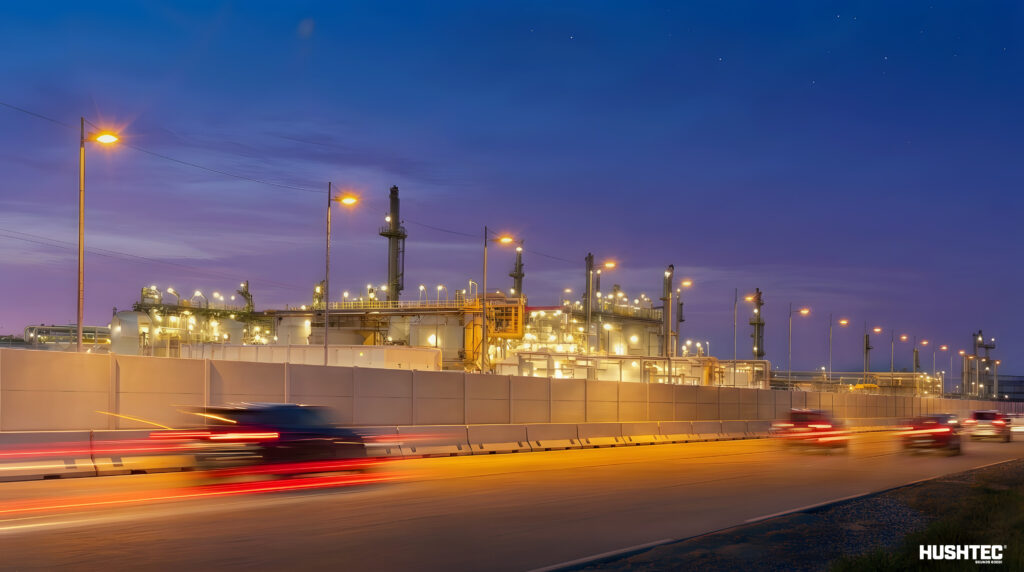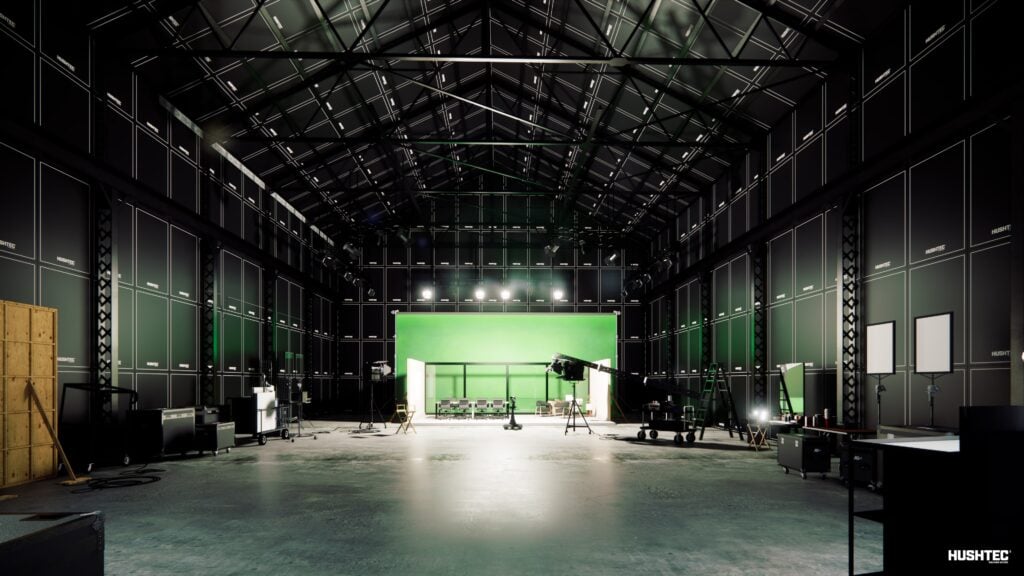



Premium acoustic barriers are essential as major construction and infrastructure projects become larger, more complex, and increasingly urban. With projects operating closer to hospitals, residential zones, transport corridors, and public infrastructure, noise control is no longer optional — it is a compliance-critical engineering requirement.
For high-noise operations such as demolition, piling, rail works, and major civil infrastructure upgrades, premium acoustic barrier systems provide the performance needed to meet strict environmental and operational standards.
Why Noise Control Is Critical in Infrastructure Development
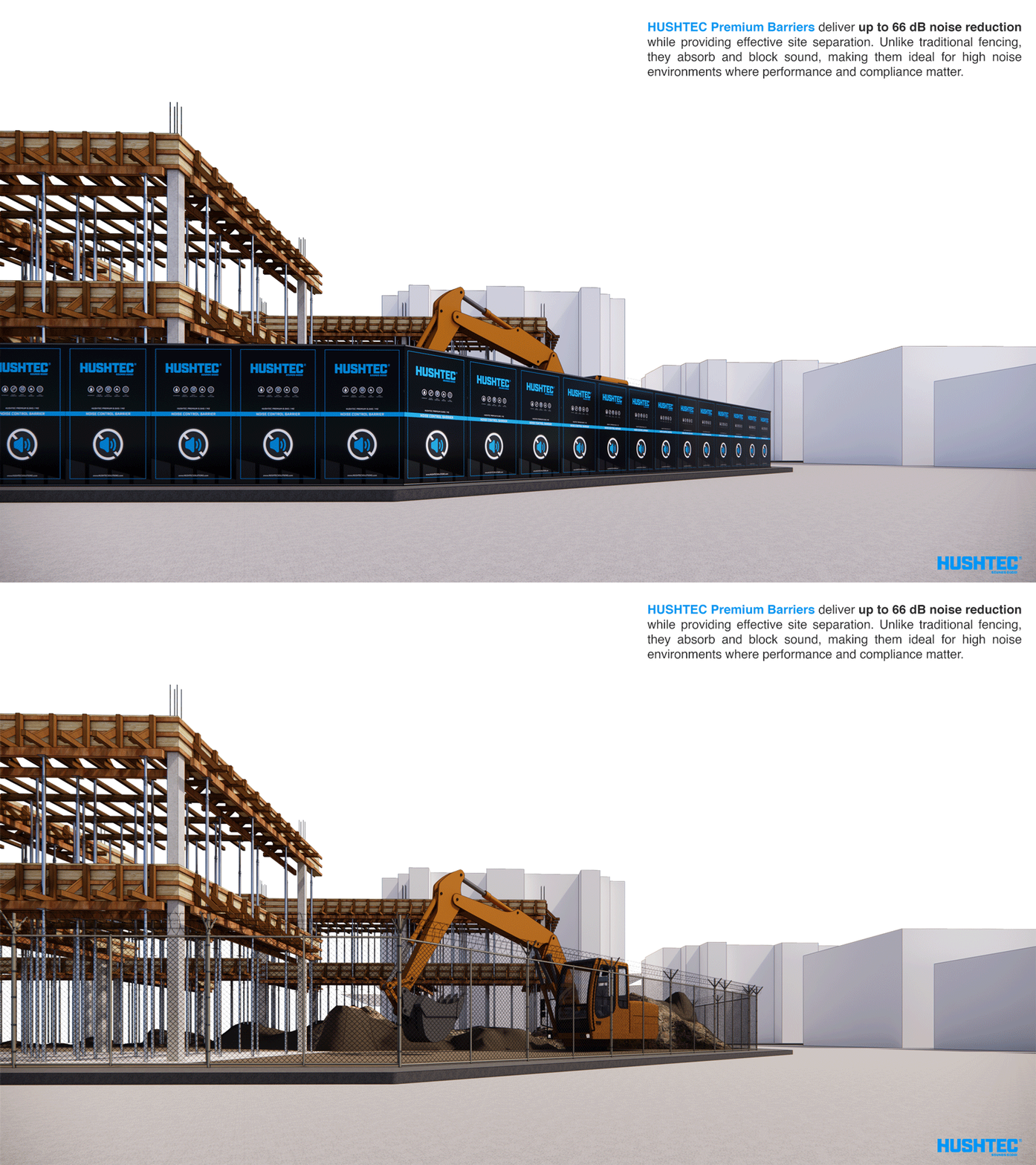
Infrastructure expansion rarely occurs in isolation. Most major works now occur in densely populated urban or mixed-use environments, where noise limits are tightly regulated.
Typical high-risk noise sources include:
- Hydraulic breakers and demolition equipment
- Concrete cutting and drilling operations
- Rail and transport corridor works
- Generator compounds
- Utility installations near hospitals or residential zones
Uncontrolled noise can result in:
- Work stoppages
- Regulatory fines
- Community complaints
- Restricted working hours
- Delays in project delivery
Temporary acoustic barriers are widely used because they reduce noise impact without requiring permanent structures, allowing projects to maintain flexibility and compliance simultaneously.
What Defines a Premium Acoustic Barriers System?
Not all temporary noise barriers deliver the same performance.
Premium-grade systems combine both absorption and blocking technologies, creating layered acoustic performance suited to extreme noise environments.
High-performance systems typically include:
Dual-Layer Acoustic Technology
Premium acoustic barriers integrate:
- High-density acoustic absorption cores
- Mass-loaded vinyl (MLV) layers
- Durable outer weatherproof materials
This combination enables both sound absorption and sound blocking, allowing systems to control high-energy noise sources effectively.
Premium barrier systems can achieve up to 66 dB noise reduction, making them suitable for high-intensity works such as demolition and infrastructure upgrades.
Key Technical Performance Characteristics of Premium Acoustic Barriers
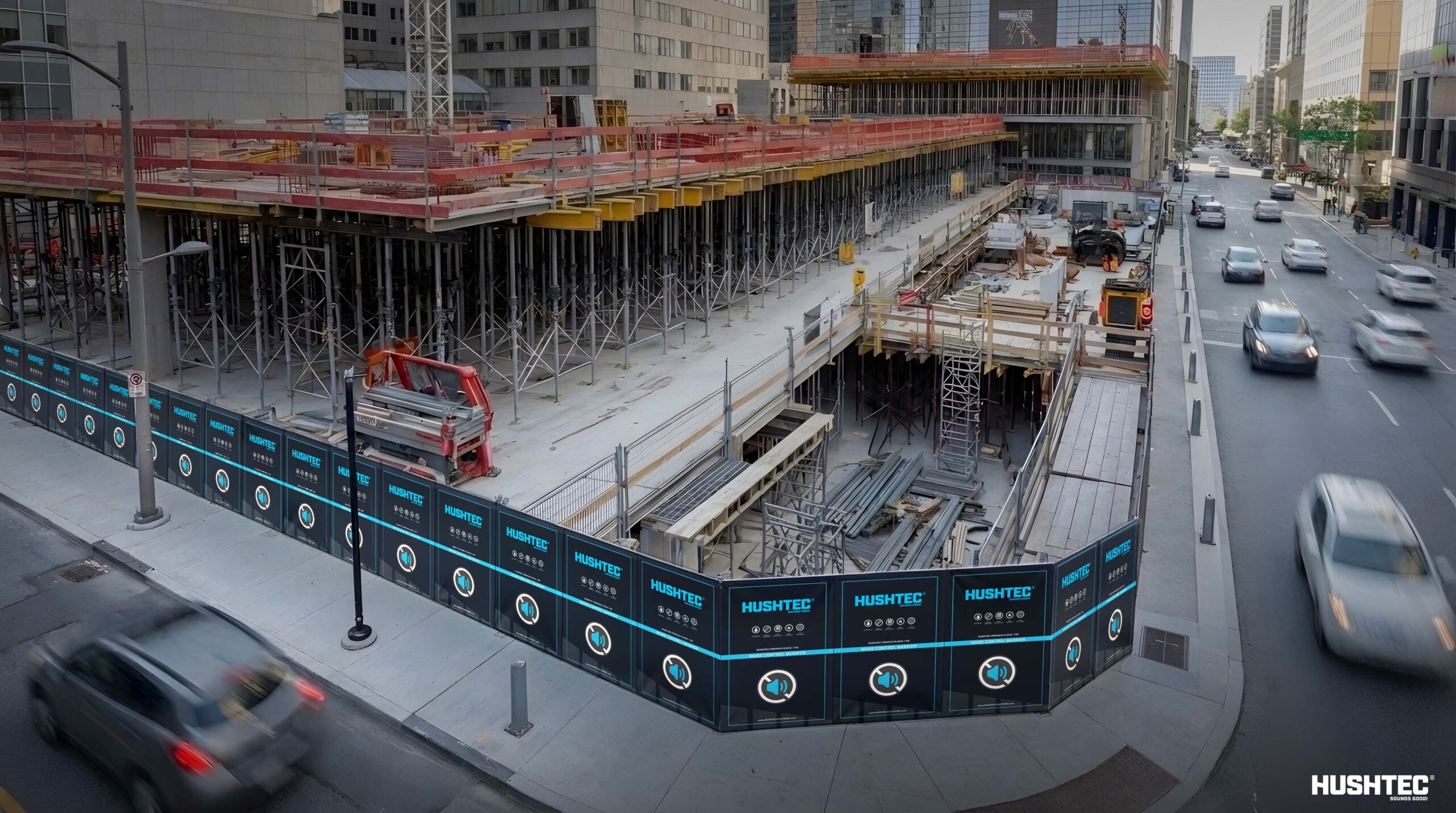
When specifying acoustic barriers for major infrastructure works, engineers typically evaluate:
Sound Absorption Performance
Measured as Noise Reduction Coefficient (NRC)
Typical premium barrier performance:
- NRC up to 0.9
- Up to 90% sound absorption
- Effective broadband noise control
High NRC ratings are particularly important for:
- Continuous machinery noise
- Generator operation
- Concrete cutting
- Fabrication works
Sound Blocking Performance
Measured using:
- STC (Sound Transmission Class)
- Barrier mass density
Premium systems typically offer:
- Standard STC 32 performance
- Optional higher-density configurations
- Increased sound isolation capability
Higher mass densities allow premium barriers to block low-frequency noise, which is common in heavy construction equipment.
Mass Loaded Vinyl (MLV) Integration
One of the defining features of premium barrier technology is mass-loaded vinyl (MLV).
Typical configurations include:
- 6.5 kg/m² (standard)
- 8–14 kg/m² (enhanced options)
Higher-density MLV layers deliver:
- Greater transmission loss
- Improved containment performance
- Reduced noise propagation beyond site boundaries
This layered acoustic design allows premium systems to perform reliably in high-noise demolition and civil infrastructure environments.
High-Noise Demolition Works
Demolition often generates:
- Impulse noise
- High-energy impact sound
- Continuous mechanical noise
Premium acoustic barriers are particularly effective when used to:
- Enclose demolition zones
- Shield surrounding infrastructure
- Maintain safe working hours
Modular Installation Advantages for Construction Projects
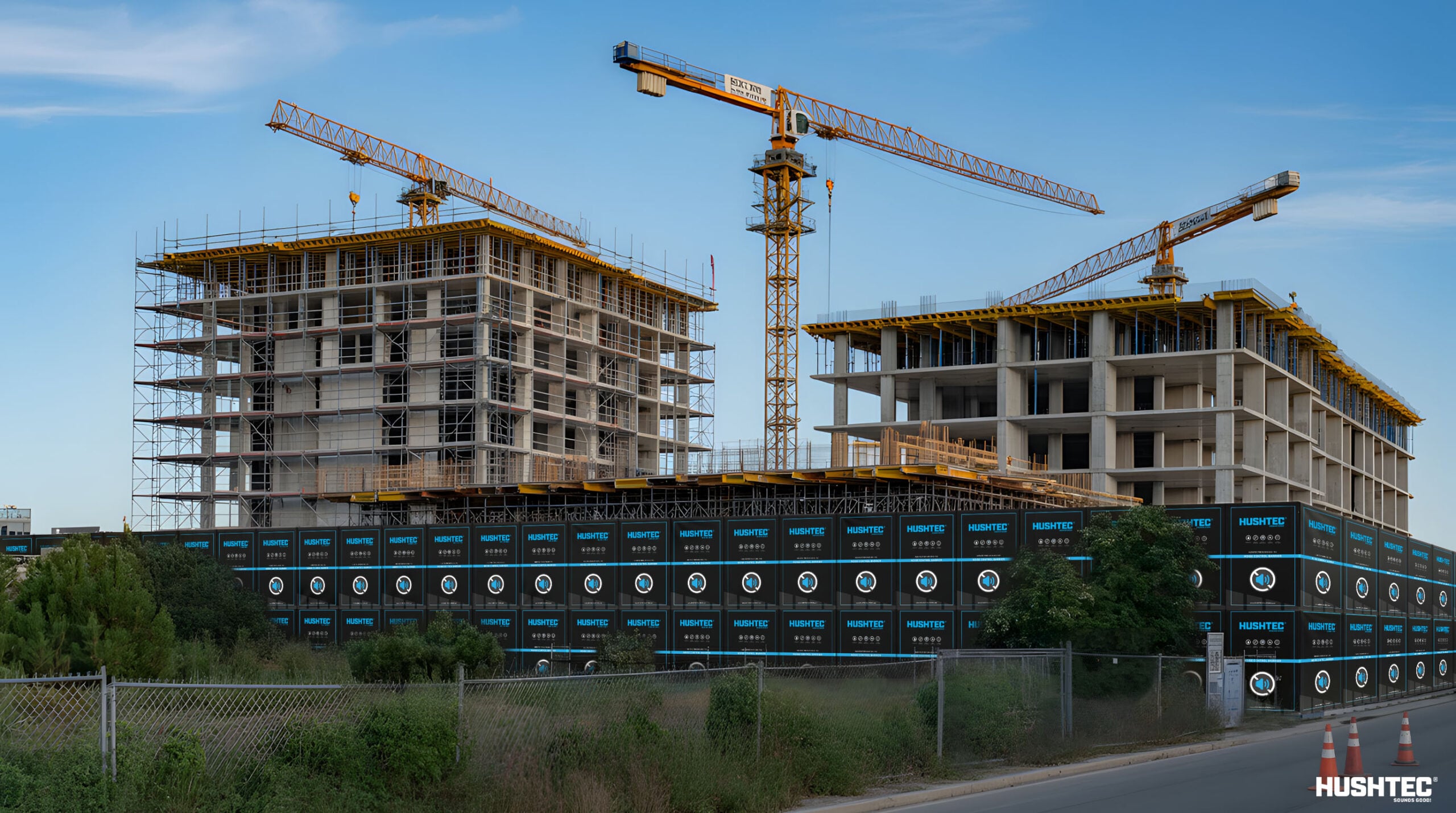
Modern infrastructure sites demand solutions that are:
- Fast to install
- Flexible
- Durable
- Scalable
Premium barrier systems typically feature:
- Hook-and-loop connection systems
- Stainless steel mounting points
- Modular panel design
- Weatherproof construction
This allows crews to:
- Install barriers quickly
- Relocate them as site conditions change
- Maintain consistent acoustic coverage
Weatherproof construction enables operation across –40°C to +70°C, supporting year-round deployment across diverse environments.
Sustainability Considerations in Modern Infrastructure
Environmental responsibility is now embedded into infrastructure procurement standards.
Premium acoustic barriers are increasingly designed using:
- Recyclable materials
- Durable, reusable components
- Long-life acoustic cores
Some systems use up to 90% recyclable materials, reducing environmental impact across multiple project cycles.
Layered Acoustic Strategies for Complex Projects
For major infrastructure works, single-layer noise control is rarely sufficient.
Instead, engineers deploy layered solutions such as:
- Premium acoustic barriers
- Equipment shrouds
- Generator enclosures
- Acoustic tents
- Structural shielding
Layered acoustic strategies have been shown to deliver significant reductions — exceeding compliance thresholds in complex sites when combined with engineered layouts.
When to Specify Premium Acoustic Barriers Instead of Standard Systems
Premium acoustic barriers are typically specified when:
- Noise limits are extremely strict
- Sensitive receptors are nearby
- Equipment generates high-impact noise
- Extended working hours are required
- Regulatory risk is high
They are especially valuable in:
- Tier 1 infrastructure projects
- Government-funded civil works
- Urban redevelopment zones
- Transport and utilities upgrades
The Future of Infrastructure Noise Management
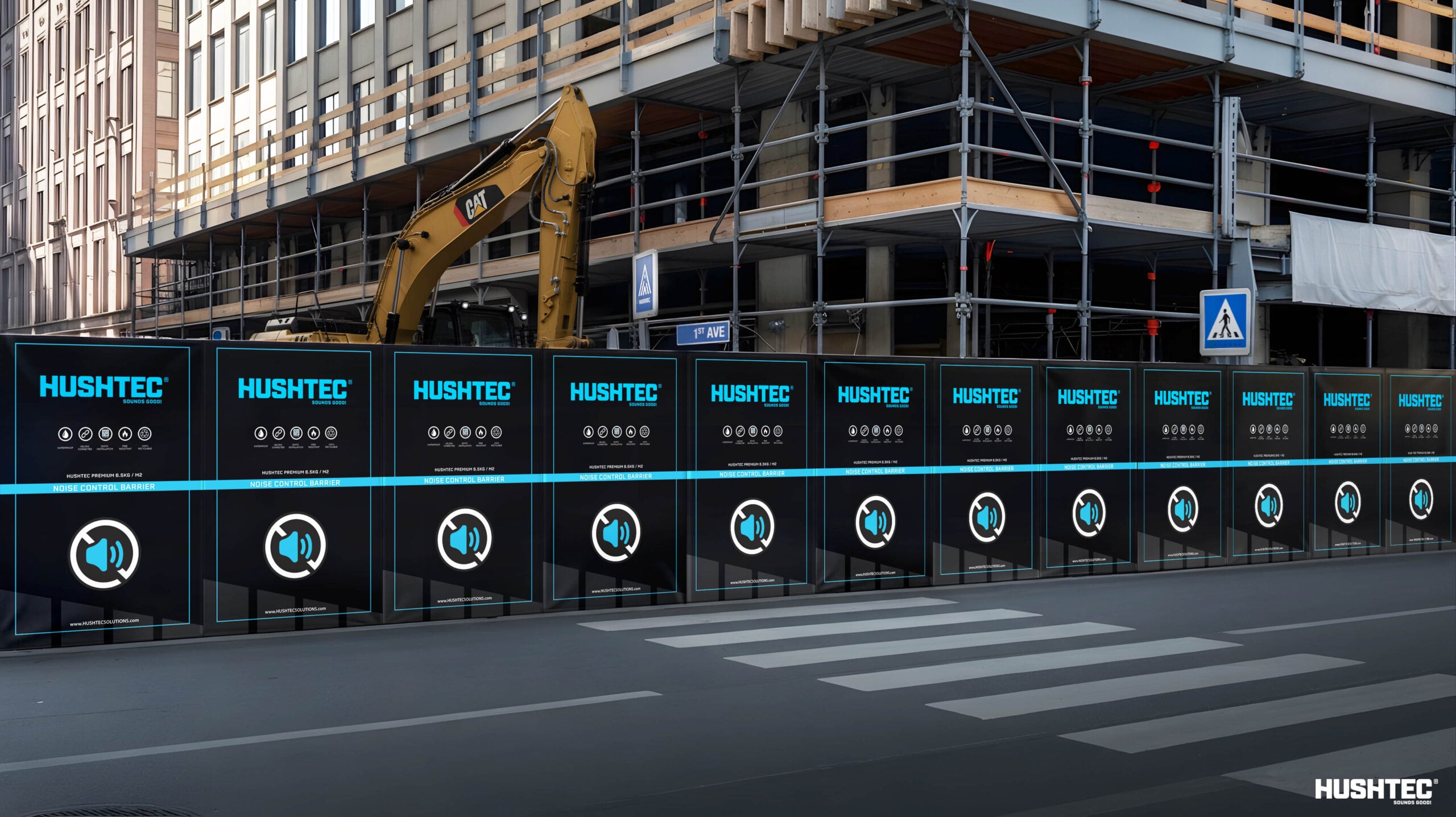
As cities grow and infrastructure expands, noise control is becoming a fundamental engineering requirement rather than a reactive solution.
Premium acoustic barriers are positioned to play a central role in:
- Compliance-driven construction
- Urban infrastructure development
- High-density project environments
- Sustainable site management
For project managers and engineers, specifying high-performance acoustic systems early in the design phase reduces risk, improves community relations, and supports uninterrupted project delivery.