


Urban rail and metro construction is unlike any other infrastructure sector. Work windows are constrained. Neighbours are metres away. And the noise sources — rail grinding equipment, ballast tampers, piling rigs, diesel locomotives on possession, and elevated trackwork — cannot be silenced at source.
Australia’s rail infrastructure investment has never been higher. Sydney Metro, Melbourne Metro Tunnel, and Cross River Rail in Queensland are all running concurrent works across urban corridors. Every one of these projects operates under Environment Protection Licence (EPL) conditions or equivalent state instruments that impose strict night-time and weekend noise limits.
Contractors failing those limits face work stoppages, compensation claims, and reputational damage. This article covers what is driving compliance pressure on Australian rail sites, where the noise is coming from, and how the Portable Hushwall and complementary systems are being deployed to protect project programmes.
Why Australian rail and metro projects face a unique noise compliance challenge
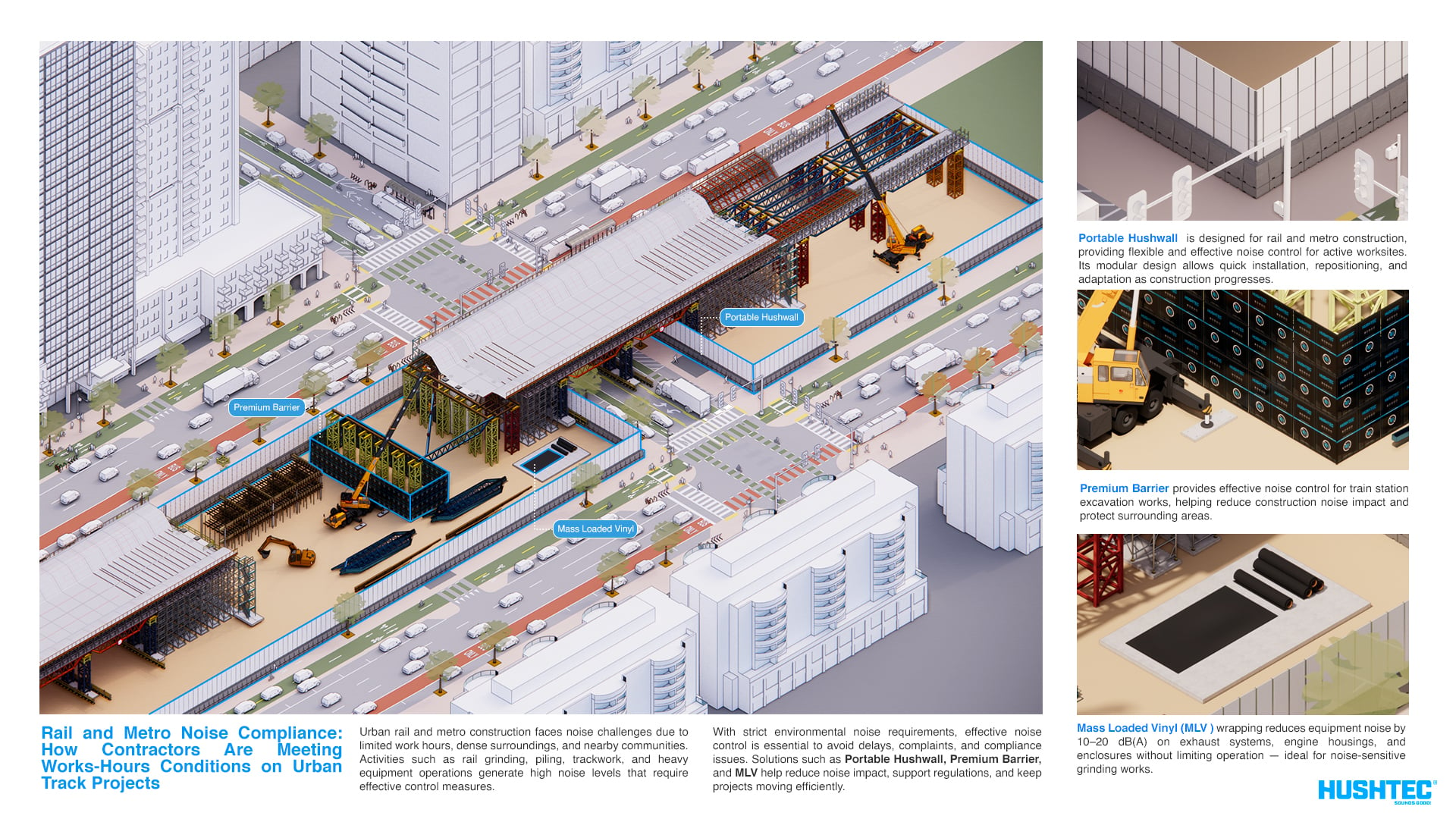
In New South Wales, rail construction noise is governed by the EPA’s Interim Construction Noise Guideline (ICNG), with project-specific EPL conditions often imposing tighter site limits based on background measurement and receiver sensitivity. In Victoria, the Environment Protection Act 2017 and associated guidelines apply equivalent frameworks. Queensland projects are assessed under the Environmental Protection Act 1994.
Three factors make rail uniquely difficult:
- Works-hours conditions — piling, grinding, and ballast works are often restricted to narrow overnight windows, meaning acoustic performance must be achieved rapidly and reliably within a single shift.
- Rolling works fronts — rail corridor construction rarely stays in one place. Barriers must move with the works or be reconfigured weekly as track renewal progresses.
- Elevation — ballast tampers, overhead electrification, and bridge deck works generate noise above the intercept height of standard site hoardings.
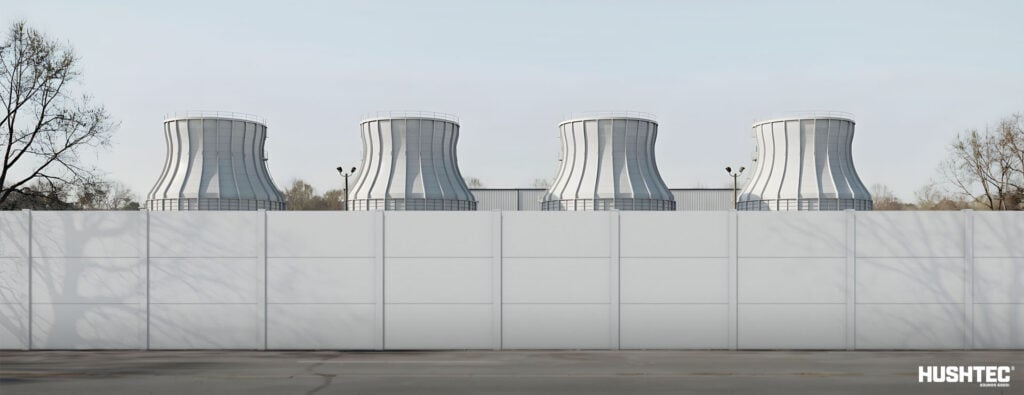
The Portable Hushwall addresses all three directly. At heights up to 6 metres, with a ballast-weighted base that requires no groundworks or building permits, and full forklift mobility, it is the only engineered freestanding barrier system that keeps pace with a moving rail works front.
The five noise sources rail contractors most underestimate
- Ballast tamping and rail grinding — tonal, high-energy noise across 80–105 dB(A), typically during overnight possession windows. A recurring cause of compliance exceedances on urban rail programmes.
- Diesel locomotives on possession — working engines idling and hauling in urban cuttings produce low-frequency drones that carry well beyond the works boundary.
- Impact and vibratory piling — foundation works for station boxes, bridge piers, and retained structures produce both airborne noise and ground-borne vibration.
- Overhead catenary and electrification plant — truck-mounted installation equipment operating above the intercept height of standard site hoardings.
- Temporary generator compounds — standby diesel sets powering contractor site compounds adjacent to residential zones during overnight works windows.
What good compliance looks like under Australian rail frameworks
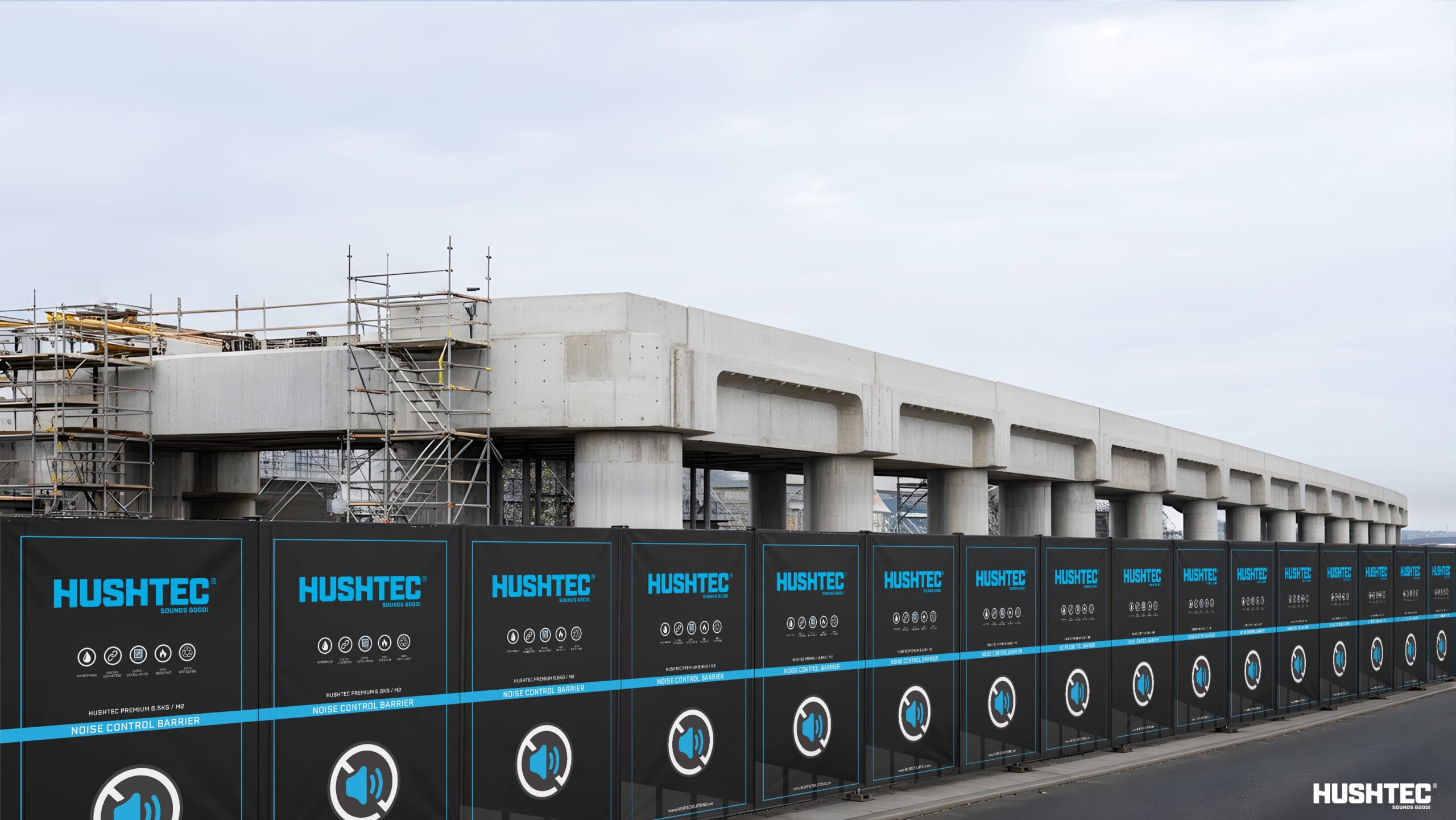
Under the NSW ICNG, residential noise limits for construction are typically 75 dB(A) LAeq daytime and 45 dB(A) LAeq night-time. EPL conditions on major rail projects often impose tighter project-specific limits. In Victoria and Queensland, equivalent instruments apply comparable frameworks — and all require contractors to demonstrate Best Practice Noise Management, not just monitoring.
Achieving those limits on an active, mobile rail works front requires:
- Rapid-deploy barriers that can be erected and repositioned within a possession window — typically 4–6 hours between last train and first train.
- Barrier heights sufficient to intercept elevated noise sources on embankments, bridges, and overbridges.
- Documented acoustic performance that can be submitted to the EPA or planning authority as evidence of Best Practice compliance.
The Portable Hushwall meets all three criteria. Its forklift base frame allows deployment and repositioning by standard site equipment. With heights to 6 metres and STC 32-rated panel options, it delivers documented insertion loss that satisfies ICNG and EPL compliance reporting requirements.
Solution approaches: what is being deployed on rail sites
Portable Hushwall — the lead system for possession works fronts
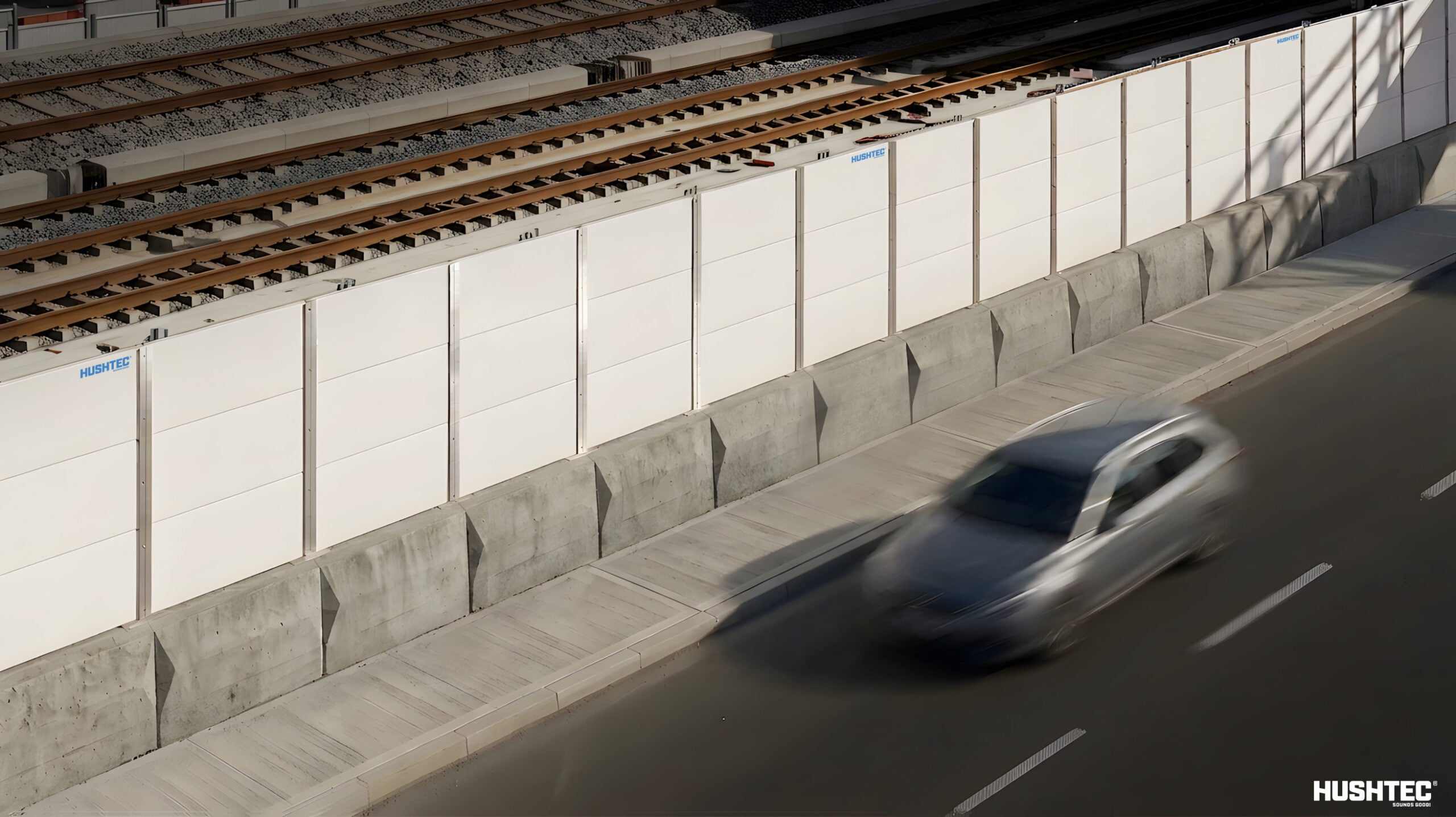
The Portable Hushwall is the primary solution for moving track renewal and electrification works. Ballast-weighted and engineered to international wind loading standards, it requires no permits, no concreting, and no excavation. Panels slot into the base frame in sequence. The complete assembly repositions by forklift as the works front advances — essential on a multi-kilometre track renewal programme.
On a typical 200-metre overnight works front, a Portable Hushwall configuration can be installed, repositioned, and reinstalled within a single possession window — without excavation, without concrete, and without permits.
Premium Barriers for perimeter screening and community interfaces
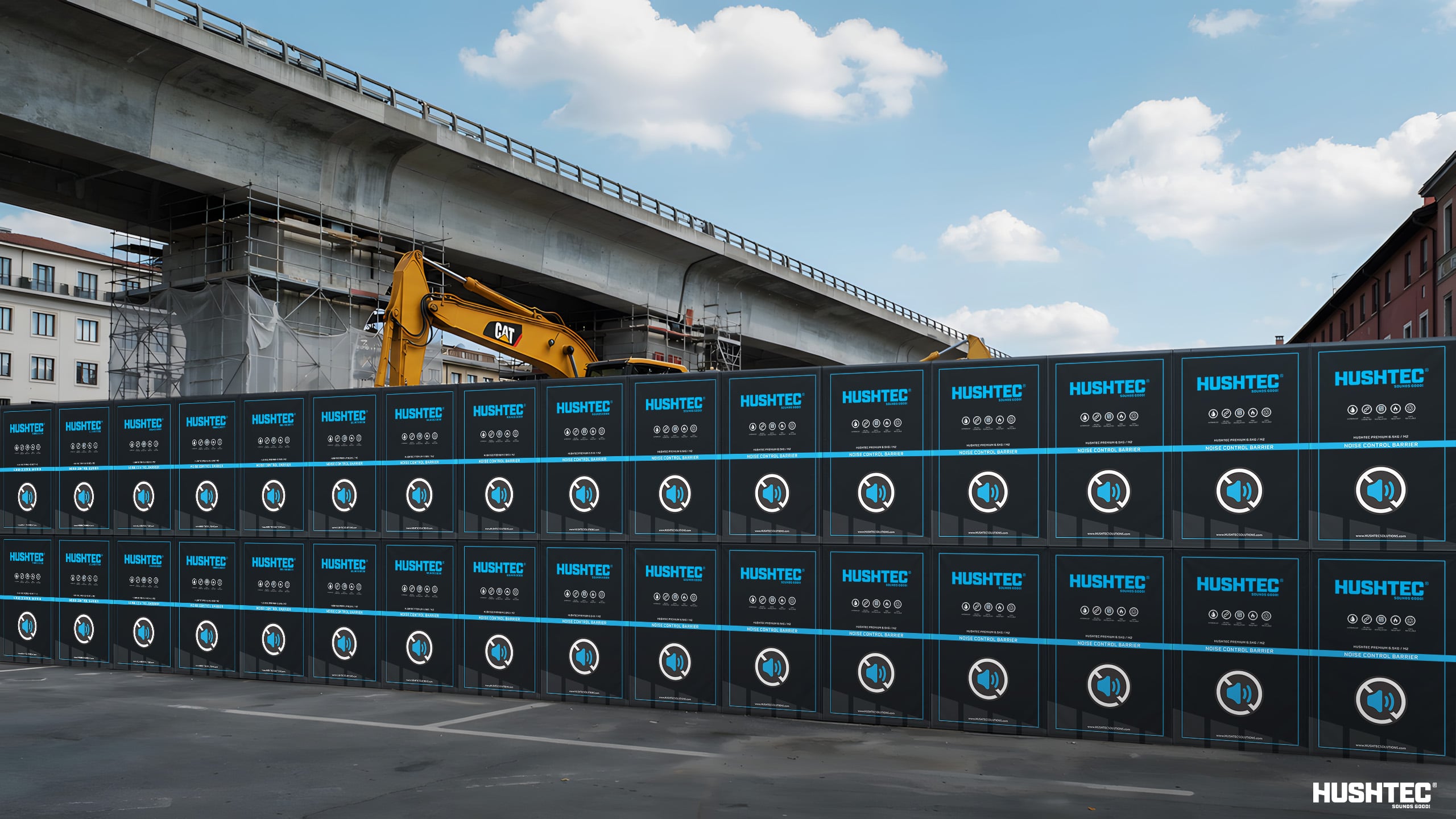
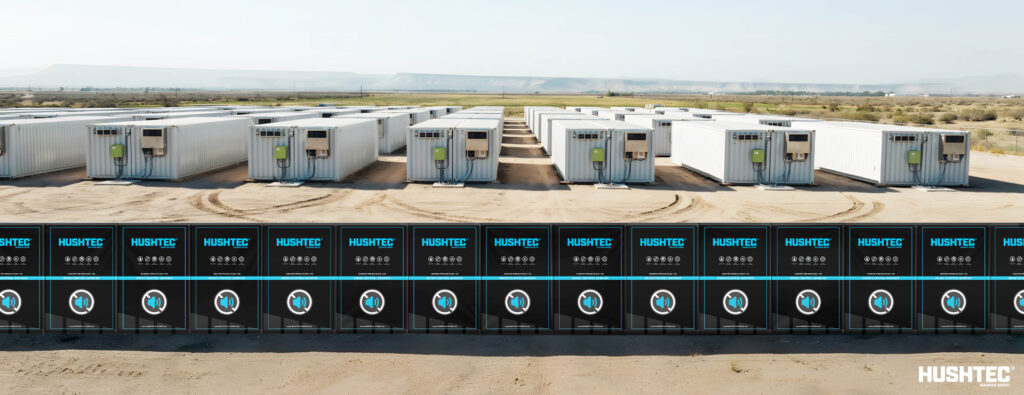
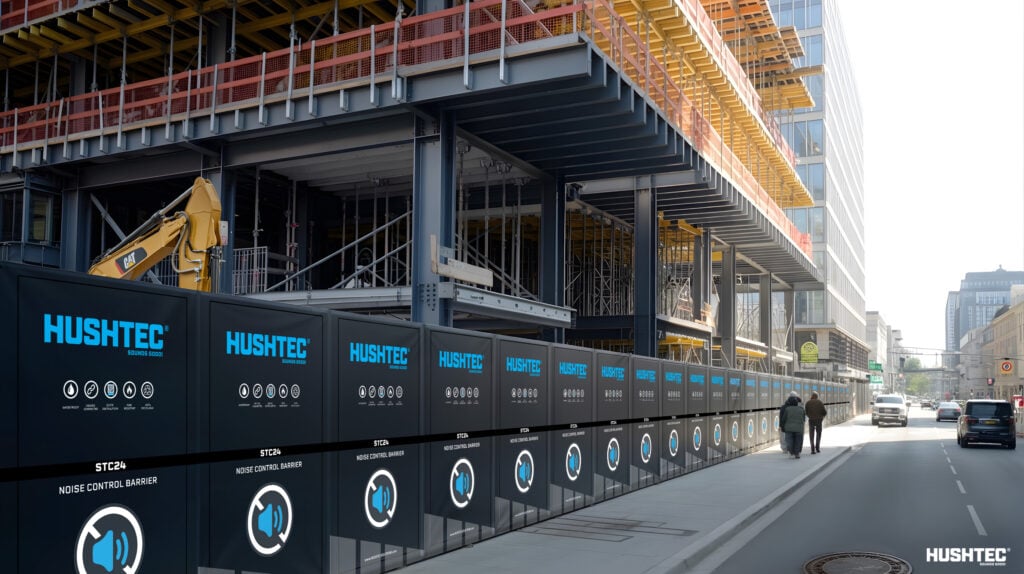
Where the works are static — over a station excavation or at a contractor compound — Hushtec Premium Barriers provide flexible perimeter noise control, with the option for custom printing with project and client branding. STC 24-rated and suited to track-side residential and commercial interfaces.
MLV wrapping for tampers, grinders, and locomotive exhausts
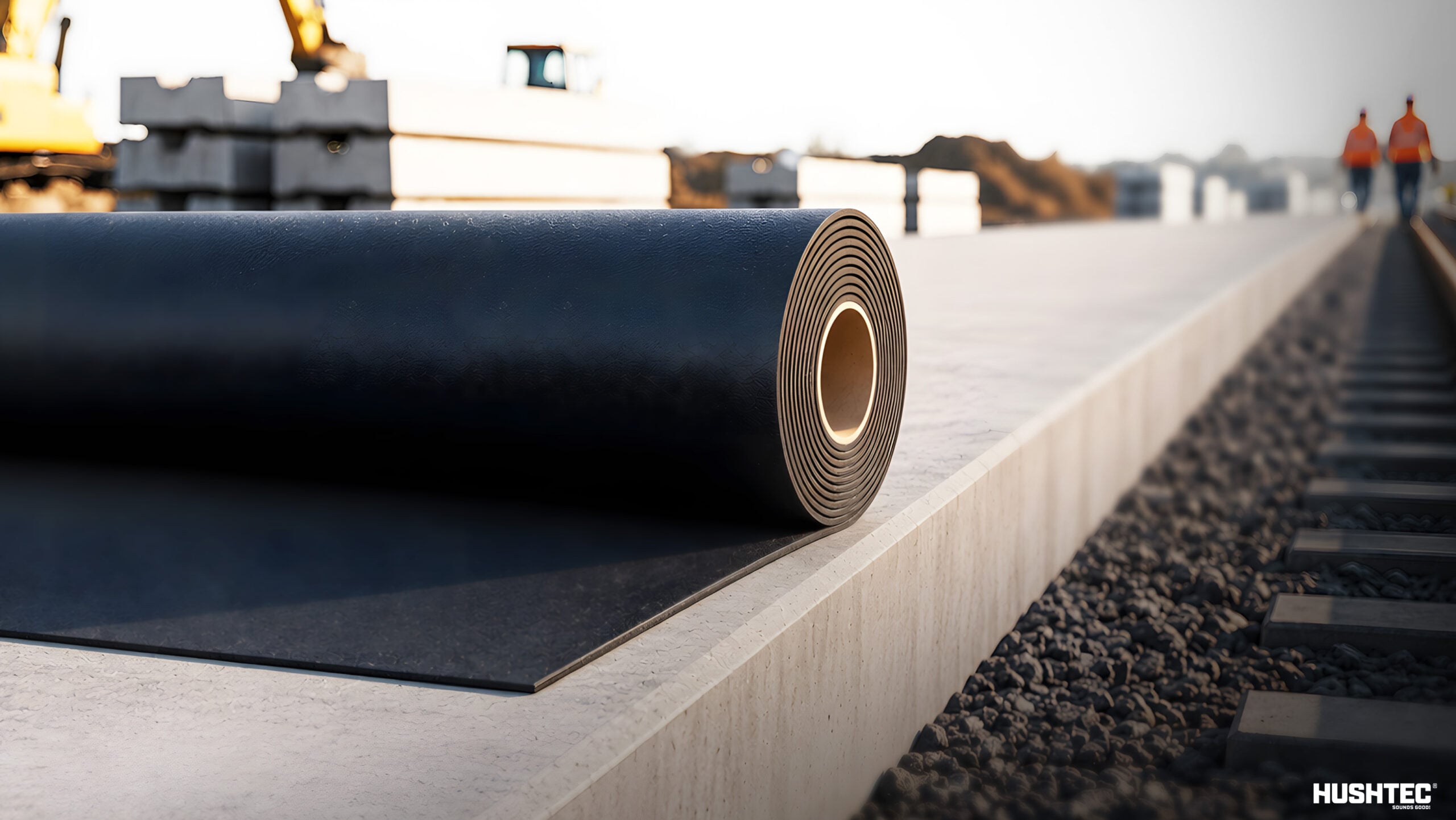
Rail grinding trains and ballast tampers produce intense tonal noise at source. Hushtec MLV (mass loaded vinyl) wrapping applied to exhaust systems, engine housings, and working head enclosures delivers 10–20 dB(A) insertion loss without restricting equipment operation — particularly valuable for grinding equipment operating in noise-sensitive cuttings under work-hours conditions.
Procurement and lead time realities
Rail projects in possession windows operate on compressed timescales. Portable Hushwall systems can be configured and dispatched within 2–4 weeks from order. Manufactured in New Zealand, Australian operators benefit from the shortest international lead times.
For projects working to EPL conditions or consent variation requirements, early supplier engagement is essential. Hushtec’s acoustic team can provide insertion loss data and compliance documentation to support EPA submissions.
Key takeaways
- Rail and metro construction operates under possession-window constraints that make rapid-deploy, forklift-mobile barriers essential — not optional.
- The Portable Hushwall is the only engineered freestanding system combining 6-metre height, STC 32 performance, wind engineering certification, and full forklift mobility with zero groundworks requirement — uniquely suited to rolling possession works fronts.
- MLV wrapping on grinding and tamping equipment, combined with Portable Hushwall screening, consistently delivers compliance-grade insertion loss within overnight possession windows.
- Manufactured in New Zealand — Australian projects benefit from the fastest international lead times. Portable Hushwall systems available within 2–4 weeks of order.
Frequently Asked Questions
What noise regulations apply to rail construction in Australia?
In NSW, the EPA’s Interim Construction Noise Guideline (ICNG) is the primary framework, with project-specific EPL conditions setting site limits. In Victoria, the Environment Protection Act 2017 and associated construction noise guidance applies. Queensland projects are assessed under the Environmental Protection Act 1994. Major rail projects typically carry project-specific Environmental Management Plans (EMPs) with consent conditions negotiated with the relevant planning authority.
Can the Portable Hushwall be deployed within an overnight possession window?
Yes. The Portable Hushwall requires no excavation, concrete, or permit. A standard works-front configuration can be installed by a two-person team and forklift within 2–3 hours — well within the typical overnight possession window of 4–6 hours. The system repositions by forklift as the works front advances.
How does the Portable Hushwall handle wind on exposed rail corridors?
The Portable Hushwall is structurally engineered to international wind loading standards using an integrated ballast weight system. Unlike lightweight temporary hoardings that can become a safety hazard in exposed cuttings or elevated environments, the Portable Hushwall is a certified freestanding structure — no ground anchoring required.
What insertion loss does the Portable Hushwall deliver?
With STC 32-rated panel options and NRC 0.9 absorption performance, the Portable Hushwall delivers real-world insertion loss of 18–28 dB depending on source geometry, barrier height, and flanking path. Hushtec can provide tested performance data and site-specific acoustic modelling for ICNG and EPL compliance reporting.
Is the Portable Hushwall available for project hire?
Yes. For rail contracts covering multi-stage works across extended programmes, project-hire arrangements provide cost-effective acoustic coverage without capital commitment. Contact Hushtec to discuss project hire terms for your programme.
Can Hushtec provide acoustic compliance documentation for regulator submissions?
Yes. Hushtec provides insertion loss data, wind engineering certification, and supporting documentation for contractor EMP submissions and EPA reporting under the ICNG and equivalent state frameworks. Early engagement is recommended for projects with formal consent conditions requiring acoustic method statements prior to work commencement.
Manufactured in New Zealand. Australian operators benefit from the shortest international lead times — Portable Hushwall systems available within 2–4 weeks of order.
Hushtec solutions are deployed on rail and metro sites across Sydney, Melbourne, Brisbane, Perth and beyond. Contact us to discuss your site requirements.