

Noise has become one of the most common concerns raised on Australian solar and battery storage projects, from rural New South Wales to South Australia. Whether it’s part of a development application or a conversation with neighbours, getting ahead of it protects both the project timeline and the relationship with the surrounding community.
Why Solar & BESS Sites Generate Noise
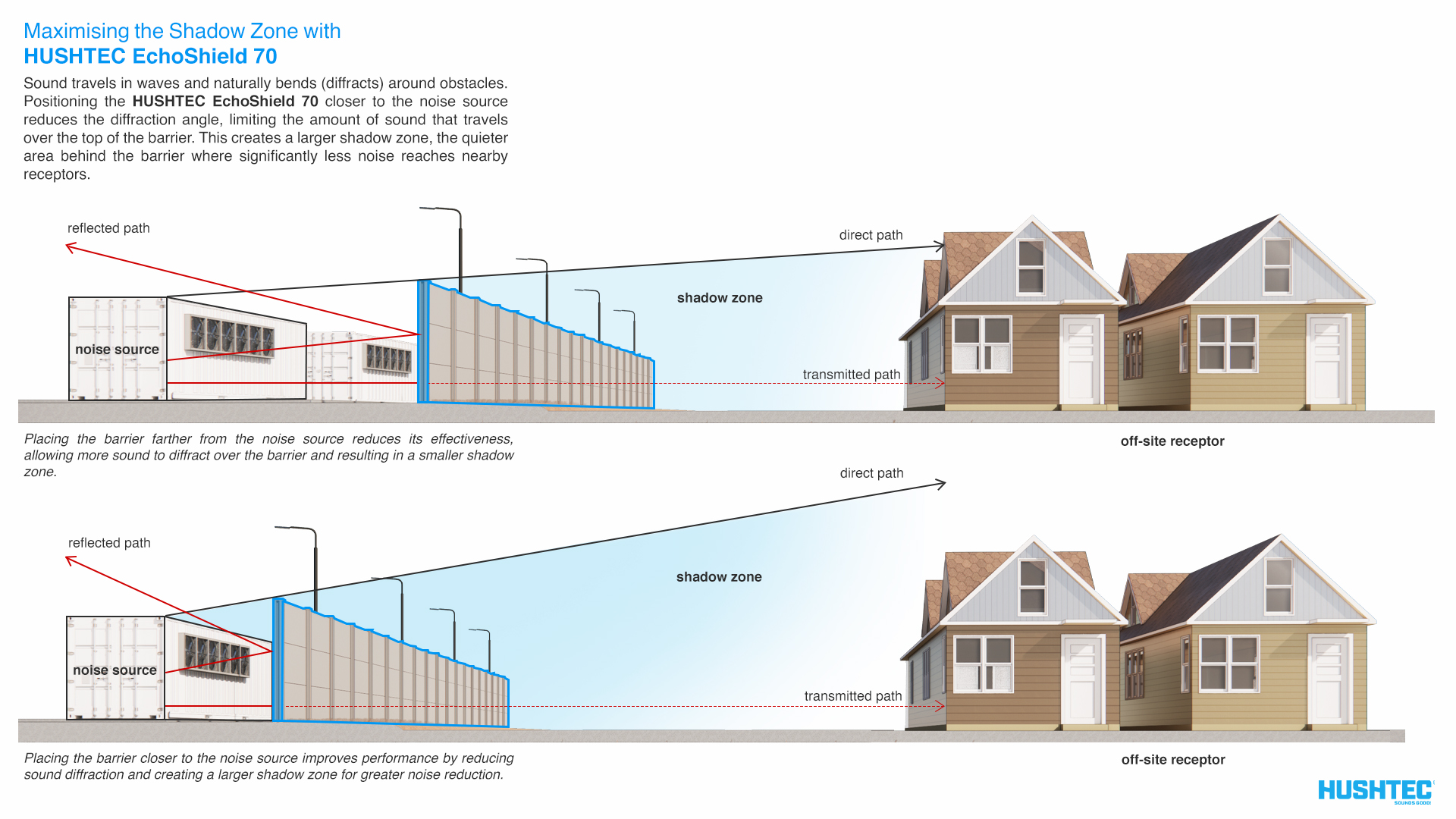
Three components account for most of it: battery cooling and HVAC systems, which run continuously; inverters and power control units, which hum during operation; and transformers, which add their own low-level noise. On rural sites with low background noise, even moderate equipment noise can carry further and stand out more than it would in an industrial precinct.
Meeting State EPA Requirements
Each state runs its own noise policy — the NSW Noise Policy for Industry, EPA Victoria’s industrial noise guidelines, and EPA SA’s framework among them — so there’s no single national number to design against. The practical goal is the same everywhere, though: keep operational noise within the limit set for the site’s surrounding land use, day and night. Hushtec designs directly against whichever policy applies to your project.
Hushtec Solutions for Australian Solar & BESS Sites
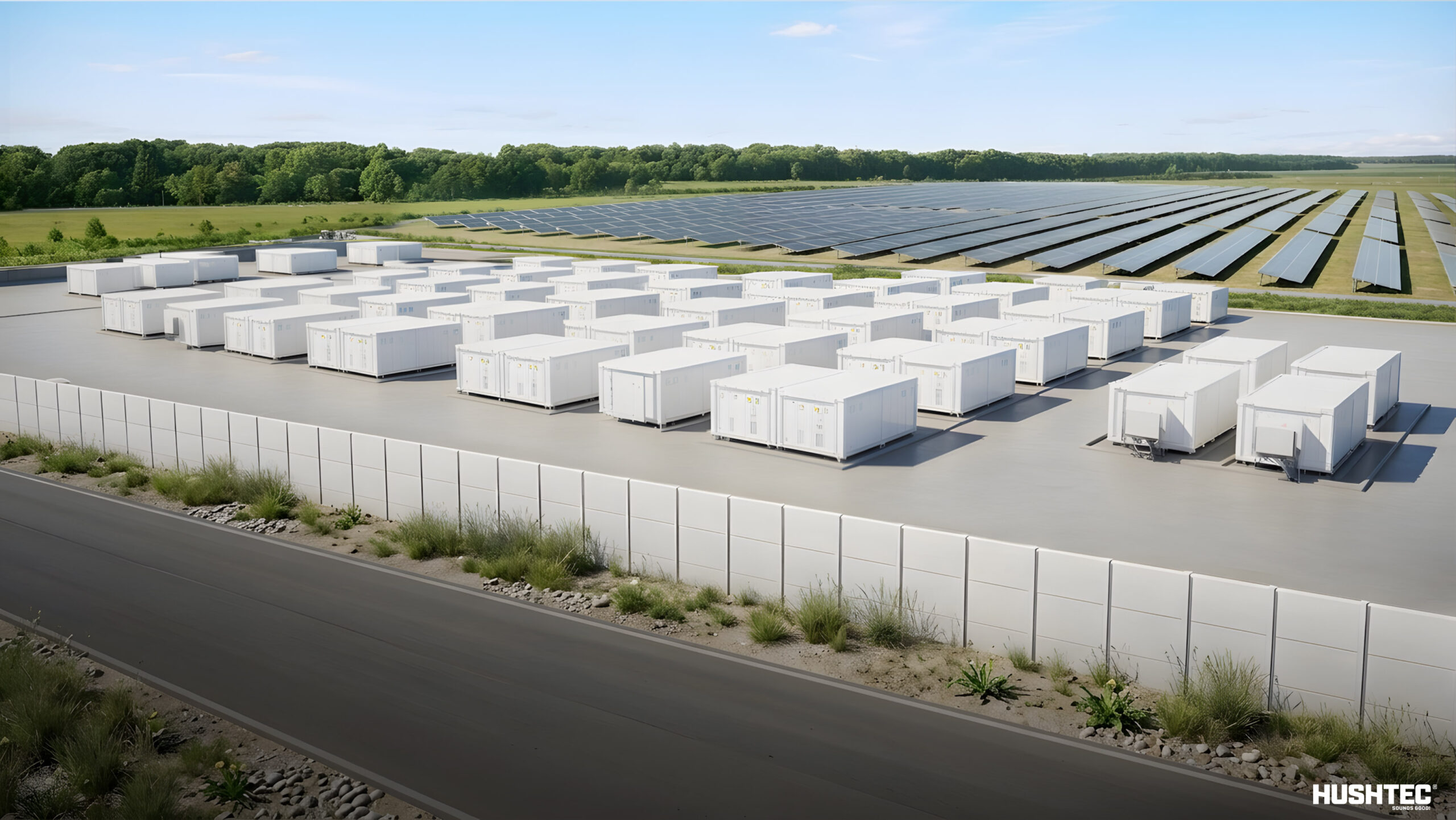
Hushtec supplies and installs purpose-built BESS & Solar noise control in Australia solutions for utility-scale solar farms, Battery Energy Storage Systems, substations, and renewable energy infrastructure across Australia:
- Site noise assessment: an on-site or desktop review that identifies your noise sources and target compliance level before you design around them.
- EchoShield Permanent Noise Wall: a modular, permanent barrier system built for substations, inverter stations, and BESS compounds.
- Custom acoustic enclosures: purpose-built housings for HVAC units, cooling fans, and battery cabinets — the components that run continuously.
- Portable and modular barriers: wind-rated, weather-resistant systems that deploy fast on rural and remote sites, and relocate if the layout changes.
- Design, supply & installation: one team from acoustic modelling through to a barrier installed and signed off on site.
What a Site Noise Assessment Involves
Before any barrier or enclosure gets designed, Hushtec starts with an assessment. That means working from site plans and equipment specifications, or visiting the site directly, to identify every significant noise source — batteries, inverters, transformers, HVAC — and modelling how that noise travels to the nearest sensitive receptor, whether that’s a neighbouring property, a road, or a protected area.
The output is a clear picture of where the site sits against the limit that applies, and where the gap needs to close. From there, design work matches mitigation to the actual noise sources rather than wrapping a generic barrier around the whole site. A transformer that’s the loudest single source might need a dedicated enclosure; a bank of HVAC units spread across a compound might be better served by a continuous wall section. Assess first, then design, then build — that sequence is what keeps the eventual solution proportionate to the problem, instead of over-building, which adds cost, or under-building, which risks falling short of the limit.
Inside the EchoShield and Enclosure Range
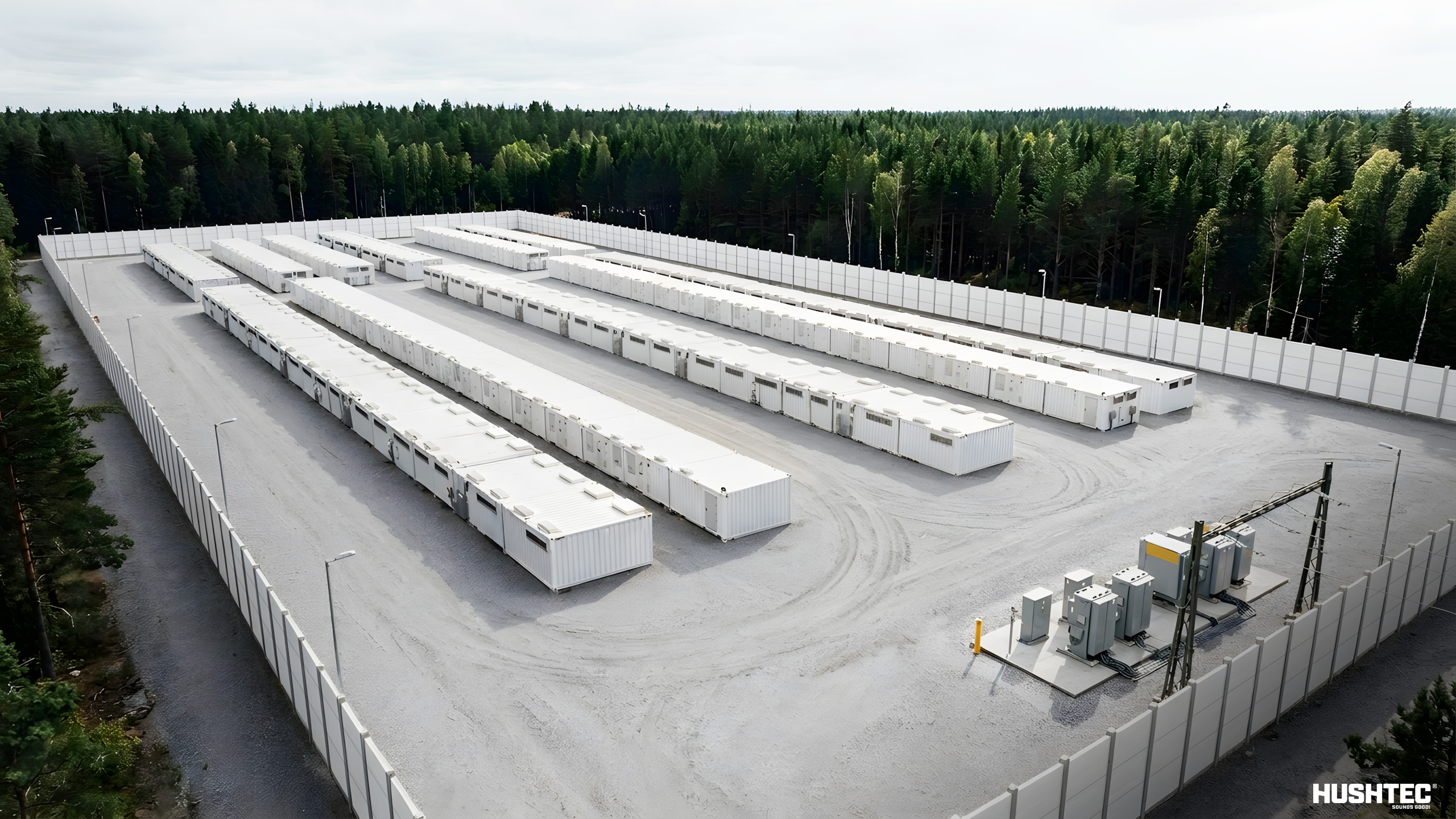
Two product lines cover most solar and BESS sites. The EchoShield Permanent Noise Wall is a modular barrier system built for long-term installations — substations, inverter stations, and BESS compounds — using durable, weather-resistant materials rated for outdoor exposure, including UV-stable panels and IPX-rated weatherproofing for wet or humid climates. Because it’s modular, a wall section can run for tens of metres around a compound perimeter or wrap tightly around a single piece of equipment, without a custom fabrication run for every site.
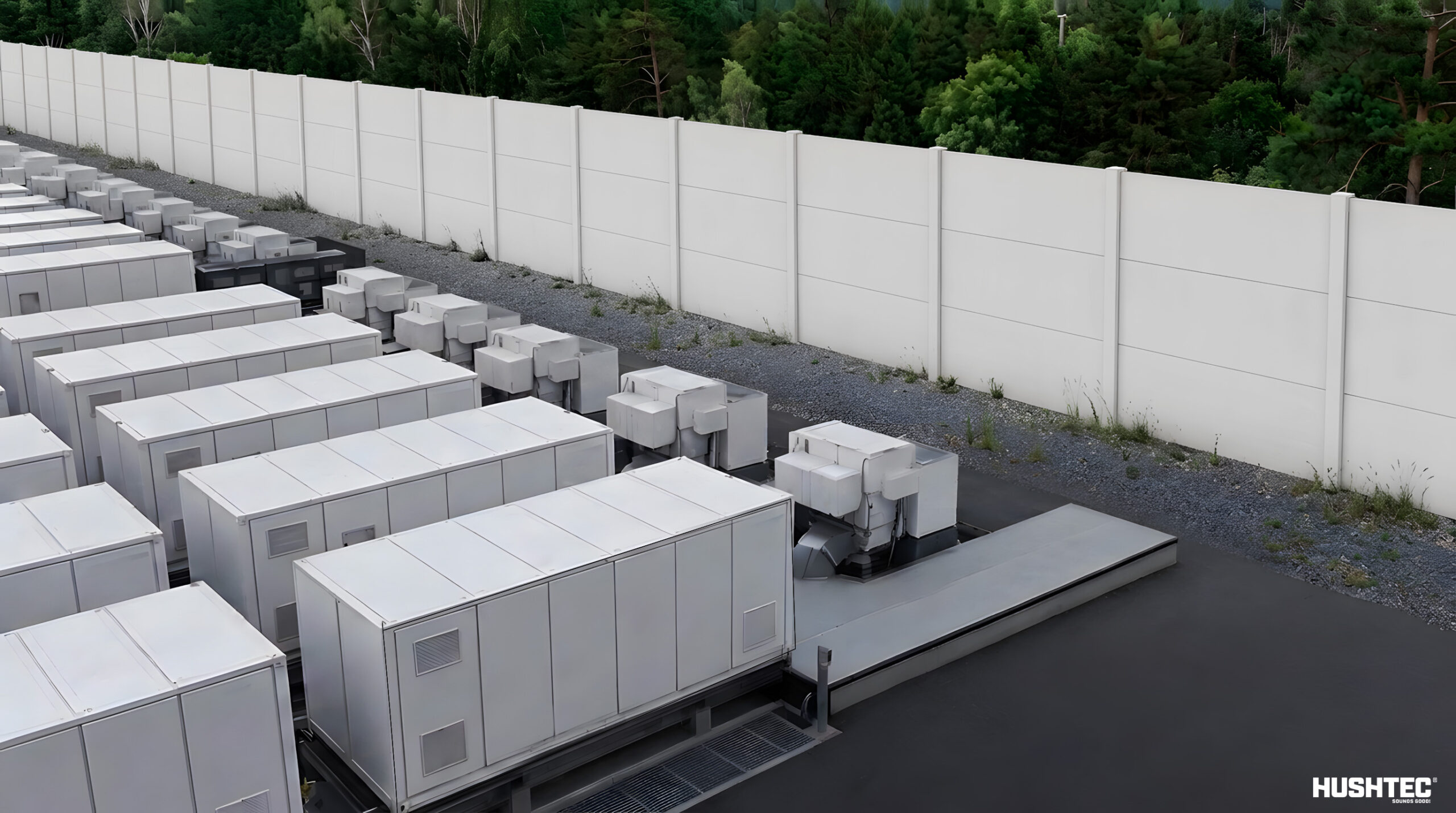
For equipment that needs a closer fit, custom acoustic enclosures house individual HVAC units, cooling fans, or battery cabinets directly. These are built to the equipment’s actual dimensions rather than a standard size, because a loose-fitting enclosure loses much of its acoustic performance. Where a site is remote, rural, or exposed to wind, Hushtec’s portable and modular barrier range gives developers a faster, relocatable option — useful during construction, or where the final site layout isn’t locked in yet. All three product lines are designed, supplied, and installed by the same team, so a project doesn’t need to coordinate separate contractors for assessment, fabrication, and fit-out.
Proven Results
In one recent BESS project sited near a rural residential area, Hushtec acoustic enclosures reduced fan and HVAC noise by more than 18 dB(A), bringing site emissions well below a 40 dB night-time limit — the kind of documented outcome that supports a development application rather than complicating it. The reduction held because the enclosure was sized to the specific units generating the noise, not fitted around a finished layout after the fact.
Get Ahead of It
A site noise audit before lodging a development application gives you a clear, documented picture of where your project sits against the relevant EPA policy — and time to design mitigation in, rather than react to it later.
Getting Started
Most projects start with a short conversation about the site: what equipment is planned, roughly where it sits relative to the nearest neighbour or sensitive receptor, and what timeline the project is working to. From there, Hushtec can scope a site assessment, model expected noise levels, and put forward a mitigation design sized to the actual problem, not a generic package. For projects still early in design, that conversation is worth having before equipment layout is finalised — it’s far easier, and cheaper, to plan acoustic mitigation into a site than to retrofit it later.
Why Getting This Right Early Matters
The cost of a noise problem rarely shows up as a single line item. It shows up as a redesign after equipment is already ordered, a delayed sign-off while a fix gets sourced, or a retrofit that costs more than the same enclosure would have cost if it had been part of the original build. None of that is unique to acoustic mitigation — the same logic applies to any site condition that gets discovered late rather than planned for. What makes noise different is that it’s straightforward to model in advance: the equipment specifications are known, the relevant limit is knowable, and the gap between the two can be closed with a barrier or enclosure sized to the actual source. There’s rarely a good reason for it to become a late-stage surprise.
That’s the practical case for treating acoustic planning the same way a project treats stormwater management or access roads: as a known requirement with a known solution, addressed at the point where it’s cheapest and easiest to solve.
Frequently Asked Question
Why is noise such a common concern on Australian solar and BESS projects?
Battery cooling systems and inverters run continuously, and as more projects are sited on rural land near existing communities, that ongoing noise is increasingly raised during consultation and assessment.
What noise limits typically apply?
It depends on the state and the site’s surrounding land use — NSW, Victoria, and South Australia each apply their own EPA noise policy. A site-specific assessment confirms the figure that applies to your project.
Which Hushtec products suit a solar or BESS site?
The EchoShield permanent noise wall and custom acoustic enclosures for HVAC and cooling equipment are the most common fit, with modular portable barriers available for rural or remote sites.
How fast can a noise barrier be installed on a rural site?
Hushtec’s modular systems are built for fast deployment to remote locations, with options for on-site installation support or training a local crew.
Can Hushtec help with the noise assessment for a development application, not just supply the barrier?
Yes. Hushtec covers site assessment and acoustic modelling as well as design, manufacturing, and installation, so the documentation and the physical solution come from one team.
Does Hushtec work with contractors already engaged on a project, or only directly with developers?
Both. Hushtec regularly works alongside civil and electrical contractors already engaged on a site, supplying and installing acoustic systems as part of the broader build.
What happens if a site already has a noise complaint from a neighbour?
The process is the same as for a new project: a site assessment identifies the specific source, and mitigation is designed and retrofitted around it.
What information does Hushtec need to start a quote or site audit?
A rough site plan, the equipment being installed or planned, distance to the nearest neighbour, and the project timeline are usually enough to scope the work and provide an initial quote.
Start with the Right Acoustic Strategy
Every solar farm and Battery Energy Storage System has unique acoustic challenges, but they don’t have to become project delays. With early planning, site-specific assessments, and purpose-built mitigation solutions, BESS & Solar noise control in Australia can be addressed efficiently from the outset.
Get in touch with Hushtec to discuss your project and learn how our acoustic expertise can help deliver a compliant, future-ready renewable energy development.