



A full-power engine ground run puts roughly 130 to 140 dB at the operator position. Run that test at 1 a.m. near a residential boundary, and you can expect a complaint, a call from the airport authority and tighter windows for the next run. For maintenance, repair and overhaul (MRO) teams, ground noise now decides when work can happen.
This guide covers where ground noise comes from at an MRO site, which control fits each source, and how to plan noise control for aircraft maintenance facilities without paying for a fixed test cell your work may not need.
Why ground noise keeps rising at maintenance bases
Oliver Wyman’s Global Fleet and MRO Market Forecast 2026–2036 puts MRO demand growth at 3.3% a year, with engine maintenance as the largest and fastest-growing segment. AlixPartners reports the global fleet reached a record average age of 14.8 years. Older aircraft need more shop visits, and each visit adds ground runs, APU checks and hours of ground power units running beside parked aircraft.
Most maintenance bases sit where they sat 30 years ago. Housing has moved closer. The work that fills your order book also reaches more neighbours.
Where aerospace ground noise comes from
Ground noise moves around the site with the job. The table shows the main zones and typical operator-position levels.
| Zone | Main sources | Typical operator-position level |
| Ramp and run-up areas | Full-power engine runs, intake and exhaust noise | ~130–140 dB |
| Taxiway and apron | Idle-power taxiing, ground power units, tugs | ~100–110 dB |
| Hangar interior | APU testing, riveting and fastening, reverberation off hard surfaces | ~90–105 dB |
| Ground support equipment (GSE) | GPUs, air conditioning carts, air start units | Varies by unit; confirm on site |
Levels vary by aircraft type, engine, and ground conditions. Use these figures as a starting point and confirm them with measurements at your own site.
Matching aerospace acoustic noise control to each source
Aerospace ground operations need different noise controls for different tasks. A barrier at the hangar door won’t help much with a GPU on a remote stand, just as a shroud around a GPU won’t reduce engine run-up noise.
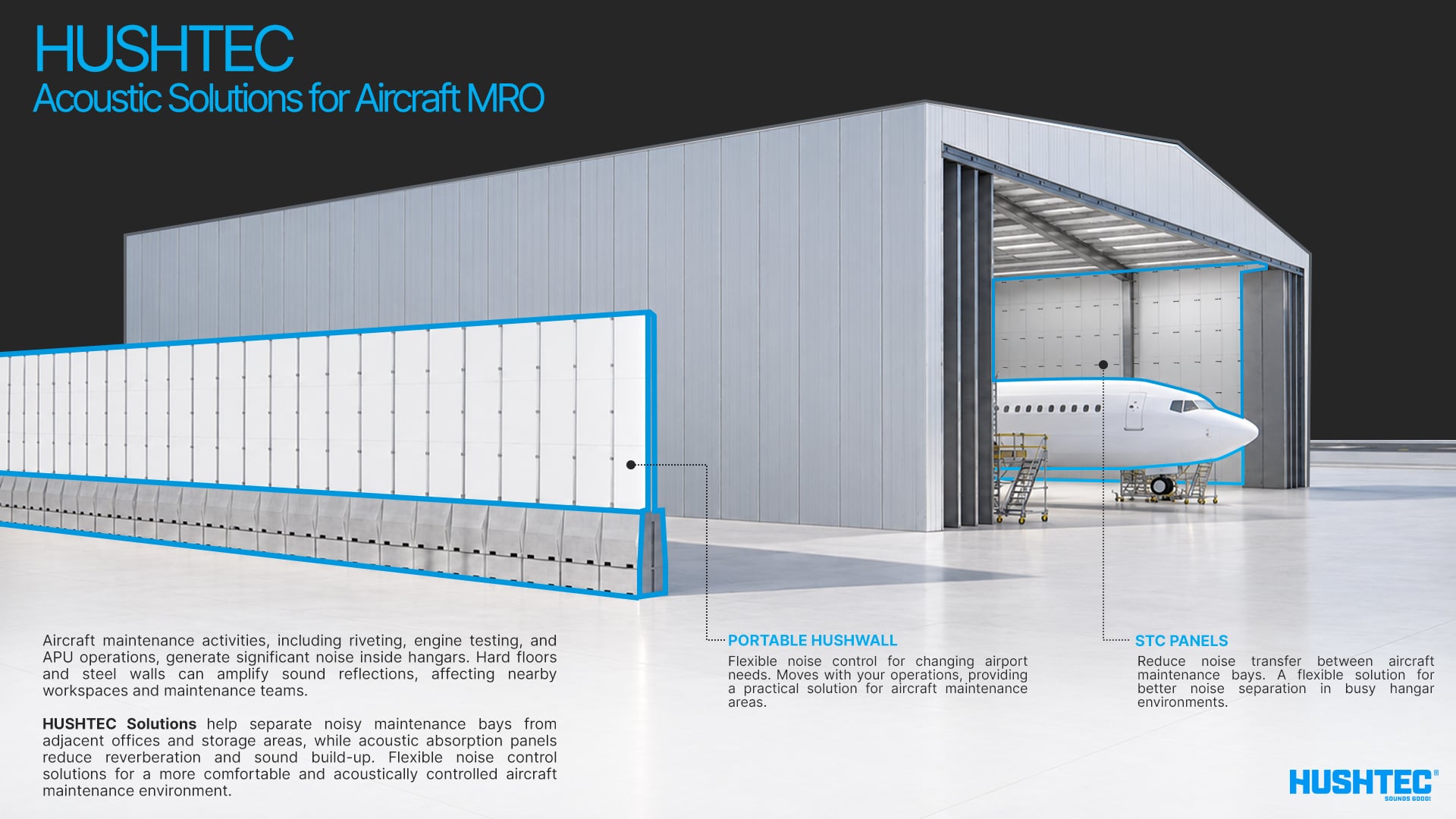
Run-up areas and the apron. Modular walls such as the Hushtec Portable Hushwall go up in sections and come down when the run-up position or stand layout changes. Hushtec is developing an apron-rated version built for jet blast, FOD safety and fuel exposure. If your run-up area needs that rating, ask about pilot sites.
Ground support equipment. A Hushtec Custom Shroud fits around a specific GPU, air cart or air start unit. Treating the unit costs less than walling off a whole stand, and the shroud travels with the equipment.
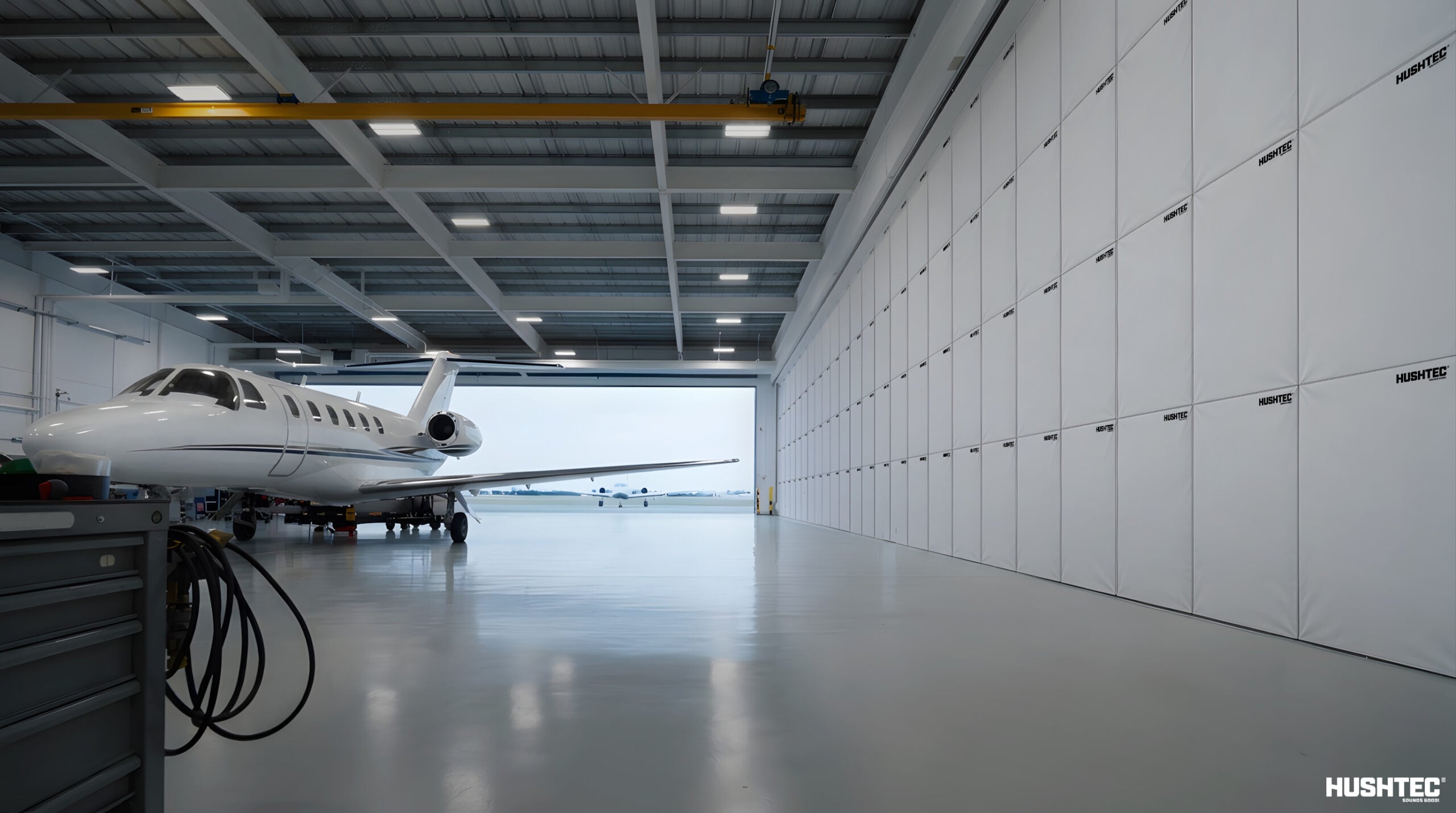
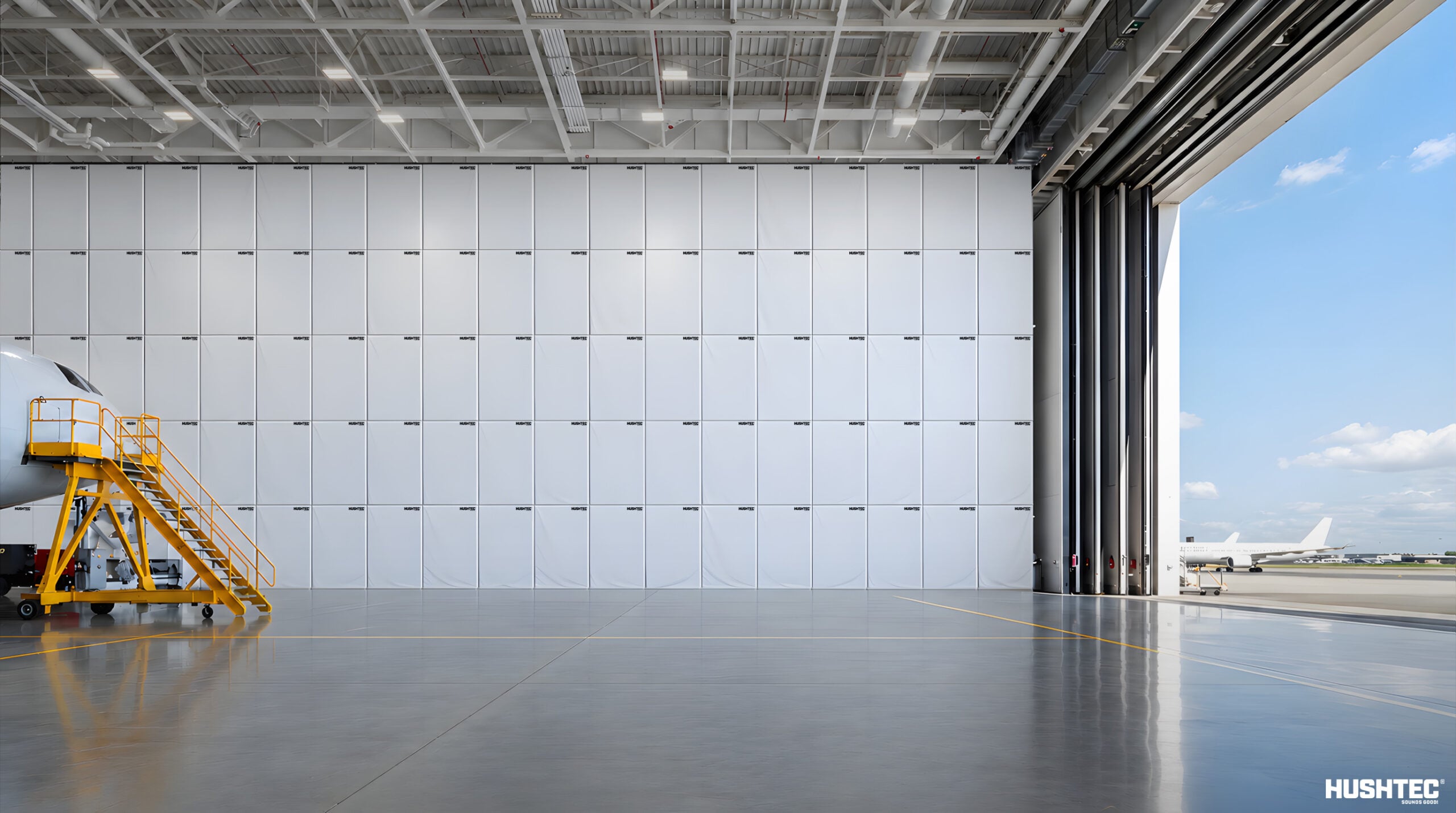
Hangar interiors. Hard floors and steel walls make hangars reverberant, so riveting and APU noise builds on itself. Hushtec STC panels separate noisy bays from offices and stores. Absorption panels cut the reverberant build-up across the floor.
Short maintenance events. For a one-off engine change or a week of structural repair, an acoustic tent contains the work without permanent changes to the hangar.
Acoustic barriers for airport ground operations: six placement rules
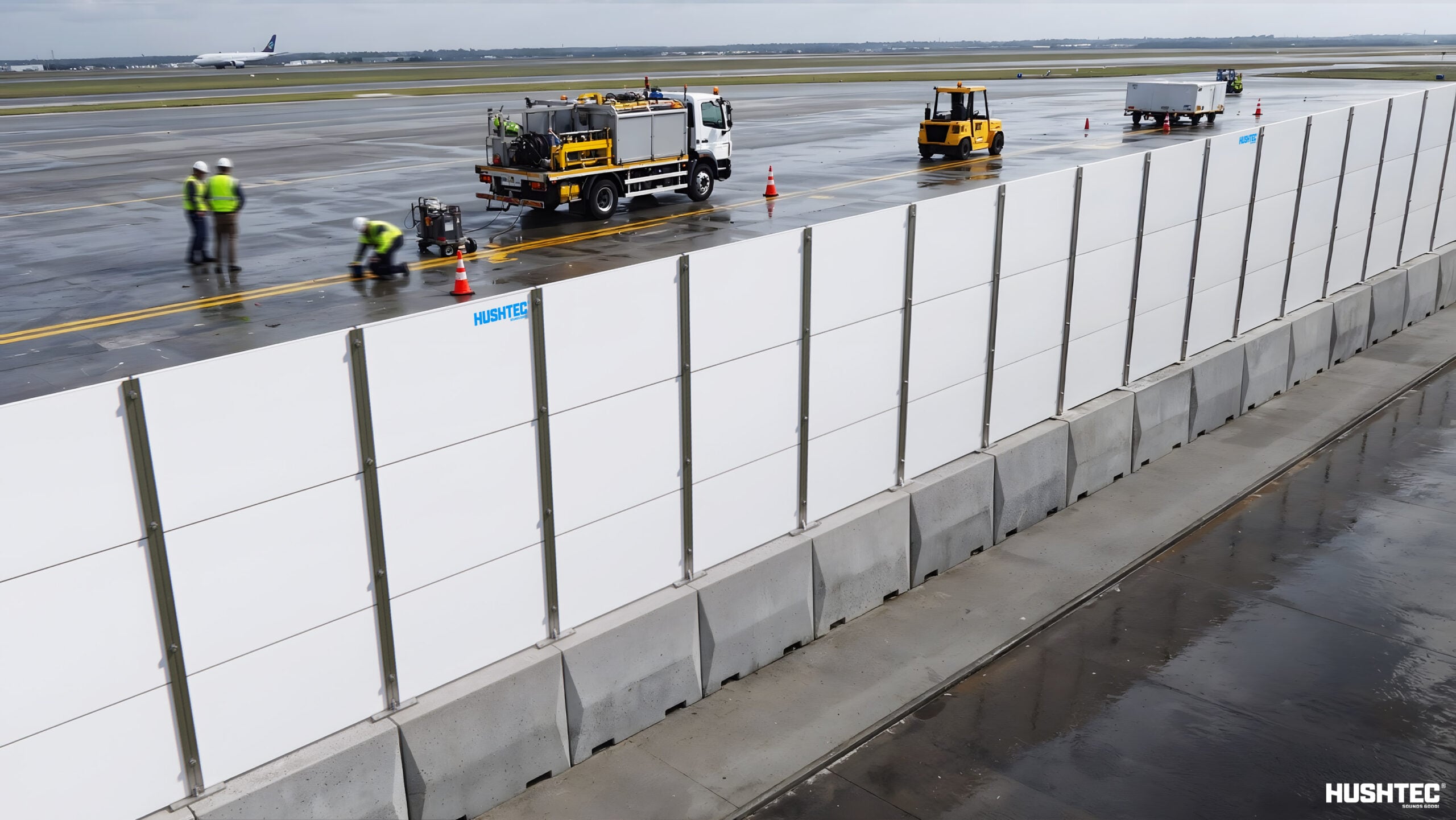
Aircraft acoustic barriers work on simple physics. Most underperforming installs break one of these rules.
- Block the line of sight. If a receiver can see the engine intake or exhaust, the barrier is too short or in the wrong place.
- Sit close to the source or the receiver. A barrier halfway between them offers the least benefit.
- Close the gaps. Sound leaks through joints, under the base and around the ends. Overlap panels and return the ends.
- Plan for low frequencies. Jet engines and APUs produce strong low-frequency sound, which bends over barrier tops more easily than high-pitched noise. Height and mass matter more here than on a construction site.
- Check for reflected noise. Hangar doors and blast fences can reflect sound towards nearby properties. Absorptive material on the side facing the noise source can help reduce these reflections.
- Measure the difference. Take noise readings before and after installing the controls. Keep the results to show the airport authority and respond to concerns from nearby communities.
Engine test cell or modular barriers?
A fixed engine test cell, sometimes called a hush house, is designed to contain and manage noise during high-power engine testing. It can suit facilities that regularly test engines off-wing and have the space and budget for a permanent installation.
Other ground operations involve different noise sources, including APU checks, ground support equipment (GSE), idle runs and riveting. Modular barriers and equipment shrouds can be more practical for these activities because you can install them where needed and move them as apron layouts change.
Some facilities use both approaches: a dedicated test cell for high-power engine testing, with portable barriers and shrouds for other ground operations.
The rules behind ground noise
Rules differ by country, but three layers show up at most airports.
- Community noise. ICAO’s Balanced Approach frames airport noise management around four elements: quieter aircraft, land-use planning, operational procedures and operating restrictions. Airports set their own ground-running procedures. At Heathrow, high-power runs at night must happen in an acoustic pen, and every engine test needs airport permission first.
- Worker exposure. Most jurisdictions set a daily exposure limit near 85 dB(A) averaged over eight hours. Ramp and hangar staff near run-ups and APUs can reach that level fast, so engineering controls reduce reliance on hearing protection.
- Curfews and consent conditions. Night curfews and planning conditions decide when work can happen. A breach can mean fines, lost slots or a late aircraft return.
How to start a ground noise project
- Log two weeks of noisy events. Record time, aircraft type, power setting, location and duration for every run-up and APU test.
- Map your receivers. Mark the nearest homes, schools and offices, plus any noise monitoring terminals the airport runs.
- Book a site assessment. A Hushtec ground operations noise assessment confirms your noise profile and recommends a mix of barriers, shrouds and panels.
- Pilot one zone. Start with the source behind most complaints, usually the run-up area or a GPU-heavy stand.
- Keep the paperwork. Before-and-after data supports talks with the airport authority and any planning review.
Frequently asked questions
What are aerospace noise control solutions?
Aerospace noise control solutions are engineered products that cut noise from aircraft maintenance and ground operations. They include modular acoustic barriers for run-up areas, shrouds for ground support equipment, and barrier and absorption panels for hangars. Hushtec sizes each product to its source instead of building a permanent test cell.
How loud is an aircraft engine ground run-up?
A full-power engine run-up can reach about 130–140 dB near the engine, while idle-power operations may produce 100–110 dB. Hangar activities such as APU testing and riveting can range from about 90–105 dB. These are approximate figures; actual levels vary with the aircraft, engine, measurement distance and site conditions.
Do acoustic barriers work for airport ground operations?
Yes, when you place them well. Acoustic barriers for airport ground operations must block the line of sight between source and receiver, sit close to one of them and have sealed joints. Low-frequency engine noise needs taller, heavier barriers than typical construction noise.
What is the difference between an engine test cell and a ground run-up barrier?
A test cell encloses a jet engine at full power inside a fixed building for certification-grade testing. A ground run-up barrier is a modular wall that cuts noise from on-wing runs, APU tests and GSE. You can move it when your apron layout changes.
How do you reduce noise inside an aircraft maintenance hangar?
Noise can build up inside a hangar as sound reflects off hard floors, walls and ceilings. Absorption panels help reduce that reverberation, while acoustic barriers can keep noise from spreading into offices and other work areas. For temporary jobs such as riveting or grinding, a portable acoustic tent can provide localised noise control around the task.
Can aircraft acoustic barriers move with our apron layout?
Yes. Hushtec Portable Hushwall systems are modular so that you can dismantle and reposition sections as ground-running areas or stand layouts change. However, standard systems are not suitable for direct jet-blast exposure or contact with fuel. A version designed for those conditions is in development. Contact Hushtec to discuss the requirements for your site.
Does ground noise control help with airport curfews?
It can help reduce noise from ground operations, including engine run-ups and ground support equipment (GSE). Whether this helps a facility meet local noise limits or operating restrictions depends on the source, the controls used and the airport’s requirements. Noise reduction can also help address community concerns, but it does not guarantee permission to operate during restricted hours.
Manage Ground Noise Before It Limits Your Operations
Hushtec handles assessment, design, manufacturing, and installation of aerospace noise control solutions for MRO hangars, run-up areas, and GSE fleets through a single point of contact. Email hello@hushtecglobal.com or call 201-679-1268 (USA and Canada).