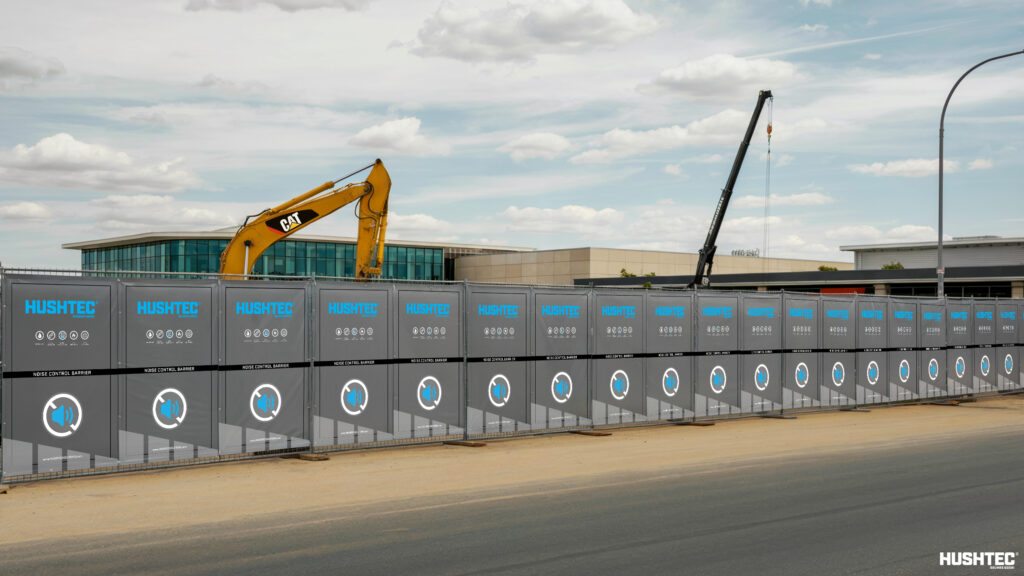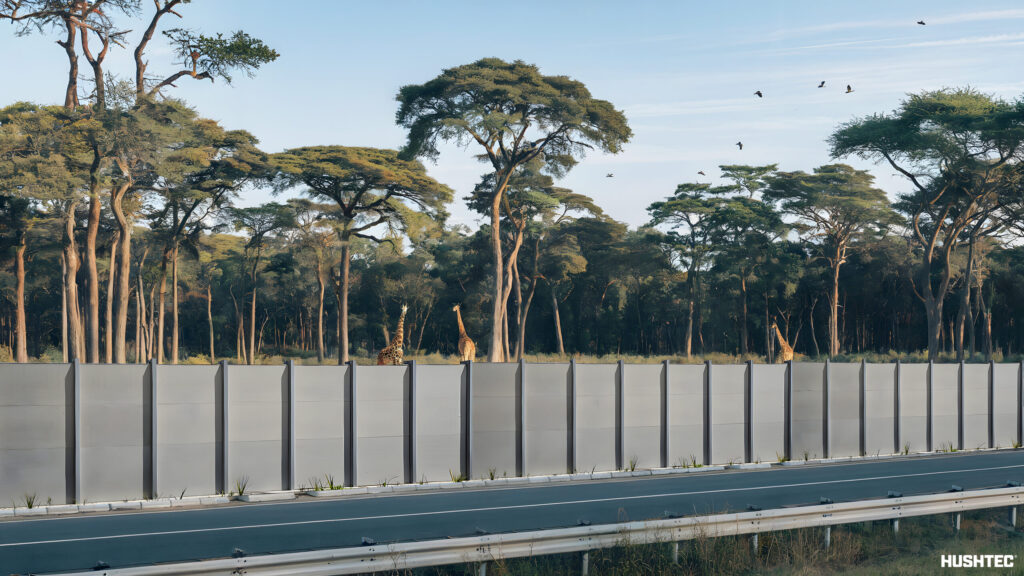
No matter the site, working close to homes will always present challenges. Programmes can slip. Relationships with the community can sour. Complaints can shut you down. Designing out these risks before the rig arrives on site is essential.
Driven concrete piling remains one of the most reliable and cost-effective foundation methods available. However, it also produces some of the most disruptive noise of any construction process.
Here at Hushtec, we help contractors and rental companies control noise at the source. Driving concrete piles near neighbours is challenging but not impossible.
In this article, we will explain why driven concrete piling is so disruptive to nearby residents. We will also describe what actually reduces the noise, and what doesn’t. By the end of the article, you will understand how to keep your programme on track without becoming the neighbourhood’s biggest problem.
Why is driven concrete piling so disruptive to neighbours?
It’s important to note that not all piling noise is equal. Driven concrete piling is not the same as CFA, rotary bored, or vibratory piling.
So it wouldn’t be correct to lump every piling method together as “the noisy one.” Nonetheless, impact-driven concrete piling presents a specific problem that other methods don’t.
Let’s look at why:
- It’s percussive, not continuous. A hammer strikes the pile every few seconds, for hours at a time. Unlike constant background noise, the human ear doesn’t adapt to repeated impacts the way it does to steady sound. Each strike re-triggers the annoyance.
- It’s low frequency. Impact piling generates a lot of energy below 500 Hz. Low-frequency noise travels further and passes through walls and windows far more easily than higher-frequency sound.
- It’s structure-borne as well as airborne. Some of the energy from the hammer strike transmits through the ground itself, arriving at nearby buildings as vibration as well as noise. Residents can feel it before they even hear it.
Typical source noise from an impact hammer driving concrete piles sits around 90-110 dB. At that level, even a property several hundred metres away can experience noise well above what’s acceptable for a residential area.
It’s also helpful to understand why this matters on a regulatory level. Most UK and European sites will operate under a noise consent (such as a Section 61 in the UK), with strict limits tied to the time of day and proximity to residential boundaries.
Breach that limit repeatedly, and the local authority can issue a stop-work notice. That’s not a fine you absorb and move on from. That’s your rig sitting idle while the programme burns.
It’s not just the regulator you need to worry about, either. Some contractors have found that even noise levels within legal limits generate enough complaints to sour relationships with the local council, making future planning consent on other sites harder to secure.
There’s a less obvious factor at play here too: perception. A resident who can see a barrier or shroud around the rig reads that site differently to one who sees an unshielded hammer working next to their fence line. Even before you measure a single decibel, visible mitigation signals that the contractor is taking the problem seriously.
That matters more than it might seem. Complaints are rarely just about the noise level in isolation. They’re often about whether the person on the other side of the fence feels like anyone cares. A site that’s visibly making the effort tends to generate fewer escalations, even when the underlying noise reduction is modest.
As you can see, this isn’t just a comfort issue for the people next door. There are real programme and reputational risks attached to unmanaged piling noise. There is no easy way of avoiding this without addressing the noise at its source.
You can reduce risk with careful scheduling and community liaison. However, source-level noise control is the only approach that reliably keeps you under the limit, regardless of what the weather, the wind direction, or the neighbours decide to do that day.
What actually reduces driven concrete piling noise?
As we explained above, there are a lot of variables that affect how disruptive a piling operation feels to nearby residents. Your site might already sit far enough from housing that standard scheduling is enough. Then again, it might not.
However, just as you can get an early read on how disruptive a job will be by the piling method, you can also get an early read on which mitigation approaches are worth pursuing.
Because a large share of the noise comes directly off the hammer and the pile head at the moment of impact, it’s important to treat the noise as close to that point as possible. Site hoarding and distance help, but they only attenuate noise that has already radiated well past the source.
It’s also important to be aware that not all acoustic mitigation performs the same. A fabric screen hung around a site boundary might look like a solution, but it does very little against the low-frequency, high-energy noise a hammer strike produces.
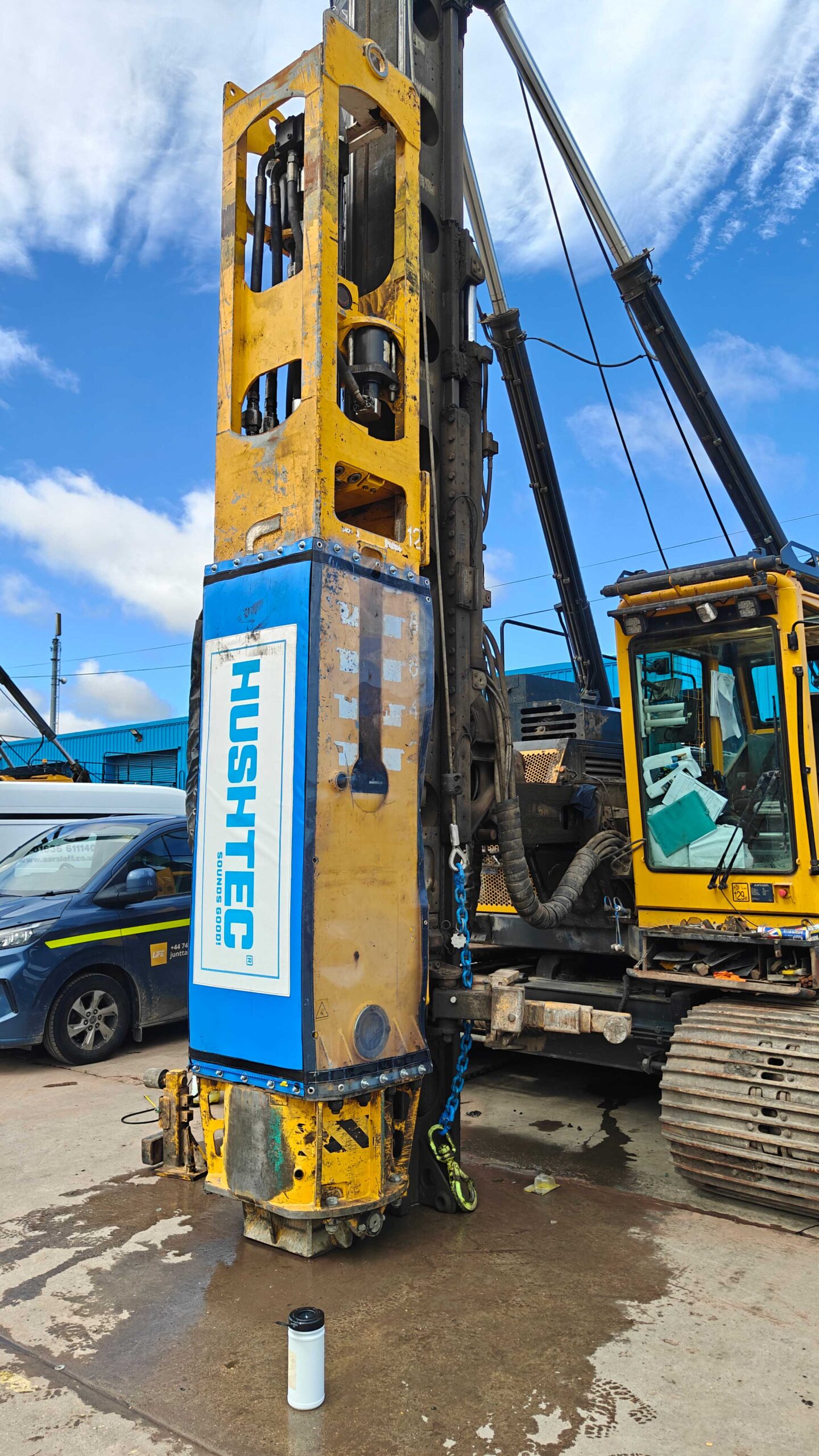
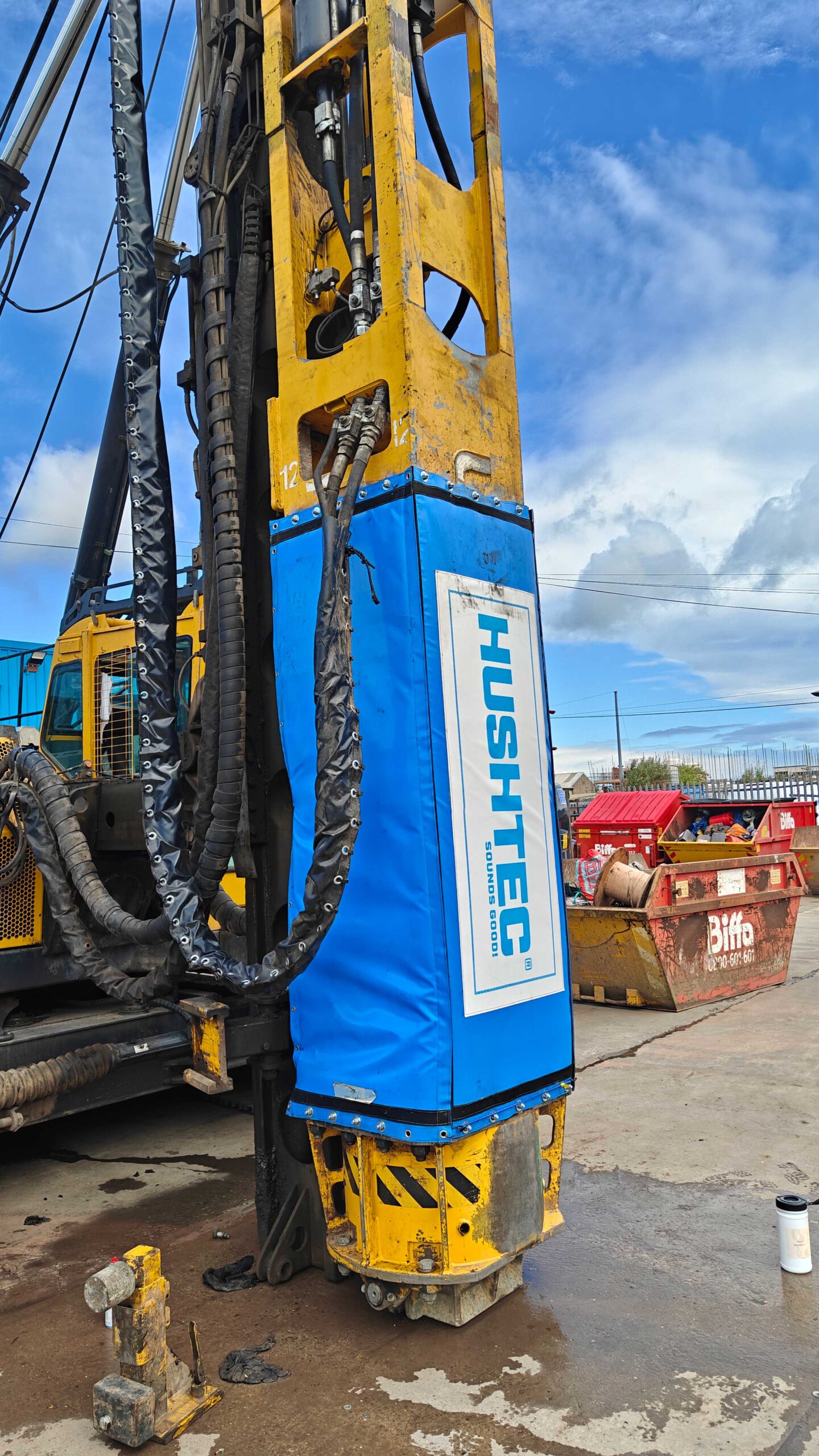
Purpose-built hydraulic hammer shrouds and freestanding acoustic barriers, positioned directly around the piling rig or hammer, are typically the most effective way to bring noise down before it ever reaches the boundary. Both characteristics — proximity to source and material density — make this the go-to solution for most driven concrete piling applications.
They do require planning though. Shrouds need to be matched to the rig and hammer configuration, and barriers need enough panel height and coverage to actually intercept the noise path. Getting the specification wrong is a common reason mitigation underperforms on site.
At Hushtec, we’ve tested our barriers and shrouds on live piling projects. We’ve listed a couple of real-world results below.
- On a recent hydraulic hammer shroud installation, we recorded a reduction from 92.4 dB down to 77.2 dB at the same measurement point — a 15 dB reduction directly at the source.
- On a freestanding barrier installation around a piling rig in Vancouver, noise was reduced from 98 dB down to 77 dB — a 21 dB reduction, bringing the site well within typical residential limits.
Considerations for managing noise around driven concrete piling
Now you understand why driven concrete piling is so disruptive to neighbours. You also understand what genuinely reduces that noise, and what only looks like it does. It’s time to work out what’s right for your site.
Here at Hushtec, we design temporary acoustic barriers and hydraulic hammer shrouds specifically for sites like yours. We want to help you keep your programme moving without the complaints, the stop-work notices, or the damaged relationship with your local authority.
If your main concern is protecting a piling rig or hammer on an active site, a properly specified shroud is usually the fastest route to compliance. Or, if you need to protect a wider boundary — for example, where several pieces of plant are operating close together — a freestanding acoustic barrier is likely the better fit.
Either way, the right answer depends on your rig, your hammer, your site layout, and your local noise limits. That’s not something a generic hoarding panel can tell you.
And even where the acoustic performance is only part of the story, the visible presence of a proper barrier or shroud does real work on its own. It tells the neighbours, the council, and anyone walking past that this is a site actively managing its impact — not one that’s ignoring it.
The easier option is to speak to our team. We’ll help you find the right barrier or shroud specification for your application, and send over the technical information you need to take it to your next site meeting.
Frequently Asked Questions
How loud is driven concrete piling?
Driven concrete piling typically produces between 90 and 110 dB at the source, depending on the hammer type, pile size, and ground conditions.
Why is driven piling louder than bored piling?
Driven piling uses repeated hammer impacts, while bored piling removes soil mechanically without high-energy impacts, resulting in significantly lower noise levels.
Can piling noise be reduced?
Yes. Properly designed hydraulic hammer shrouds and temporary acoustic barriers can significantly reduce noise before it reaches nearby properties.
What causes complaints during piling?
The biggest causes include repetitive impact noise, low-frequency sound, ground vibration, and prolonged working hours near residential areas.
Every site presents unique challenges, but excessive piling noise doesn’t have to be one of them. With the right mitigation strategy in place before work begins, you can minimise disruption, reduce complaints, and keep your project on schedule without compromising productivity.
Talk to the Hushtec team to find the best acoustic solution for your piling operation. We’ll help you select the right barriers or hammer shrouds and provide the technical guidance needed to achieve effective noise reduction on site.