


Why Construction Noise Control Matters
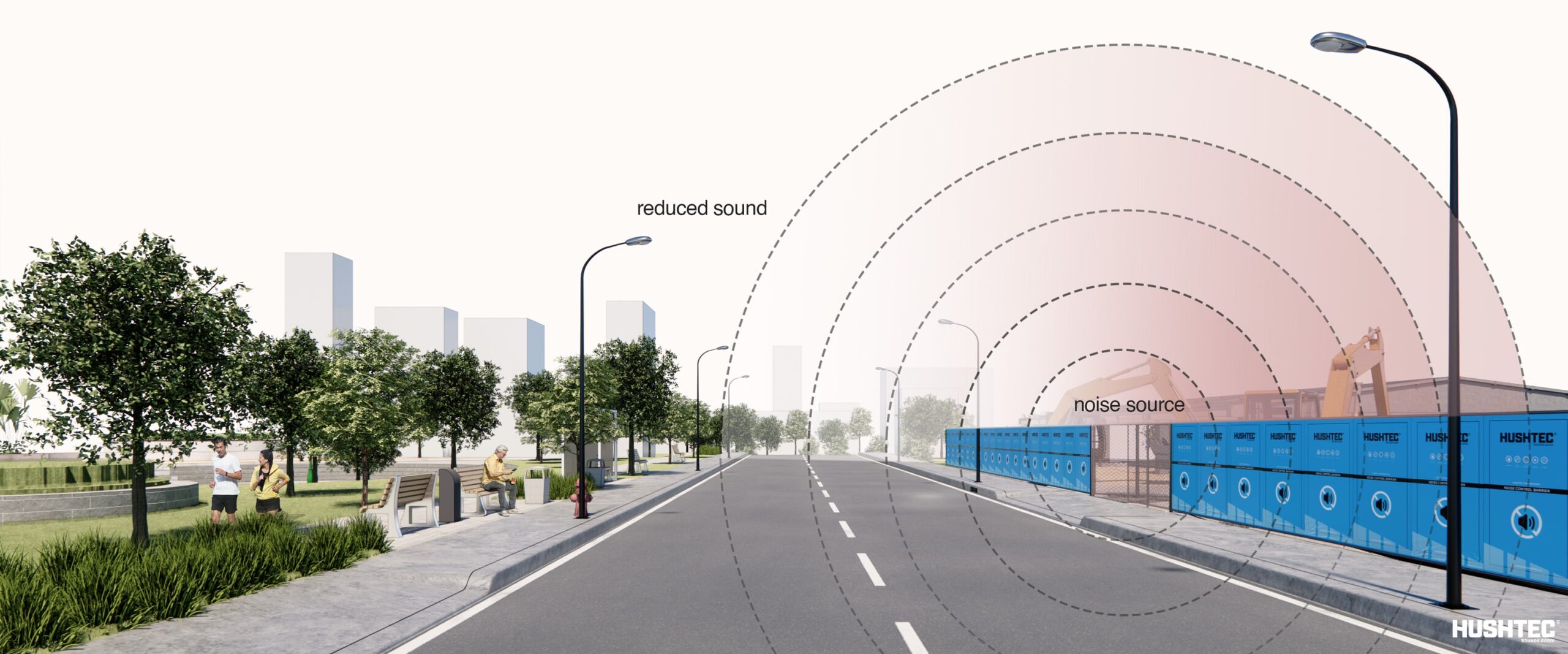
Construction sites often operate near homes, businesses, or public infrastructure. Excessive noise can lead to:
- Community complaints
- Lost productivity
- Worker fatigue and safety risks
- Costly delays or fines for non-compliance
With the right noise control solutions, contractors can significantly reduce these problems and keep projects moving.
Main Sources of Noise on Construction Sites
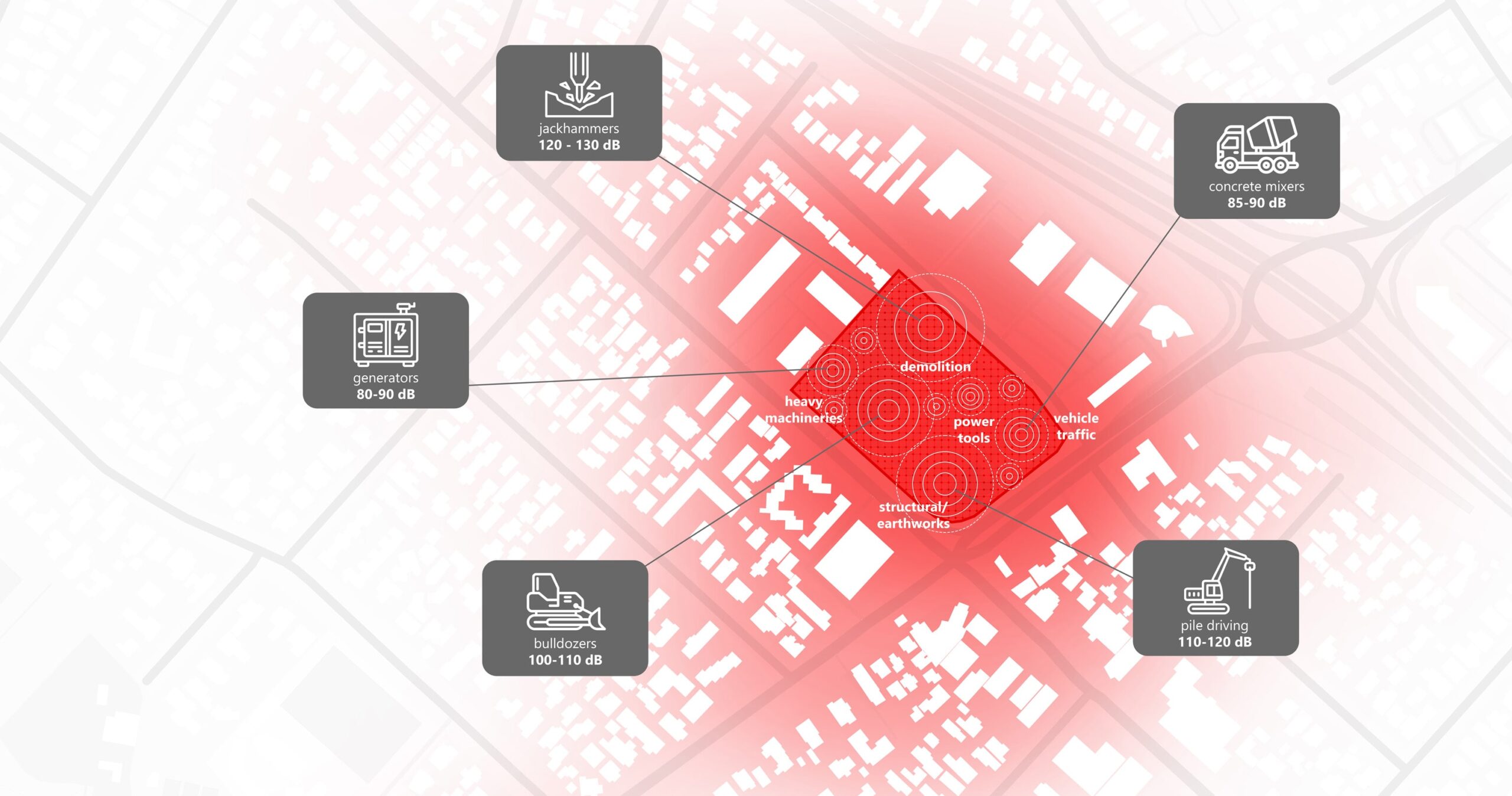
Heavy Machinery
Heavy machinery noise, such as Excavators, loaders, and trucks, generates continuous engine noise.
Cutting, Drilling & Grinding Tools
Saws, drills, and grinders create high-frequency noise that travels far.
Impact Machinery
Jackhammers, hammers, and pile drivers create intense, impulsive noise.
Understanding the primary sources helps determine where barriers and noise-control strategies will be most effective
Best Noise Control Strategies for Construction Projects
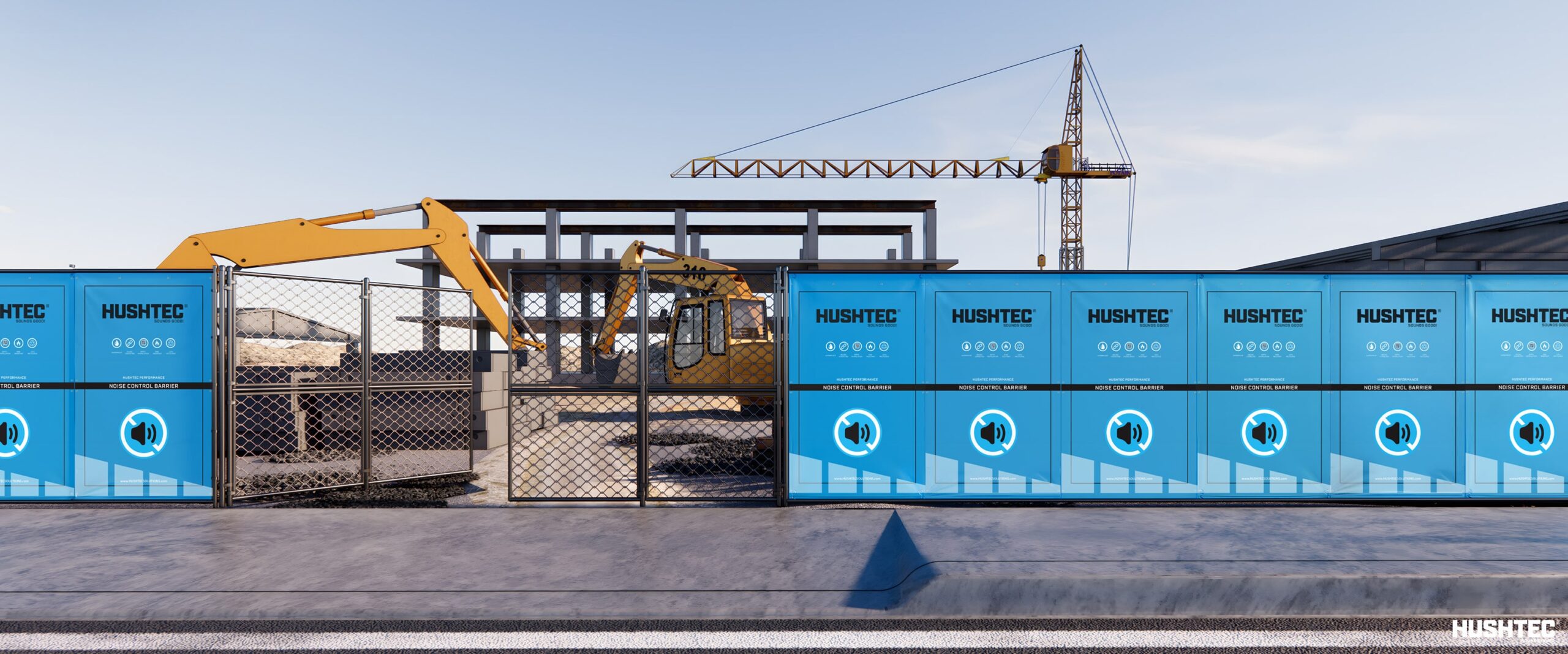
1. Install Temporary Noise Barriers
Temporary acoustic barriers absorb and block sound waves, significantly reducing noise escaping the site. They are ideal for:
- Urban construction
- Demolition
- Long-term infrastructure projects
- Sensitive environments (schools, hospitals, residential areas)
High-performance barriers can reduce noise by as much as 66dB, depending on material and placement.
👉 Learn more about construction noise solutions.
2. Optimize Site Layout
Smart placement of machinery can reduce noise travel:
- Keep high-noise equipment behind barriers
- Create noise “zones”
- Avoid running multiple loud machines simultaneously
Even simple layout changes can reduce noise exposure.
3. Maintain and Upgrade Machinery
Well-maintained equipment produces less noise. Key steps:
- Lubrication schedules
- Replacing worn components
- Using modern, low-noise machinery where possible
4. Protect Workers With PPE
To reduce worker exposure:
- Provide ear plugs & earmuffs
- Rotate shifts during high-noise phases
- Use noise meters to track exposure
This is essential for meeting occupational safety standards.
5. Work With a Professional Noise Control Provider
A dedicated noise-control partner can offer:
- On-site noise assessments
- Custom barrier recommendations
- Rapid installation
- Compliance reporting
Professional support ensures your project stays productive and compliant.

Conclusion
Construction noise control is no longer optional — it’s essential for safety, compliance, and community relations. By combining noise barriers, strategic planning, and modern machinery, contractors can create safer, quieter, and more efficient job sites.
FAQ
Q1: What is construction noise control?
Construction noise control refers to strategies and equipment used to reduce noise from machinery, tools, and site operations.
Q2: How do temporary noise barriers work?
Noise barriers absorb and block sound waves, reducing the amount of noise that escapes the construction site.
Q3: Why is noise control important for construction?
It prevents complaints, avoids fines, keeps sites compliant, and protects workers from unsafe noise levels.
Q4: How much noise can acoustic barriers reduce?
High-quality construction noise barriers typically reduce noise by 60-66dB depending on the materials used.
Q5: When should noise control be planned?
Ideally during the early planning stage of a project to avoid delays and compliance issues.