
Effective infrastructure noise control is essential for large-scale development projects where compliance, community protection, and worker safety are critical. Hushtec delivers customised noise control solutions, including acoustic barriers and engineered containment systems built specifically for demanding infrastructure environments.
Infrastructure development sites—including roads, rail networks, utilities, and power facilities—generate complex and high-impact noise. Mobile plant, fixed equipment, and phased construction activities all produce different sound characteristics, requiring specific noise attenuation strategies to meet environmental approvals and community expectations.
Hushtec delivers a range of engineered noise control solutions, applied selectively based on the noise source, required decibel (dB) reduction, site constraints, and project duration. This targeted approach ensures effective, compliant, and practical noise mitigation for infrastructure projects.
Why Infrastructure Noise Control Is Not One-Size-Fits-All

Unlike single-use construction sites, infrastructure projects typically involve multiple concurrent noise sources, including:
- Earthworks, piling, and civil construction
- Concrete batching and material processing
- Generators, compressors, and pumps
- Road, rail, and utility construction activities
Each source varies in sound power level, frequency content, and operating duration. As a result, different noise control solutions must be applied to achieve specific attenuation targets, rather than relying on generic products or single-system approaches.
Hushtec Noise Control Solutions for Infrastructure Projects
Hushtec offers multiple noise control solutions.
Each solution is selected and engineered based on how much noise attenuation is required and where it is most effective.
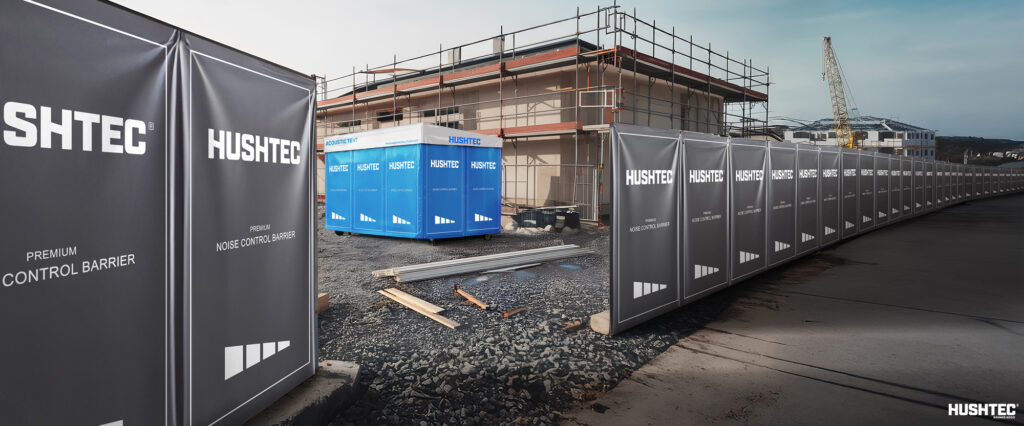
1. Noise Barriers – Site & Perimeter Noise Attenuation
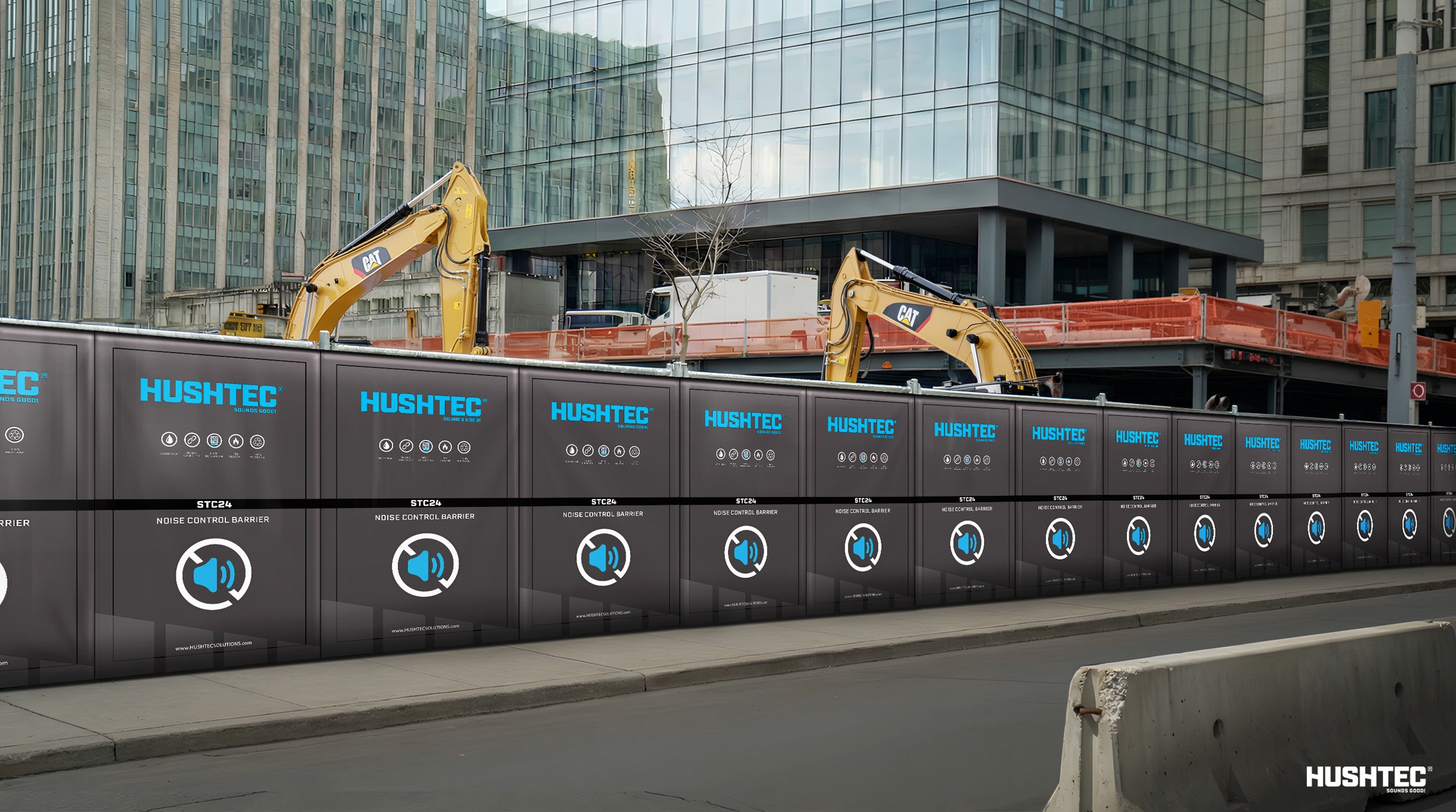
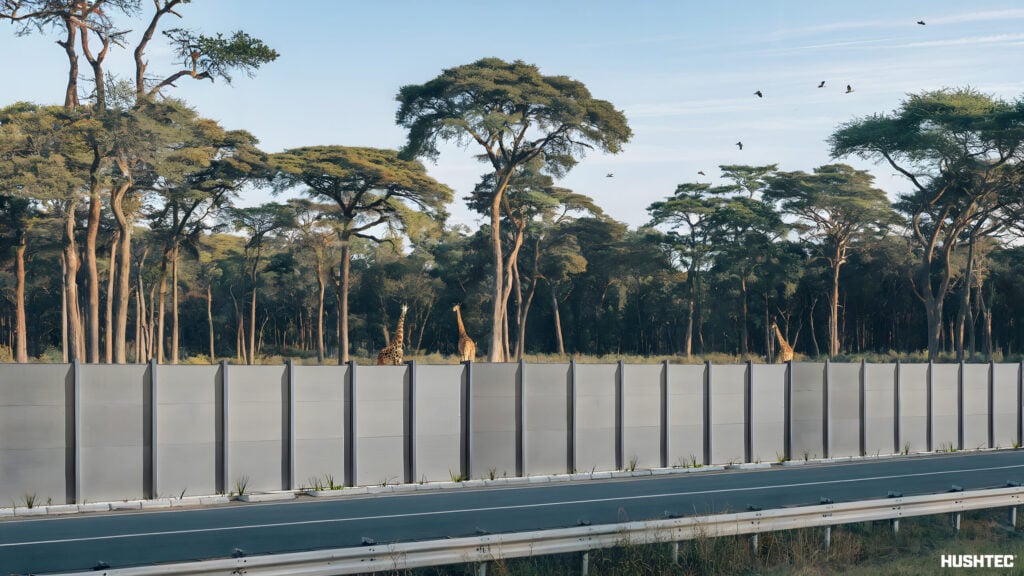
Noise barriers are used to reduce sound transmission between construction activities and nearby receivers.
Applied when:
- Moderate noise attenuation is required
- Noise sources are distributed across open work zones
- Temporary or semi-permanent mitigation is needed
Typical infrastructure applications:
- Road and highway construction
- Rail corridor works
- Urban civil infrastructure projects
Barrier height, length, and configuration are engineered to achieve the required attenuation at receptor locations, considering distance, line-of-sight, and site exposure.
2. Acoustic Enclosures – Source-Based Noise Attenuation
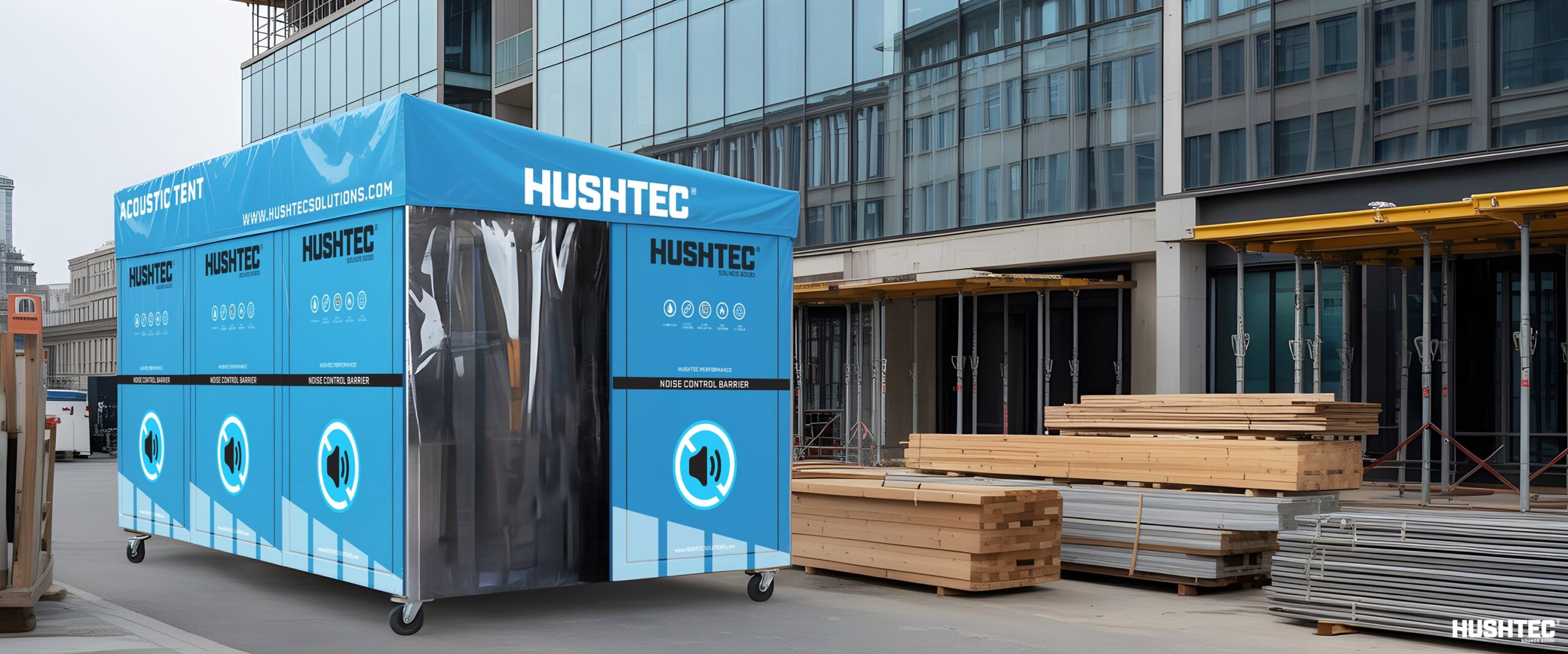
Acoustic enclosures are used when higher levels of noise reduction are required directly at the source.
Applied when:
- High noise attenuation is required
- Equipment operates continuously or near sensitive receivers
- Regulatory limits demand significant dB reduction
Typical infrastructure applications:
- Generators and power systems
- Pumps and compressors for utilities
- Concrete batching and processing plants
Enclosures are engineered with ventilation and airflow considerations to maintain equipment performance while achieving the required noise attenuation.
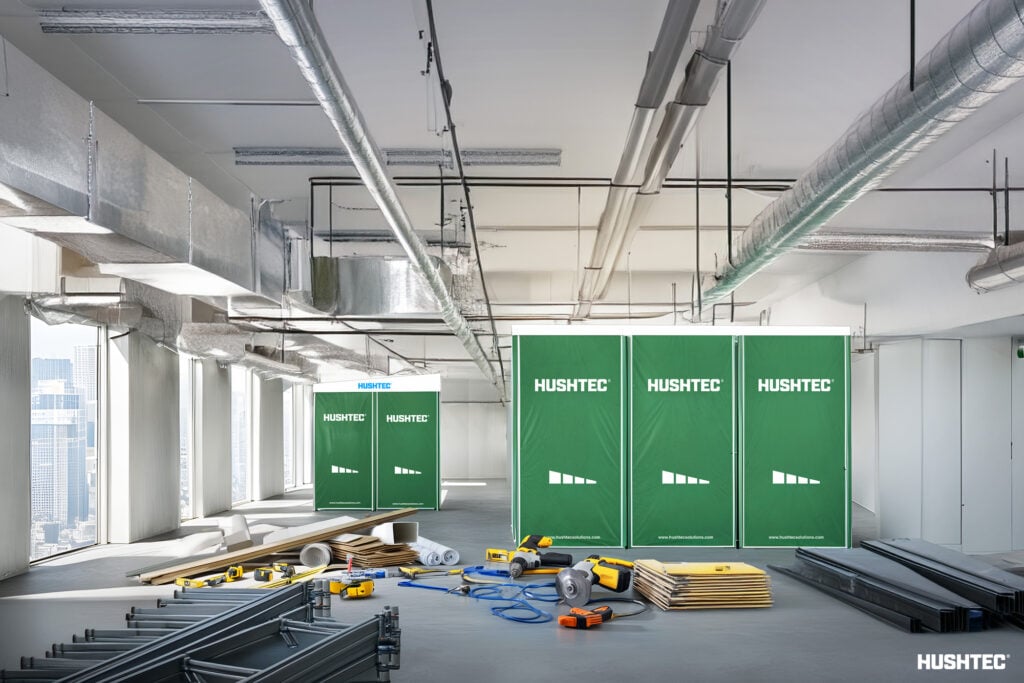
3. Temporary Noise Control Systems – Phased Infrastructure Works

Temporary systems support short-term or mobile noise sources across evolving infrastructure sites.
Applied when:
- Noise sources move as construction progresses
- Night works or shutdown activities occur
- Rapid installation and removal are required
Typical infrastructure applications:
- Rail maintenance and shutdown works
- Utility upgrades and repairs
- Road resurfacing and rehabilitation projects
Temporary systems allow noise control measures to match the activity phase, ensuring compliance without unnecessary permanent installation.
4. Combined Noise Control Strategies
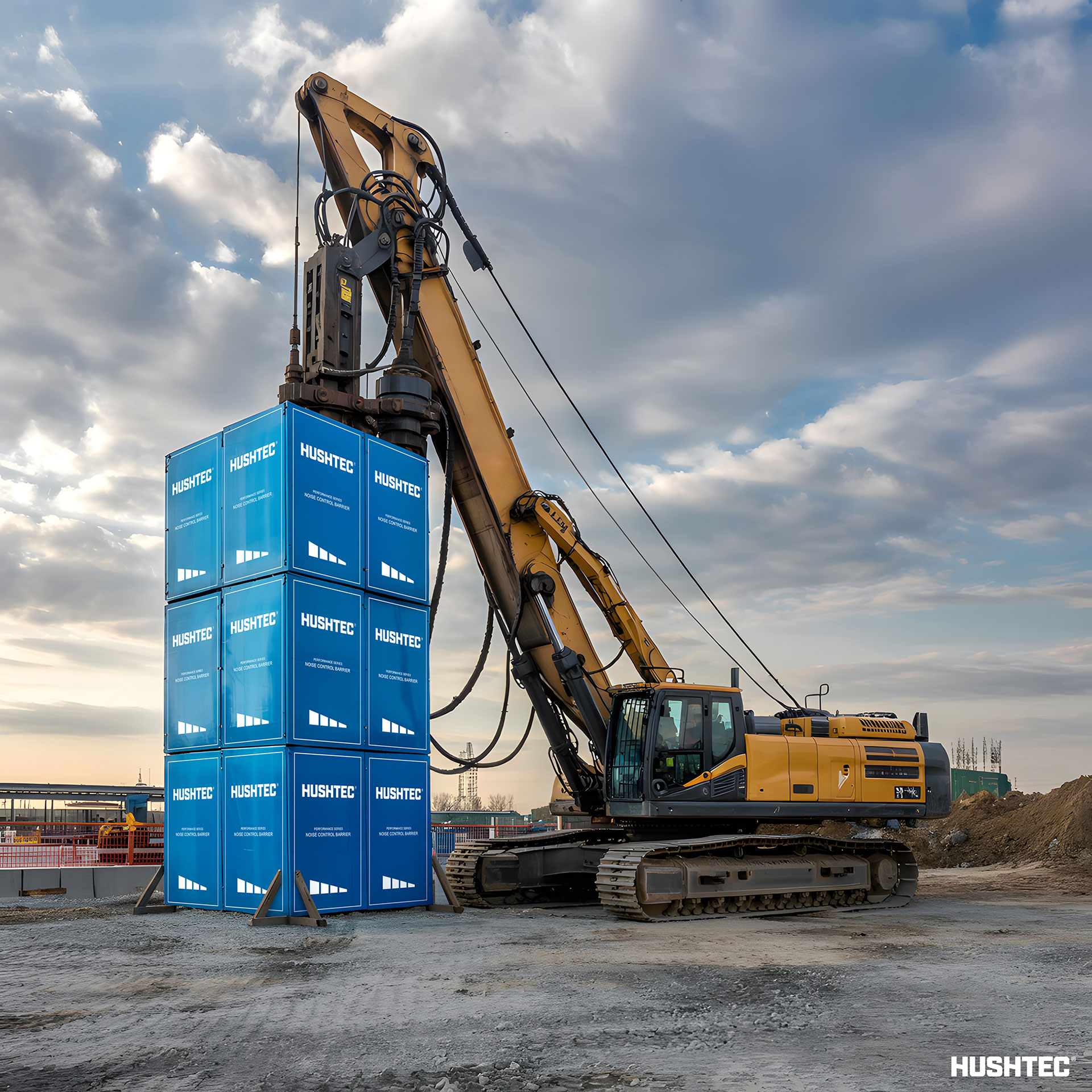
Most infrastructure projects require multiple noise control solutions working together.
Common combinations include:
- Noise barriers for site-wide attenuation
- Acoustic enclosures for dominant equipment
- Temporary systems for peak construction phases
This layered approach ensures overall attenuation targets are met efficiently and cost-effectively.
Noise Attenuation Strategy Comparison
| Noise Control Solution | Typical Application | Relative Attenuation Level | Infrastructure Examples |
| Noise Barriers | Line-of-sight reduction | Moderate | Roads, rail corridors |
| Acoustic Enclosures | Source control | High | Generators, batching plants |
| Temporary Systems | Short-term mitigation | Variable | Rail shutdowns, utilities |
| Combined Solutions | Complex sites | High (layered) | Major infrastructure projects |
**Actual attenuation performance depends on site conditions, layout, and engineering design.
Infrastructure Sector Applications
Road & Highway Infrastructure
Primarily uses perimeter noise barriers and temporary systems to manage traffic-facing and community noise exposure.
Rail Infrastructure
Requires a combination of barriers, enclosures, and temporary systems for construction, maintenance, and shutdown works.
Utilities & Water Infrastructure
Relies heavily on acoustic enclosures for pumps, generators, and treatment equipment operating near sensitive receivers.
Power & Energy Infrastructure
Combines source-based enclosures with perimeter barriers to manage continuous operational noise.
Each sector requires different noise control solutions to meet different attenuation requirements.
Compliance, Community Impact & Project Continuity
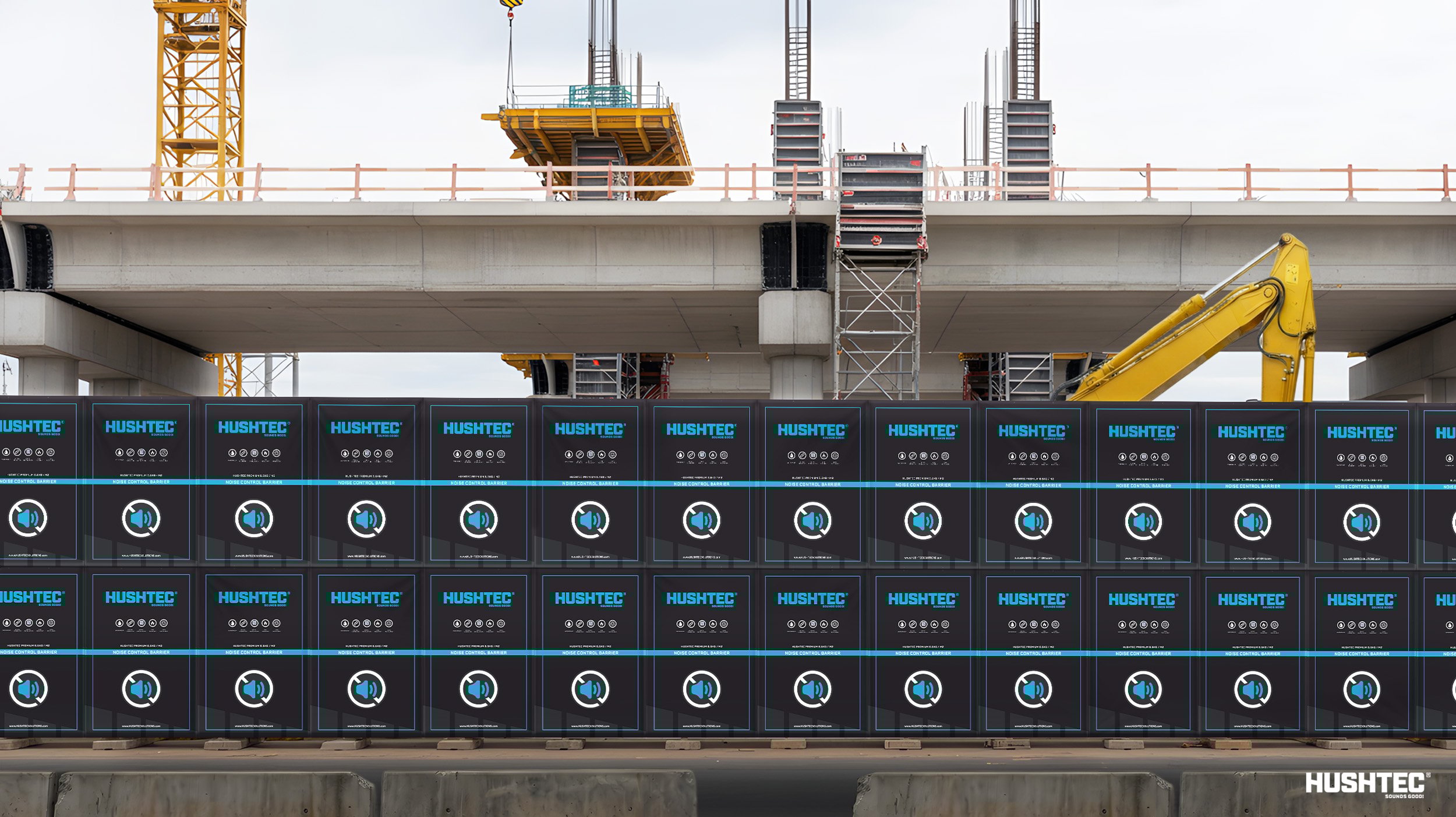
By selecting the appropriate noise control solution for each noise source, infrastructure teams can:
- Meet environmental approval conditions
- Reduce community complaints
- Avoid delays, redesigns, or penalties
- Maintain project schedules and stakeholder confidence
Effective noise control becomes a critical component of project delivery, not an afterthought.
Frequently Asked Questions (FAQ)
What noise control solution is best for infrastructure projects?
There is no single solution suitable for all infrastructure projects. The most effective approach depends on the noise source, required attenuation level, and site conditions. Most projects use a combination of barriers, enclosures, and temporary systems.
How much noise attenuation can Hushtec solutions provide?
Attenuation varies by solution type and engineering design. Noise barriers typically provide moderate reduction, acoustic enclosures deliver higher source-based attenuation, and temporary systems offer variable performance depending on configuration.
When should acoustic enclosures be used instead of noise barriers?
Acoustic enclosures are used when high noise attenuation is required at the source, particularly for continuous or high-output equipment where barriers alone are insufficient.
Can multiple noise control solutions be used on one project?
Yes. Most infrastructure sites require multiple solutions working together to achieve overall compliance.
Are Hushtec solutions suitable for temporary works?
Yes. Hushtec provides modular and temporary noise control systems designed for phased construction, shutdowns, and short-term infrastructure activities.
When should noise control be considered during a project?
Noise control should be considered during planning and approvals to reduce the risk of compliance issues and construction delays.
Why Infrastructure Teams Choose Hushtec
- Multiple engineered solutions for different attenuation needs
- Custom designs based on real infrastructure conditions
- Experience across complex construction and industrial environments
- Scalable systems that adapt as projects evolve
Conclusion
Infrastructure development requires targeted noise attenuation strategies, not generic products. By applying different noise control solutions for different noise sources and attenuation requirements, Hushtec delivers compliant, effective, and practical noise mitigation for modern infrastructure projects.
Contact Hushtec to discuss a custom noise control solution engineered for your infrastructure