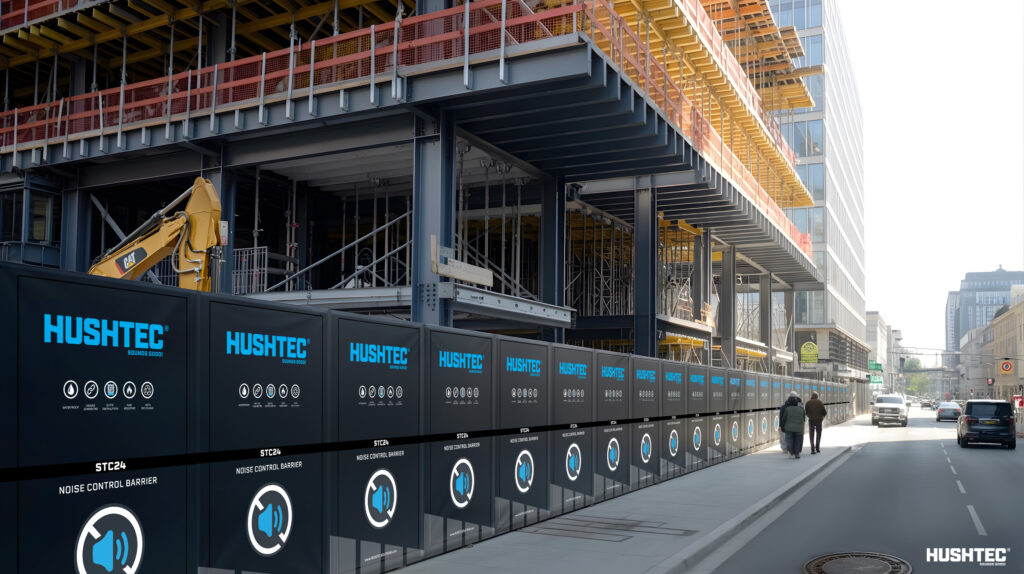



Engineering Noise Control for Modern Projects
Temporary noise control has become a core engineering requirement across construction, infrastructure, utilities, and industrial environments. As projects move closer to residential developments and sensitive facilities, managing sound emissions is no longer optional — it is essential for maintaining compliance, protecting communities, and ensuring uninterrupted operations.
Activities such as demolition, concrete cutting, rail maintenance, and generator operation generate significant sound energy that can propagate well beyond project boundaries. Without effective containment, this noise can disrupt surrounding environments, trigger regulatory action, and delay project schedules.
Temporary acoustic performance barriers provide a flexible and engineered method of controlling noise at its source. Unlike permanent structures, these systems are designed for rapid deployment and adaptation across changing project conditions, making them particularly suitable for temporary works, staged construction, and mobile operations.
Understanding How Temporary Acoustic Barriers Control Noise
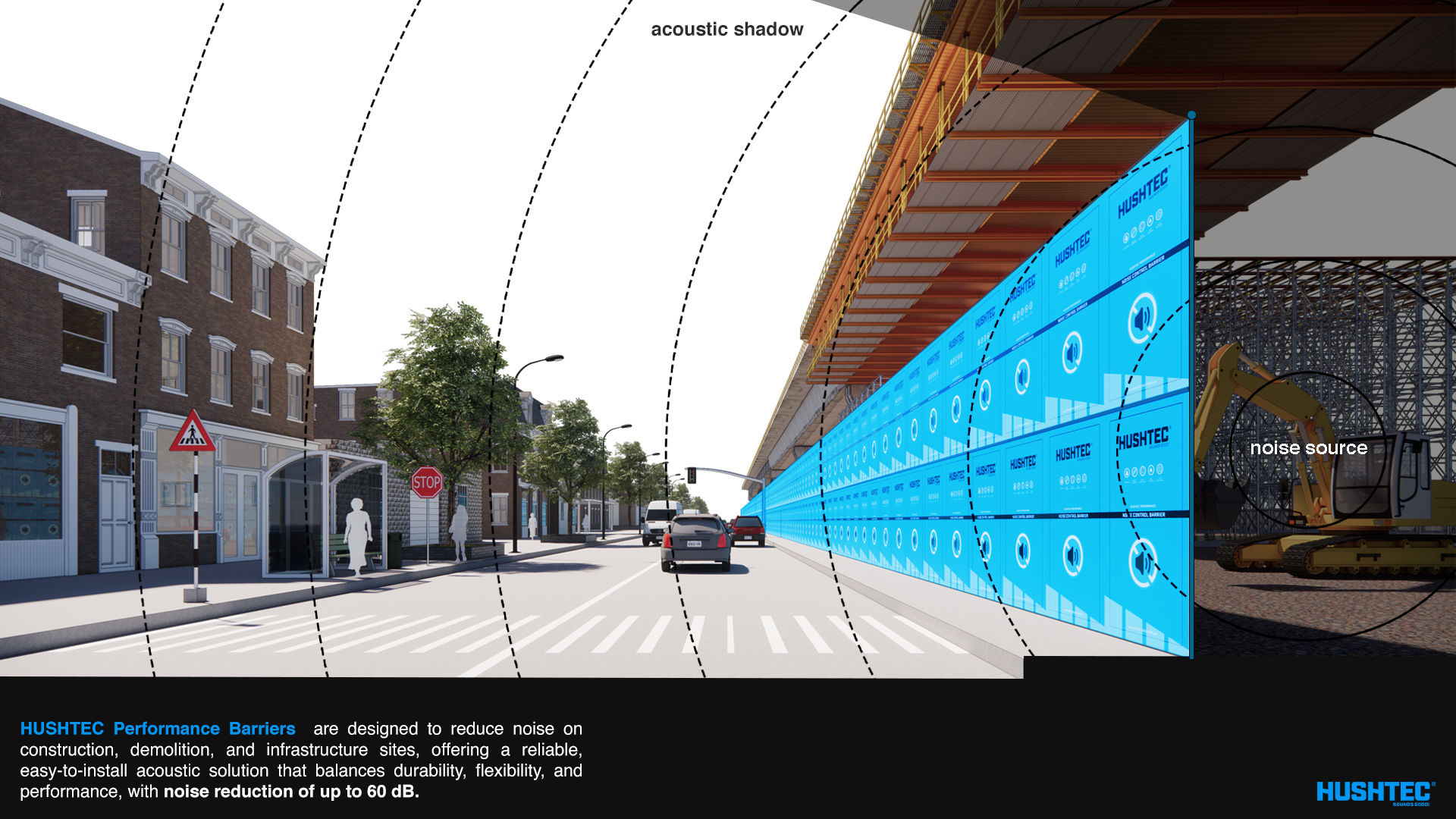
Effective noise control depends on understanding how sound behaves within a working environment. Noise does not simply travel in a straight line — it reflects off surfaces, passes through openings, and spreads outward in multiple directions.
Temporary acoustic barriers work by combining absorption and blocking mechanisms to reduce the energy that escapes from a work zone.
Acoustic absorption occurs when sound waves enter porous materials and lose energy through friction. This reduces reflected noise and improves containment within enclosed or semi-enclosed spaces. In environments with hard reflective surfaces, this absorption effect is particularly important for limiting reverberation and secondary noise buildup.
At the same time, dense barrier layers provide transmission resistance, preventing sound from passing directly through the material. This principle, commonly referred to as the acoustic mass law, explains why heavier materials generally deliver improved sound blocking performance.
Barrier placement is equally important. To achieve effective noise reduction, the barrier must interrupt the direct line-of-sight between the sound source and surrounding receivers. Increasing barrier height and maintaining continuous coverage significantly improves performance outcomes.
Designing Temporary Acoustic Barrier Systems
Designing an effective temporary acoustic barrier system requires careful evaluation of both the noise source and surrounding environment. Each project presents different acoustic challenges, and successful outcomes depend on aligning barrier configuration with operational conditions.
One of the first design considerations is the type of equipment generating noise. Continuous sources such as generators produce stable sound levels, while intermittent tools such as grinders or breakers produce sudden bursts of energy. These variations influence the required barrier height, placement distance, and enclosure strategy.
Site layout also plays an important role. In open environments, sound energy dissipates naturally over distance, while confined urban environments may amplify noise through reflections between nearby structures. Temporary barriers provide controlled containment that limits sound propagation regardless of surrounding conditions.
Installation integrity is another critical factor. Gaps between barrier panels or openings at ground level allow sound to escape, reducing effectiveness. Overlapping panel systems and continuous sealing methods help maintain consistent performance across the entire barrier length.
Temporary acoustic barriers can be installed using perimeter fencing, scaffolding systems, or modular frame structures. The chosen method depends on available infrastructure, site layout, and required flexibility during project operations.
Industry Applications and Typical Noise Sources
Temporary acoustic barriers are widely used across industries where short-term noise control is required under variable operating conditions. Although the installation methods may vary, the fundamental objective remains the same: reduce noise exposure at its source and prevent sound from reaching sensitive receptors.
The table below outlines typical noise sources and corresponding barrier applications across major industries.
Typical Noise Sources by Industry
| Industry | Common Noise Sources | Typical Barrier Application |
| Construction & Civil | Concrete cutting, demolition, piling, drilling | Perimeter fencing and equipment shielding |
| Rail & Transport | Track grinding, maintenance works | Scaffold-mounted acoustic systems |
| Utilities & Energy | Generators, pumps, compressors | Temporary acoustic enclosures |
| Industrial Manufacturing | Fabrication, mechanical upgrades | Internal containment zones |
| Events & Temporary Installations | Generators, stage equipment | Portable sound containment |

In construction environments, perimeter barrier systems are often installed along site boundaries to minimise sound reaching neighbouring properties. Rail and infrastructure works frequently rely on scaffold-mounted systems to contain noise from elevated or linear work zones. Utility installations benefit from temporary enclosures that isolate generators and mechanical equipment during commissioning phases.
Industrial environments often deploy containment systems internally to protect workers from excessive noise exposure while allowing adjacent processes to continue without disruption.
Supporting Compliance and Project Continuity
Noise compliance plays a central role in project planning, particularly in urban and mixed-use environments. Environmental authorities typically establish allowable sound limits based on location, time of day, and surrounding land use.
Exceeding these limits can lead to enforcement action, project delays, or operational restrictions. Even when regulatory limits are not exceeded, sustained noise exposure can generate complaints from surrounding communities, increasing project risk.
Temporary acoustic barriers support compliance by intercepting sound energy before it reaches site boundaries. By reducing overall emission levels, these systems help maintain regulatory alignment while enabling continuous operations.
In occupational settings, temporary containment systems also contribute to worker safety by reducing noise exposure within active work zones. This supports compliance with workplace health requirements and improves communication clarity within operational areas.
Installation Methods and Practical Configurations
Temporary acoustic barriers are designed to integrate with existing site infrastructure, allowing flexible deployment across a wide range of operational environments.
Fence-mounted installations are commonly used to create continuous perimeter noise barriers. These systems attach directly to existing fencing and provide rapid installation without permanent modifications.
Scaffold-mounted configurations are used where vertical containment is required, particularly in multi-storey construction or infrastructure maintenance environments. These installations allow noise control to extend vertically along work zones.
Temporary acoustic enclosures provide targeted noise containment around high-intensity equipment such as generators or compressors. These enclosed systems reduce localised sound exposure and improve acoustic control within defined areas.
Portable frame systems allow barriers to be repositioned as equipment locations change, supporting dynamic work environments where flexibility is essential.
Case-Style Applications — Practical Implementation Examples
Real-world applications demonstrate how temporary acoustic barriers function under operational conditions.
Urban Construction Near Residential Housing

A construction project operating adjacent to residential housing required continuous cutting operations. Initial monitoring indicated that sound levels approached regulatory thresholds at the property boundary.
Temporary acoustic barriers were installed along perimeter fencing surrounding the active work zone. Continuous sealing between panels ensured minimal leakage. Following installation, boundary sound levels were reduced sufficiently to maintain compliance, allowing operations to continue without disruption.
Night Rail Maintenance Operations
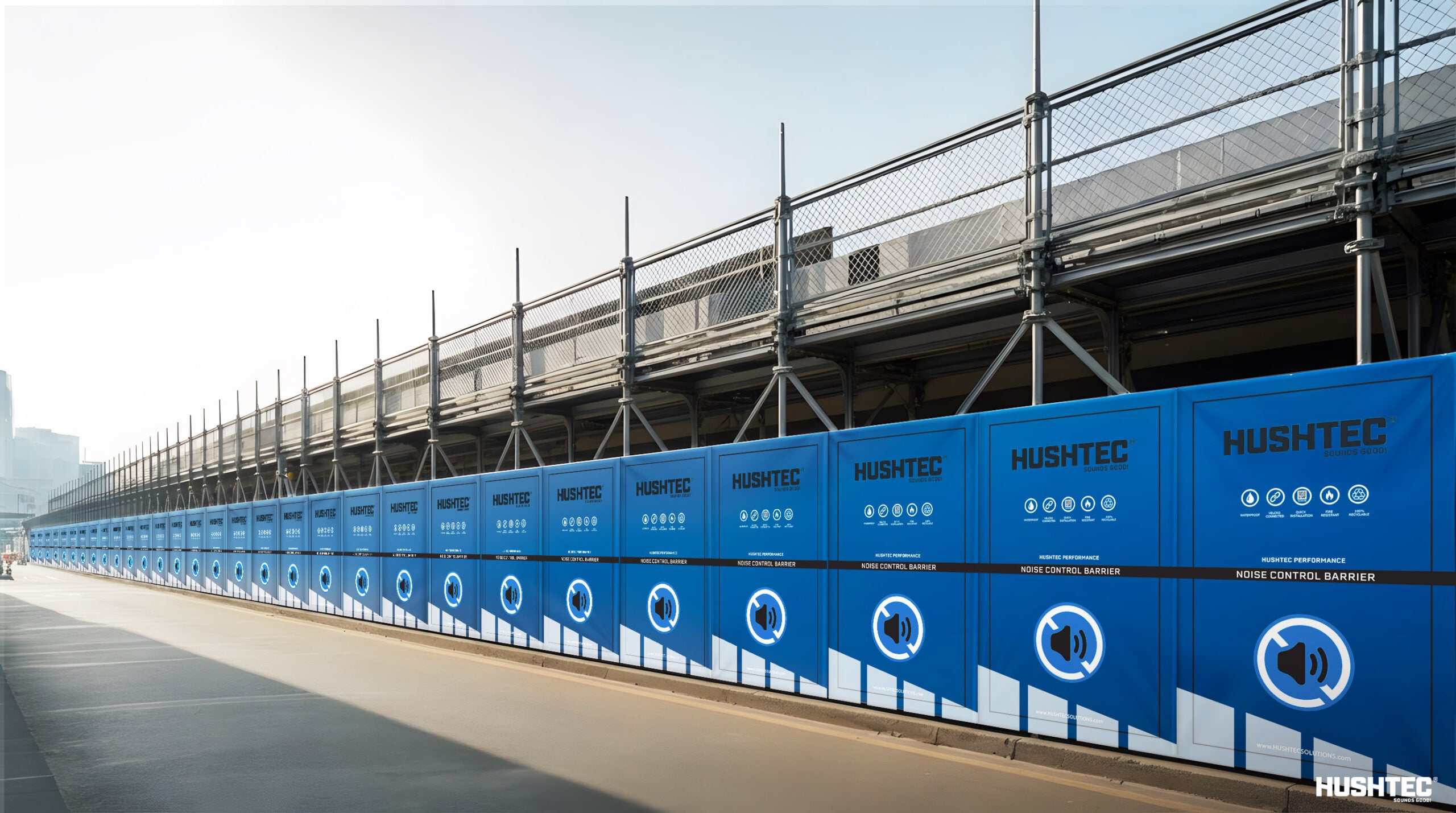
Rail maintenance activities conducted during night hours required strict noise management due to reduced allowable limits. Scaffold-mounted barrier systems were deployed along the track corridor, providing vertical shielding around grinding operations.
This configuration enabled maintenance to proceed within scheduled windows while maintaining compliance with night-time noise restrictions.
Generator Containment at Utility Installation
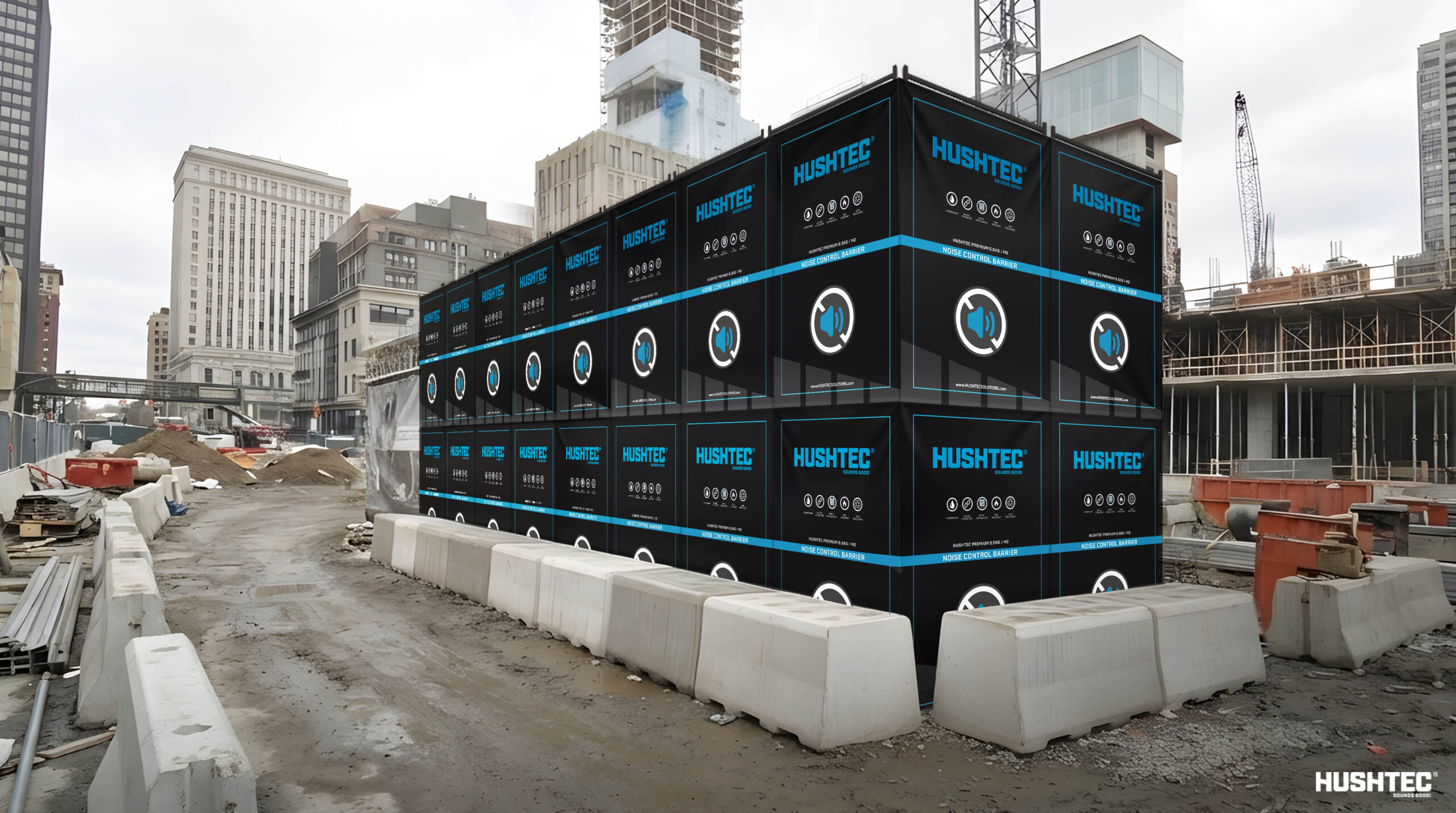
During commissioning of temporary generators, elevated sound levels affected nearby commercial buildings. Engineers implemented a modular enclosure system around the equipment, forming a contained acoustic environment.
Noise measurements taken after installation confirmed a reduction in localised exposure, enabling continued commissioning without interruption.
Performance Expectations in Temporary Noise Control
The effectiveness of temporary acoustic barrier systems depends on both material performance and installation quality. While barrier materials provide the necessary acoustic properties, proper positioning and sealing often determine the final outcome.
In most practical applications, measurable noise reduction is achieved when barriers are installed close to the noise source and extend beyond its height. Combining absorption and transmission resistance improves containment efficiency and reduces environmental impact.
Performance verification typically involves site-based measurements to confirm that installed systems meet project-specific noise reduction targets
Technical Reference — NRC, STC, and Noise Reduction Calculations
Understanding acoustic performance metrics is important when specifying temporary barrier systems. While detailed analysis is typically performed during acoustic design stages, the following reference provides a simplified overview of commonly used metrics.
Key Acoustic Performance Concepts
| Concept | What It Measures | Why It Matters | Future Reference Topic |
| NRC (Noise Reduction Coefficient) | Sound absorption performance | Helps control reflected noise and reverberation | Understanding NRC vs STC Ratings |
| STC (Sound Transmission Class) | Sound blocking performance | Indicates ability to reduce sound passing through materials | Understanding NRC vs STC Ratings |
| dB Reduction Targets | Required noise reduction level | Determines barrier height and configuration | How to Calculate Required Noise Reduction (dB Design Guide) |
These concepts form the technical foundation of barrier design and are often addressed during detailed acoustic assessments. While temporary barrier installations can deliver significant reductions, accurate prediction of outcomes depends on site-specific modelling and measurement.
Separate technical guides exploring NRC, STC, and noise reduction calculations provide deeper insight into these topics and support more advanced engineering applications.
Sustainability and Reusability Considerations
Temporary acoustic barriers contribute to sustainable construction practices through their reusable design. Unlike permanent structures, these systems can be relocated and redeployed across multiple project stages.
Reusable materials reduce waste generation and lower overall lifecycle costs. This flexibility also supports changing project requirements without requiring permanent infrastructure changes.
By enabling efficient noise control without long-term structural modification, temporary acoustic barriers support both operational efficiency and environmental responsibility.
Conclusion — A Practical Engineering Approach to Temporary Noise Control
Temporary acoustic barriers provide a reliable and adaptable method of controlling noise across construction, infrastructure, and industrial environments. Their effectiveness lies not only in material design but also in thoughtful placement, proper sealing, and alignment with operational requirements.
As regulatory pressures increase and project environments become more complex, engineered temporary noise control solutions will continue to play a vital role in maintaining compliance and protecting surrounding communities.
By integrating practical design principles with flexible installation methods, temporary acoustic barriers support safe, compliant, and uninterrupted project delivery across a wide range of industries.