

The rapid expansion of AI and digital infrastructure is driving a surge in data center construction worldwide. From hyperscale campuses to edge computing facilities, modern data centers rely on large mechanical systems operating continuously—often near residential and commercial zones.
While computing hardware operates quietly, supporting infrastructure does not.
Backup generators, cooling towers, chillers, and air handling systems generate significant mechanical noise that can exceed regulatory limits, trigger complaints, and delay approvals.
Effective data center noise control now requires engineered acoustic strategies that address both internal infrastructure noise and external environmental compliance requirements.
Why Data Center Noise Control Matters
Noise in data center environments is continuous and infrastructure-driven—not temporary.
Primary contributors include:
- 24/7 cooling system operation
- Backup generator testing
- Emergency power readiness
- High-capacity ventilation
- External mechanical plant activity
Environmental regulations commonly apply limits to:
- Boundary noise levels
- Night-time operations
- Tonal noise sources
- Community-sensitive areas
Without early planning, projects may face:
- Approval delays
- Costly retrofits
- Community complaints
- Compliance penalties
Early integration of engineered solutions such as internal acoustic separation walls and permanent external acoustic barrier systems significantly reduces long-term risk.
Major Noise Sources in Data Center Facilities
Understanding dominant noise sources allows engineers to design targeted mitigation systems.
Generator Compounds
Backup generators are typically the loudest intermittent noise source within a data center.
Primary noise sources include:
- Engine exhaust
- Cooling fan operation
- Mechanical vibration
- Load bank testing
Routine generator testing cycles can create short-duration high-intensity noise events.
Typical mitigation methods include:
- Acoustic enclosures
- Exhaust attenuation
- Permanent external Hushwall acoustic barrier systems
- Equipment noise shrouds
- Hushtec absorption panel systems installed as internal acoustic separation walls between generator infrastructure areas and occupied building spaces
Combining internal separation and external containment significantly improves overall acoustic performance.
Cooling Towers and Chiller Plants
Cooling systems represent the loudest continuous noise source in most facilities.
Primary contributors:
- Cooling tower fans
- Compressor operation
- Air discharge turbulence
- Water flow noise
Because these systems operate continuously, cumulative noise must be carefully managed.
Effective mitigation includes:
Internal Infrastructure Control
- Hushtec absorption panel systems installed as internal acoustic separation walls between mechanical infrastructure zones and occupied building areas.
- These internal partitions reduce transmitted sound into office areas, control rooms, and technician workspaces where personnel may be present 24/7.
- The systems also reduce reverberation inside infrastructure enclosures, improving overall acoustic efficiency.
External Boundary Control
- Hushwall permanent acoustic barrier systems installed around cooling yards and perimeter plant zones contain noise before it propagates beyond the facility boundary.
- Designed for long-term infrastructure durability and high acoustic performance in demanding environment
HVAC and Air Handling Units
Large HVAC systems generate broadband mechanical noise across multiple frequencies.
Noise sources include:
- Fan noise
- Air turbulence
- Mechanical vibration
- Structure-borne transmission
Without proper internal separation, enclosed plant areas can transmit noise into adjacent working environments.
Typical solutions include:
- Hushtec absorption panels installed as internal acoustic separation walls between HVAC infrastructure areas and occupied operational spaces.
- Equipment enclosures and shrouds to control localized noise emission.
- Structural isolation to reduce vibration transfer through building elements.
These internal acoustic separation systems help maintain comfortable working environments while supporting predictable external compliance performance.
Layered Data Center Noise Control Strategies
Single-solution noise control rarely delivers reliable results.
Modern data center noise control relies on layered acoustic engineering strategies combining source control, internal separation, and external containment.
Source-Level Noise Control
Source control reduces noise directly at its origin.
Typical solutions:
- Generator enclosures
- Equipment shrouds
- Intake and exhaust silencers
Benefits:
- Immediate noise reduction
- Reduced propagation distance
- Improved system performance
Pathway Noise Control Using Permanent Barrier Systems
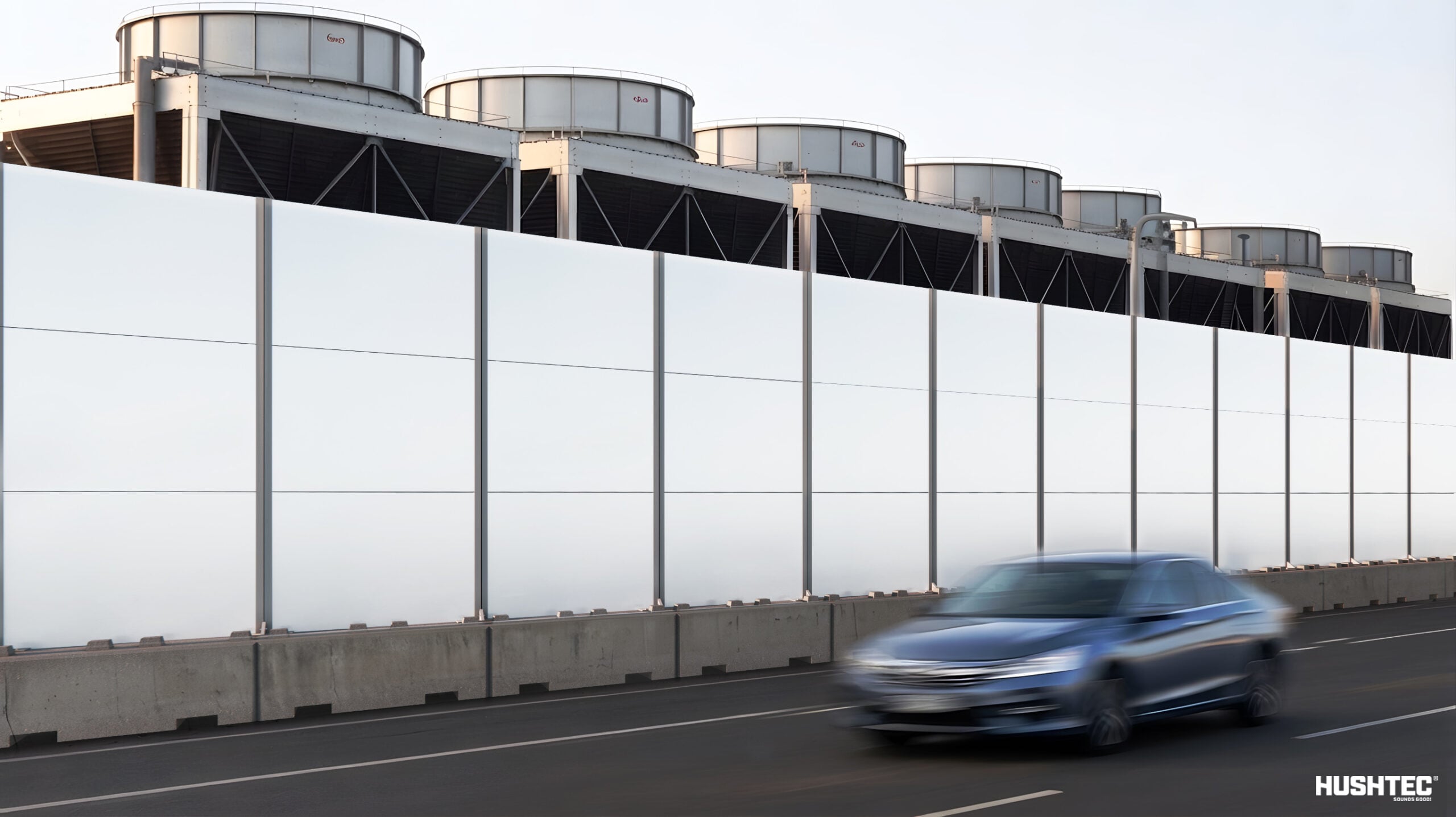
Pathway mitigation interrupts sound transmission between the source and surrounding environments.
Typical systems include:
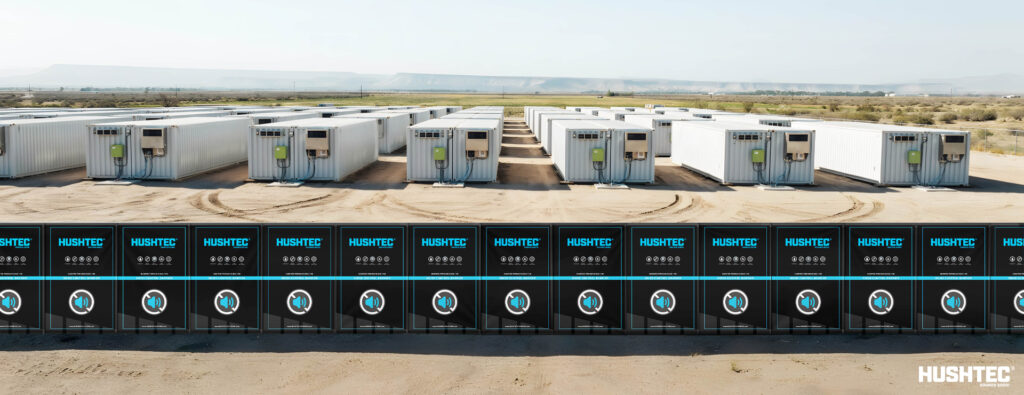
- Hushwall permanent acoustic barrier systems designed for external perimeter containment.
- Perimeter wall systems installed around generator yards and cooling compounds.
- Compound containment barriers used to interrupt direct line-of-sight noise transmission.
These permanent external systems are particularly effective for:
- Generator yards
- Cooling compounds
- External infrastructure zones
- Site boundary compliance control
Hushwall systems provide a durable long-life solution suitable for hyperscale and mission-critical facilities.
Internal Acoustic Separation and Reflection Control
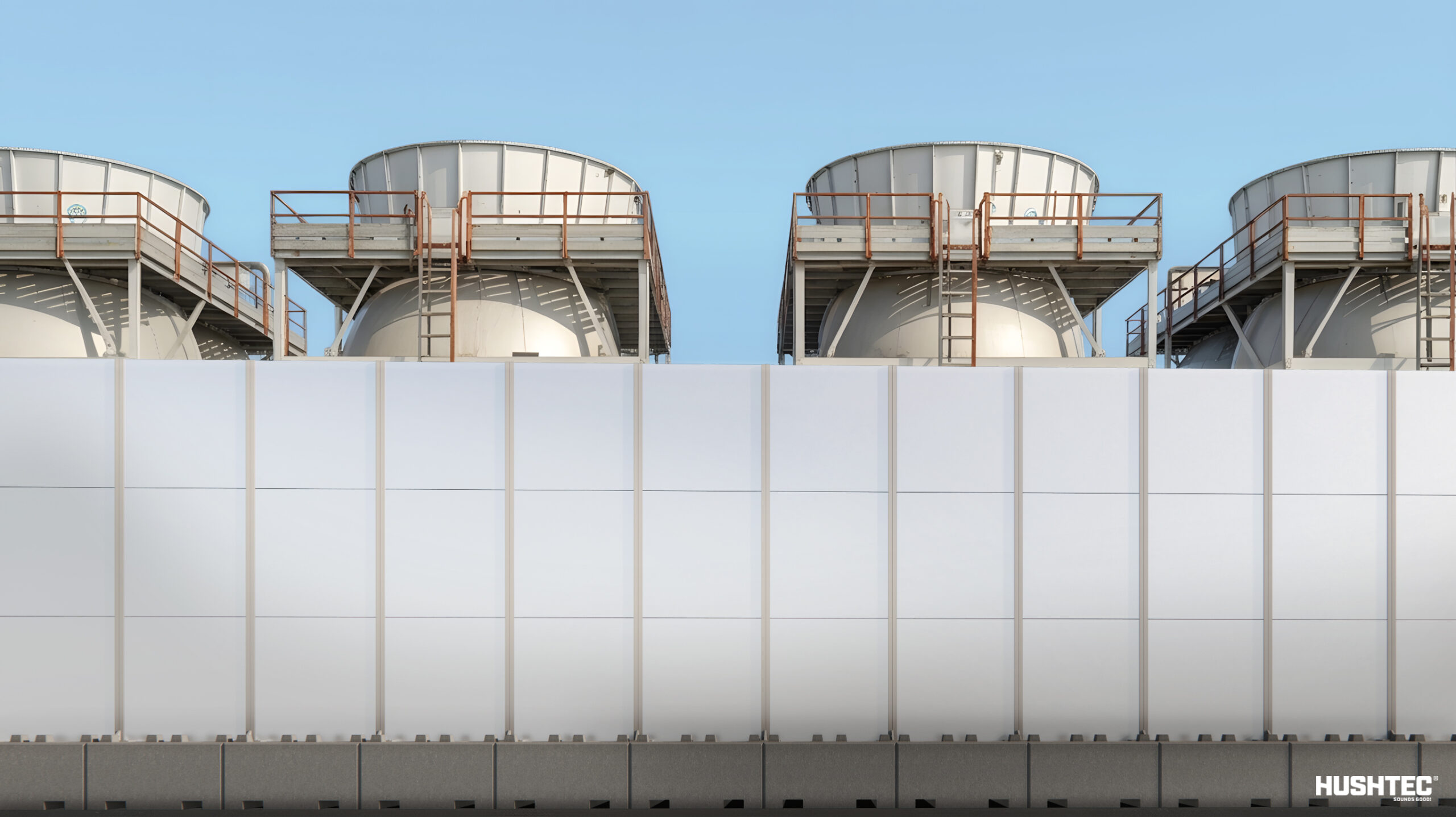
Hard surfaces surrounding infrastructure areas can transmit noise into adjacent occupied zones and create echo effects within plant spaces.
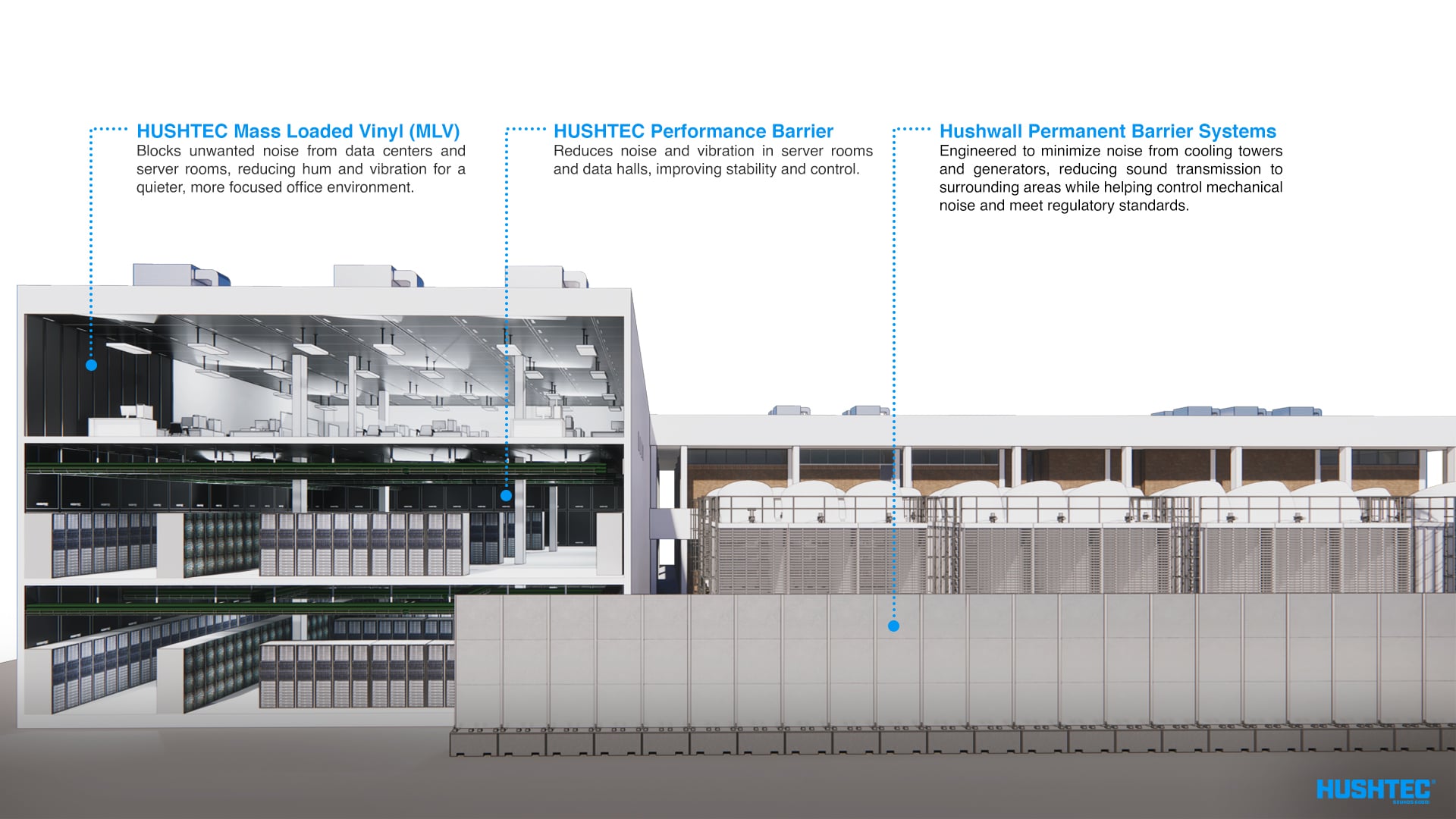
Hushtec absorption panel systems are engineered as internal acoustic separation wall systems, designed to isolate infrastructure noise from occupied environments.
These internal wall systems are commonly installed between:
- Data storage halls and office spaces
- Server infrastructure zones and operational control rooms
- Mechanical plant areas and technician workspaces
- Cooling infrastructure and administration zones
- 24/7 operational staff environments
By reducing transmitted and reflected energy across internal partitions, Hushtec separation systems improve working conditions for personnel while enhancing the effectiveness of external containment systems such as Hushwall permanent acoustic barriers.
Acoustic Design Considerations for Hyperscale Facilities
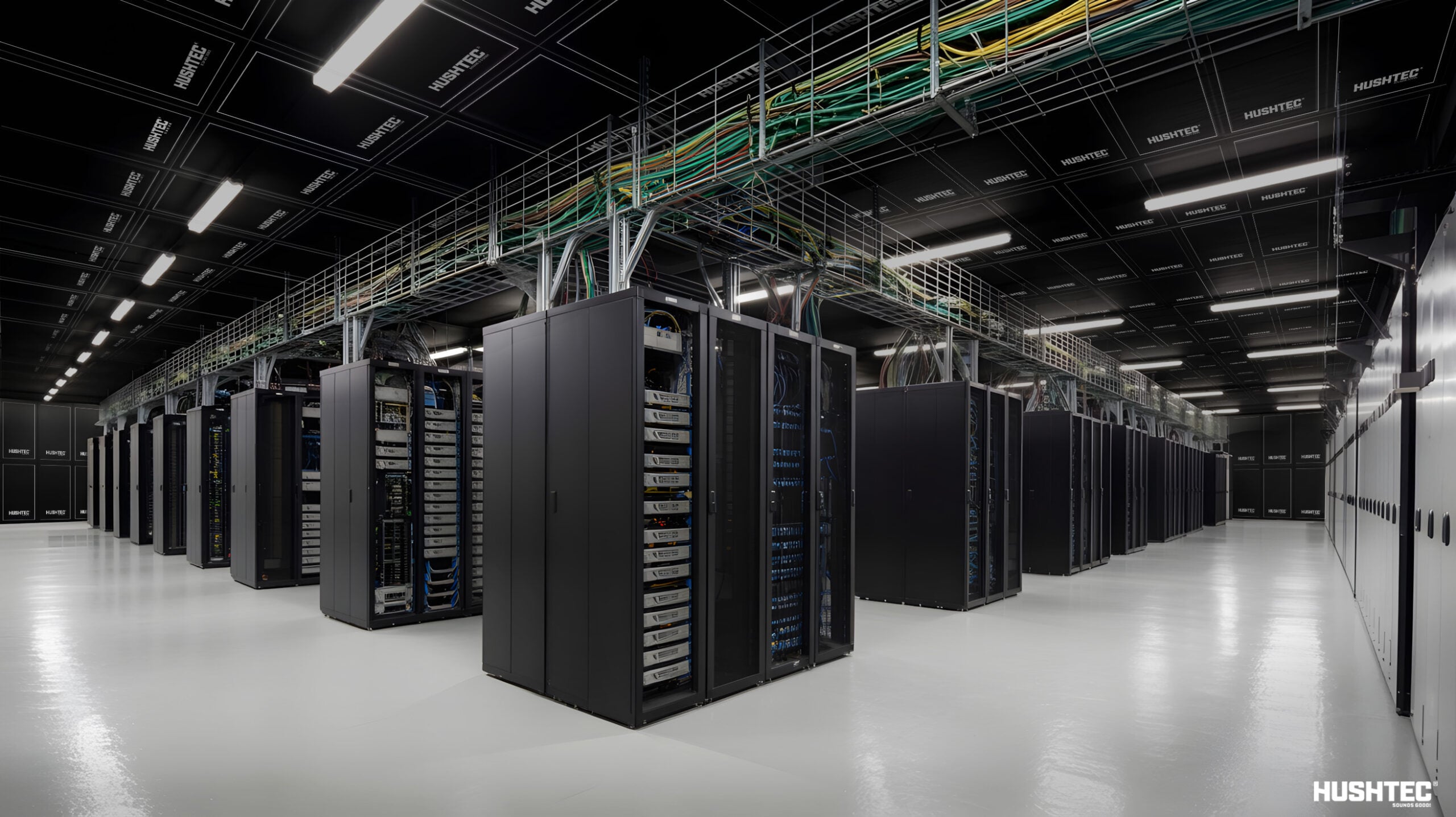
Hyperscale facilities introduce additional acoustic complexity due to equipment scale and density.
Large Equipment Density
Multiple generators and cooling systems operating simultaneously create cumulative noise loads.
Design must account for:
- Combined sound power levels
- Directional propagation
- Overlapping operational cycles
Site Boundary Noise Limits
Urban development increasingly places strict limits on property boundary noise.
Design considerations include:
- Distance attenuation
- Barrier height optimization
- Line-of-sight interruption
Tonal Noise Characteristics
Cooling systems often produce tonal frequencies that are more noticeable than broadband noise.
Targeted mitigation strategies are required to maintain compliance.
Permanent vs Internal Acoustic Systems in Data Center Design
Modern infrastructure noise control relies on both internal acoustic separation systems and permanent external containment structures.
Internal Infrastructure Control — Hushtec Absorption Panels
Hushtec absorption systems are engineered as internal acoustic separation wall systems used to isolate infrastructure noise from occupied environments.
Rather than functioning as external barriers, these systems are installed inside buildings to separate high-noise data infrastructure from personnel workspaces.
They are specifically designed to:
- Reduce sound transmission between data halls and office areas
- Improve acoustic comfort in occupied spaces
- Support safe and sustainable 24/7 operational environments
- Reduce internal reverberation within infrastructure zones
- Enhance performance of perimeter noise control systems
Typical installation locations include:
- Between data storage halls and office spaces
- Between server rooms and control centers
- Between mechanical infrastructure and administration zones
- Along internal acoustic separation corridors
- Within facilities operating 24/7 staff environments
These internal separation systems play a critical role in protecting personnel from continuous infrastructure noise exposure.
External Infrastructure Control — Hushwall Permanent Barrier Systems
Hushwall systems provide a long-term external noise containment solution designed for demanding infrastructure environments.
They are engineered for:
- Permanent perimeter noise control
- High structural durability
- Long-term compliance reliability
- Resistance to environmental loading conditions
Typical installation locations include:
- External generator yards
- Cooling tower compounds
- Facility boundary walls
- Infrastructure perimeter zones
When combined with internal separation systems such as Hushtec absorption panels, Hushwall delivers predictable, high-performance acoustic containment.
Modular Acoustic Systems for Scalable Infrastructure
Scalability is a defining feature of modern data center design.
As facilities expand, acoustic systems must adapt.
Modular systems provide:
- Flexible installation
- Scalable performance
- Rapid deployment
- Reconfigurable layouts
These features make modular systems ideal for phased infrastructure growth and long-term expansion.
Benefits of Engineered Data Center Noise Control Systems
Well-designed acoustic systems deliver measurable operational benefits, including:
- Regulatory compliance support
- Reduced community impact
- Improved operational reliability
- Lower retrofit risk
- Predictable acoustic performance
For high-value infrastructure projects, early planning significantly reduces long-term operational risk.
Planning Data Center Noise Control Early
Noise mitigation is most effective when integrated during the design phase—not after construction.
Early planning allows:
- Optimized equipment layout
- Reduced structural modification costs
- Improved project timelines
- Greater compliance confidence
Collaboration between engineers, planners, and acoustic specialists supports more predictable acoustic outcomes.
Conclusion
As demand for AI and digital infrastructure accelerates, data centers are becoming larger and more integrated into urban environments.
Managing generator, cooling, and mechanical noise is no longer optional—it is a core infrastructure requirement.
By combining:
- Source-level control
- Internal acoustic separation systems such as Hushtec absorption panels
- Permanent external containment using Hushwall barrier systems
engineered acoustic strategies help maintain compliance, protect surrounding communities, and create safer working environments for personnel operating within data infrastructure facilities.
For modern AI and hyperscale facilities, this layered approach delivers predictable long-term acoustic performance, regulatory confidence, and improved working conditions for 24/7 operations.